
Canada Post to End Door-to-Door Delivery for 620,000 Addresses by 2027
Canada Post has announced a sweeping change to how millions of Canadians will receive their mail. The national postal service confirmed it will convert approximately 620,000 addresses from door-to-door delivery to community mailboxes by 2027, marking one of the most significant shifts in Canadian postal history. The move is a cornerstone of a broader restructuring initiative designed to modernize the service and pull it back from the brink of financial collapse.
What Exactly Is Changing — and When?
The announcement comes in two phases. Canada Post had previously confirmed that 136,000 addresses would be transitioned to community mailboxes in late 2026 or early 2027. Now, the postal service has added another 485,000 addresses across 37 communities to that list, with those conversions slated for 2027. Together, the changes will affect roughly 620,000 addresses nationwide.
Among the communities impacted are parts of Halifax, various cities across Ontario, and Calgary. Canada Post has stated that it will begin reaching out to affected communities within the coming weeks and months to provide more detailed information about timelines and what residents can expect during the transition.
Why Is Canada Post Making This Change?
The decision to eliminate door-to-door delivery for hundreds of thousands of Canadians is not being made lightly — it is being made out of financial necessity. Canada Post recorded a staggering loss of US$1.15 billion in 2025, the largest in the organization's history. Adding to the urgency, the postal service posted a first-quarter loss of $147.5 million, continuing a troubling trend. In total, Canada Post has now lost money for eight consecutive years, a streak that has made reform not just desirable but unavoidable.
Delivering mail and parcels directly to individual homes and businesses is significantly more expensive than consolidating deliveries to central neighborhood locations. By shifting to community mailboxes, Canada Post expects to generate considerable cost savings that will help stabilize its finances and allow the organization to invest in the infrastructure needed to serve Canadians for decades to come.
What Are Community Mailboxes and How Do They Work?
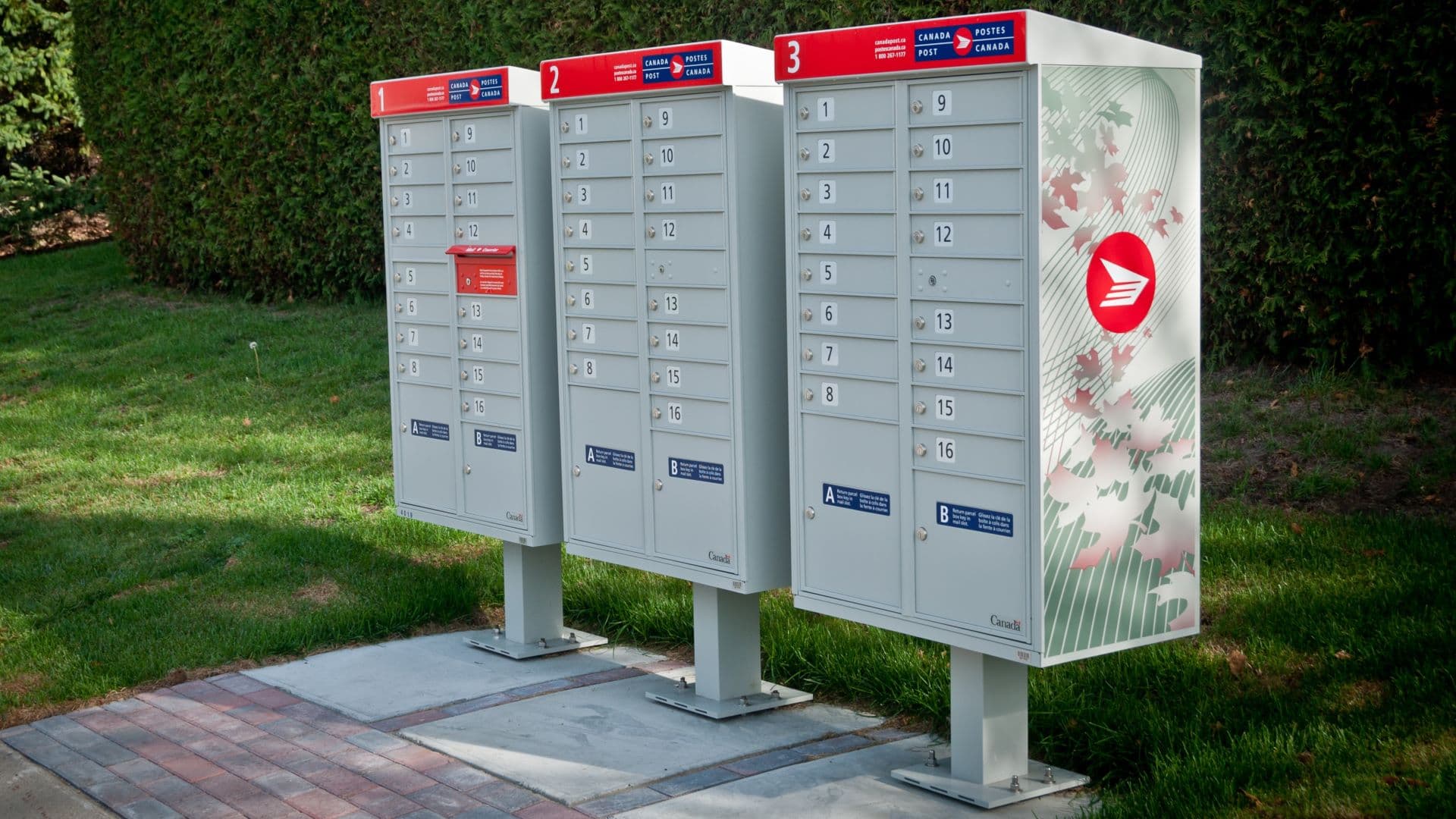
Community mailboxes — sometimes called superboxes — are centralized mail units typically installed in neighborhoods, parking lots, or easily accessible public areas. Each resident assigned to a community mailbox unit has their own secure, locked compartment where letter carriers deposit mail and small parcels. For larger packages, a parcel key is often left inside the mailbox, which opens a larger compartment within the same unit.
The shift to community mailboxes is not new territory for Canada Post. In fact, nearly three-quarters of all Canadian addresses already receive mail and parcels through some form of centralized, secure delivery — whether that is a community mailbox, an apartment lobby box, or a post office box. The upcoming conversions will bring more urban and suburban residents into alignment with a delivery model that has already been the norm for the majority of Canadians.
A Security Upgrade for Mail and Parcels
Beyond the cost savings, Canada Post has highlighted an important benefit that tends to get overlooked in discussions about the transition: security. Community mailboxes keep nearly all mail and parcels under lock and key, dramatically reducing the risk of theft, tampering, or weather damage that can affect items left at front doors or in unsecured mailboxes. For Canadians who regularly receive sensitive correspondence, prescription medications, or valuable packages, this added layer of protection is a meaningful improvement over traditional doorstep delivery.
Labour Stability Clears the Path Forward
The announcement also comes on the heels of a landmark labour agreement. Earlier this month, more than 50,000 letter carriers represented by the Canadian Union of Postal Workers ratified a new contract — an outcome that had been elusive for more than two years. That extended period of labour uncertainty, marked by strikes and other disruptive tactics, took a significant toll on Canada Post's revenues as businesses and consumers began routing their mail and parcel volumes through alternative carriers.
With the contract now ratified, Canada Post has the operational and legal footing it needs to move forward with its broader transformation agenda, of which the community mailbox expansion is a central element. The labour peace is widely seen as a prerequisite for restoring the confidence of business clients and rebuilding volumes that were lost during the period of disruption.
The Bigger Picture: Canada Post's Transformation Plan
The shift away from door-to-door delivery for these 620,000 addresses is part of a much larger transformation plan that Canada Post has been developing to adapt to a rapidly changing communications and logistics landscape. As part of this plan, the postal service is working to convert a total of 4 million addresses to more cost-efficient delivery models over the coming years.
The reality is that letter mail volumes have been in long-term structural decline as Canadians increasingly rely on digital communication. Meanwhile, the parcel business — driven by e-commerce — has grown substantially but comes with its own competitive pressures and cost challenges. Canada Post must navigate both trends simultaneously, and restructuring its delivery network is a foundational step in doing so.
What Should Affected Residents Do Now?
If you live in one of the 37 communities identified for conversion in 2027, or in an area previously flagged for the late 2026 transition, here is what you should know going forward.
- Canada Post will contact affected communities in the coming weeks and months with specific details about your transition timeline and the location of your nearest community mailbox unit.
- The transition is designed to be straightforward, and no action is typically required from residents beyond updating their delivery preferences with senders if needed.
- Residents with mobility challenges or accessibility needs should contact Canada Post directly, as accommodation policies may apply.
- Staying informed through Canada Post's official website and local municipal announcements will ensure you do not miss any important updates about your specific address.
A New Era for Canadian Mail Delivery
The conversion of 620,000 addresses to community mailboxes by 2027 represents a pivotal moment for Canada Post and for the millions of Canadians who depend on reliable postal service. While the loss of door-to-door delivery will require an adjustment for many households, the move reflects the hard financial realities facing the postal service and the broader global trend toward more efficient, centralized delivery models. With a new labour contract in place and a clear restructuring roadmap approved, Canada Post appears positioned to begin the difficult but necessary work of transforming itself into a financially sustainable organization ready to serve Canadians well into the future.