
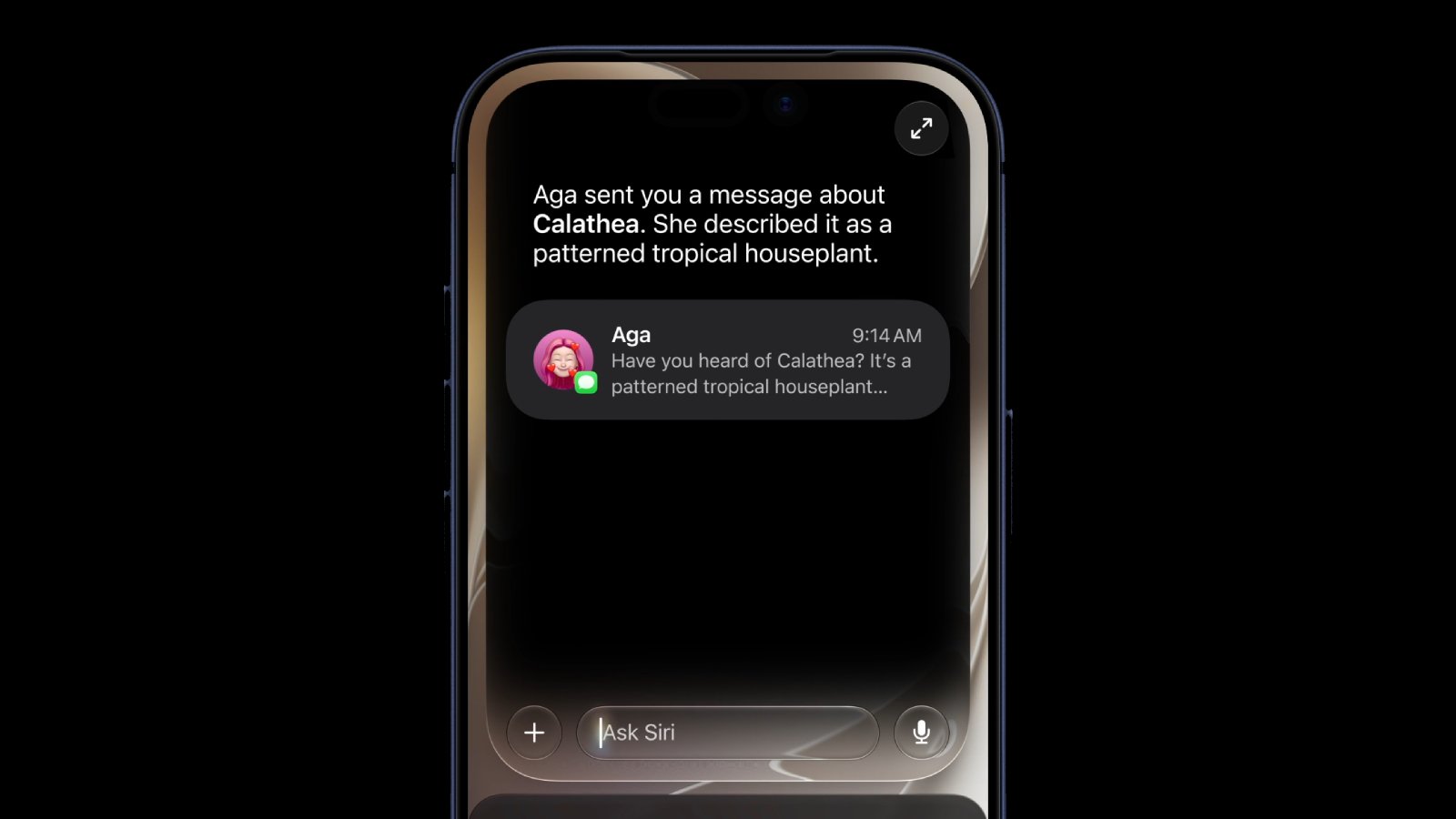
Apple Reverses Course: Craig Federighi Explains the New Siri App in iOS 27
Apple has long prided itself on thoughtful, deliberate design decisions — rarely making moves that seem reactive or contradictory to its stated philosophy. That's what made the announcement of a standalone Siri app at WWDC 2026 so surprising to longtime Apple watchers. Just a year earlier, Apple executives had publicly dismissed the idea of a dedicated chatbot interface, framing it as something fundamentally at odds with Apple's vision for artificial intelligence. Now, with iOS 27, Apple is doing exactly what it said it wouldn't. So what changed?
Craig Federighi, Apple's senior vice president of software engineering, addressed the apparent reversal head-on during a post-keynote media discussion held at Apple Park. His explanation sheds significant light not only on this specific decision, but on how Apple's broader approach to AI and Apple Intelligence continues to evolve in response to real-world user behavior.
What Apple Said Before: The "Bolt-On Chatbot" Criticism
To understand the significance of this shift, it helps to revisit what Apple said just twelve months ago. Following WWDC 2025, Federighi and senior vice president of worldwide marketing Greg Joswiak embarked on a media tour to explain Apple's AI strategy. A central theme of those conversations was that Apple's approach was fundamentally different from competitors like OpenAI and Google.
Rather than offering users a dedicated chat interface — a place to go and converse with an AI separate from their normal workflow — Apple wanted Siri to be woven seamlessly into the apps, tasks, and moments that already make up a user's day. Federighi and Joswiak specifically described a standalone chatbot experience as a "bolt-on chatbot on the side," language that implied such an approach was clunky, disjointed, and not the Apple way.
That framing positioned Apple as taking the high road: building something more sophisticated, more integrated, and ultimately more useful than a simple chat window. It was a clear differentiator from ChatGPT, Gemini, and the growing number of AI assistants asking users to visit a separate app or website to get things done.
What Changed: The Practical Case for a Siri App
At WWDC 2026, Apple announced the new Siri app — a centralized hub where users can manage and revisit their conversations with Siri AI. On the surface, this looks like a direct contradiction of everything Apple said a year prior. But Federighi's explanation reveals a more nuanced story about how Apple arrived at this decision.
According to Federighi, the pivot came down to a straightforward user need: the ability to return to and continue past Siri conversations. As Apple Intelligence features matured and users began engaging with Siri in more complex, multi-step ways, it became clear that conversations couldn't always be resolved in a single moment. Users needed a place to pick up where they left off — to reference something Siri had told them earlier, or to continue a task they'd started hours before.
Apple determined that a home screen app was the most natural and intuitive solution for this on its platform. Rather than inventing a new paradigm, Apple leaned into a convention that iPhone users already understand: if something is important enough to revisit, it belongs on the home screen with its own dedicated app.
Siri as an Integral Tool, Not an Isolated Chatbot
Critically, Federighi was careful to frame the new Siri app not as an admission that Apple was building a conventional chatbot, but as an extension of the system-wide Siri experience. In his words, Apple sees Siri "not as a separate chatbot, just an unintegrated place you go and chit-chat, but rather as an integral, conversational tool" embedded in the broader Apple ecosystem.
This distinction matters. The new app is designed to serve as a persistent record and continuation point for conversations that begin elsewhere — on the lock screen, within another app, or through a Siri suggestion. It is a companion to the integrated Siri experience, not a replacement for it. Apple is not abandoning its philosophy of contextual, in-the-moment AI assistance. It's adding a layer of continuity on top of it.
In that sense, Apple's position has evolved rather than reversed. The "bolt-on chatbot" critique was aimed at AI experiences that exist entirely in isolation, disconnected from the apps and data users actually work with. Apple's Siri app, as described, is tethered to the same system-level intelligence that powers Siri everywhere else on the device.
What This Means for Apple Intelligence Going Forward
The launch of the Siri app in iOS 27 signals something important about where Apple Intelligence is headed. Apple is learning from how people actually use its AI features — and it's willing to adapt, even when that adaptation requires walking back a public stance.
This kind of iterative thinking has always been part of Apple's DNA, even if the company rarely acknowledges it explicitly. Features that once seemed unnecessary often find their way into Apple products once the right use case or user behavior emerges. The Siri app appears to be exactly that: a feature born from observed user need rather than marketing strategy.
For users, this means a more capable and continuous Siri experience starting with iOS 27. The ability to scroll back through past conversations, resume complex requests, and manage AI interactions in a single place brings Apple's assistant closer to parity with competitors who have offered persistent chat histories for years.
A Smarter, More Honest Approach to AI Product Development
Perhaps the most interesting takeaway from Federighi's comments is what they reveal about how Apple thinks about being wrong — or at least incomplete. Rather than doubling down on a prior public position for the sake of consistency, Apple identified a gap in its AI experience and filled it, even at the cost of some short-term narrative awkwardness.
That kind of intellectual honesty, paired with a clear rationale rooted in user experience rather than competitive pressure, is ultimately what separates thoughtful product evolution from reactive trend-chasing. Whether the Siri app becomes a beloved staple of iOS or a footnote in Apple's AI journey remains to be seen. But the reasoning behind it, as explained by Federighi, is coherent, grounded, and very much in keeping with how Apple has always approached the gap between intention and execution.
iOS 27 is shaping up to be one of the most significant software releases in Apple's recent history, and the new Siri app may be one of its most telling features — not just for what it does, but for what it says about how Apple is maturing in the age of AI.