
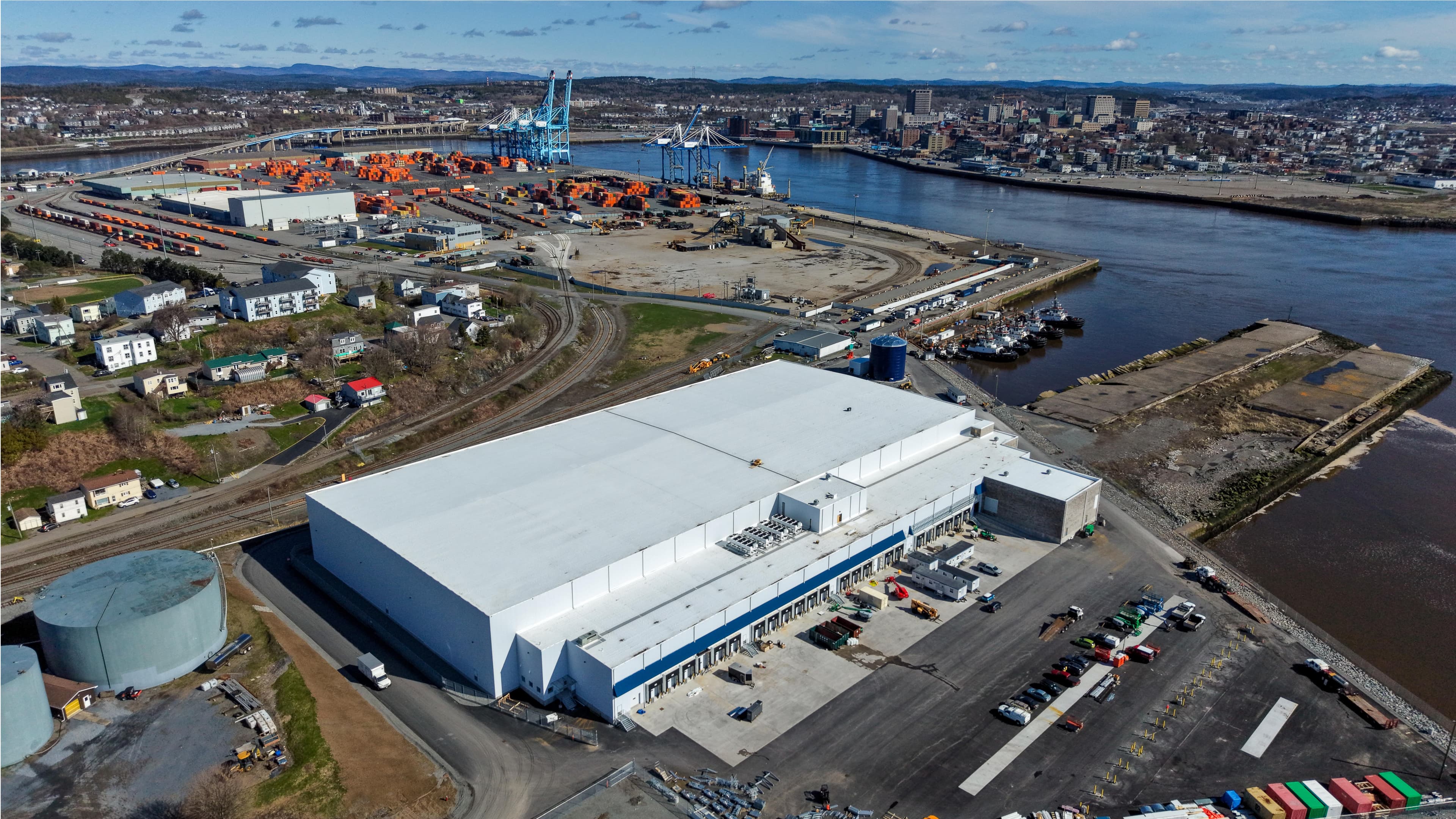
Americold, DP World, and CPKC Launch Landmark Cold Chain Facility at Port Saint John
In a move poised to reshape temperature-controlled logistics across North America and beyond, Americold Realty Trust has officially opened a new integrated cold chain hub at Port Saint John in New Brunswick, Canada. Developed in strategic partnership with global port terminal operator DP World and Canadian Pacific Kansas City (CPKC), the facility represents a first-of-its-kind convergence of cold storage, maritime logistics, and transcontinental rail access — all under one roof at one of eastern Canada's most strategically positioned ports.
For shippers moving perishable goods between inland production regions and international markets, this development signals a significant leap forward in efficiency, reliability, and cost reduction across the cold chain.
What Makes This Facility Unique?
The Port Saint John hub is not simply another cold storage warehouse. What sets it apart from any other temperature-controlled logistics facility in eastern Canada — or arguably in North America — is its seamless, drayage-free integration between cold storage and an active international seaport.
Americold has described the facility as the only temperature-controlled storage solution in eastern Canada that connects directly to a port without requiring drayage. In practice, this means perishable cargo can move between a vessel and the warehouse without the additional truck transport legs that typically add cost, transit time, and — critically — temperature risk to cold chain operations. For producers and distributors of frozen and refrigerated goods, eliminating that drayage step is not a minor operational footnote. It is a meaningful structural advantage that reduces spoilage risk, lowers logistics costs, and compresses delivery timelines.
Beyond the port connection, the facility benefits from direct access to CPKC's extensive North American rail network, enabling temperature-sensitive products to move efficiently from central and western Canadian production regions all the way to Port Saint John for international export — and vice versa for imports arriving from overseas markets.
A Three-Way Partnership Built for Global Trade
The collaboration driving this project brings together three industry leaders, each contributing a distinct and complementary capability to create what Americold calls a "uniquely integrated solution."
- Americold Realty Trust (NYSE: COLD), headquartered in Atlanta, Georgia, is one of the world's largest owners and operators of temperature-controlled warehousing and logistics infrastructure. The company's expertise in cold storage operations forms the operational backbone of the new facility.
- DP World, the Dubai-based global port terminal and supply chain operator with a presence across more than 70 countries, brings its deep maritime logistics capabilities and global trade network to the partnership. DP World's involvement ensures that the Port Saint John hub is plugged into established international shipping lanes connecting eastern Canada to major markets worldwide.
- Canadian Pacific Kansas City (CPKC) (NYSE: CP) contributes its transcontinental rail infrastructure, which spans Canada, the United States, and Mexico following the landmark merger that created North America's first truly transnational railroad. CPKC's rail network provides a direct inland artery for sourcing and distributing temperature-sensitive products across the continent.
Rob Chambers, chief executive at Americold, emphasized the significance of combining these capabilities in a single location. "This facility leverages our collaboration with leading global trade and transportation partners, creating a uniquely integrated solution to move temperature-sensitive products between inland production regions and international markets more efficiently and reliably," Chambers said. "It is another example of how we are evolving our network to better serve our customers through differentiated solutions that open new growth opportunities for the company."
Key Trade Lanes and Target Markets
The Port Saint John facility has been specifically designed to support temperature-controlled trade flows between central and eastern Canada and three major international regions: Europe, South America, and the Asia-Pacific. These corridors represent some of the most active routes for agricultural commodities, seafood, dairy, meat, and other perishable products traded between North America and the rest of the world.
Eastern Canada, and New Brunswick in particular, is already a significant origin and destination point for seafood exports, with the Bay of Fundy and surrounding Atlantic waters producing substantial volumes of lobster, salmon, scallops, and other high-value marine products. The ability to move these goods directly from a port-connected cold store to a waiting vessel — without intermediate trucking — positions Port Saint John as a compelling export gateway for Atlantic Canadian producers eyeing premium overseas markets.
At the same time, the facility's import capabilities allow perishable goods arriving from Europe, South America, or Asia-Pacific to be received, stored, and then efficiently distributed across Canada and the broader North American interior via CPKC's rail network.
Why Port Saint John?
Port Saint John is the largest port in Atlantic Canada by cargo volume and one of the most ice-free, deep-water harbors on the eastern seaboard. Its geographic position makes it a natural gateway for transatlantic and transoceanic trade, and its existing connections to rail and road infrastructure make it a logical anchor point for a next-generation cold chain hub.
The choice of this location reflects a broader industry recognition that cold chain infrastructure has historically lagged behind dry cargo logistics in terms of integration and efficiency. By situating a world-class temperature-controlled facility at Port Saint John and connecting it directly to global maritime and continental rail networks, the Americold-DP World-CPKC partnership is actively closing that gap.
Implications for the Broader Cold Chain Industry
The opening of this facility comes at a time when demand for reliable, integrated cold chain solutions is growing rapidly. Consumer expectations for high-quality perishable products, combined with the increasing complexity of global food supply chains, have placed enormous pressure on logistics operators to deliver faster, safer, and more cost-effective cold chain services.
Facilities that eliminate unnecessary handling steps, reduce drayage exposure, and offer multimodal connectivity are increasingly seen as competitive differentiators rather than incremental improvements. The Port Saint John hub, by combining port-direct access with rail connectivity and purpose-built cold storage operations, provides a model that other regions and operators may look to replicate.
For Canadian exporters of perishable goods — whether seafood from the Atlantic coast, grain and pulse crops from the Prairie provinces, or processed food products from Ontario and Quebec — the new Americold facility at Port Saint John offers a more direct route to global consumers while protecting product integrity throughout the journey.
Looking Ahead
As Americold continues to evolve its North American network, the Port Saint John facility illustrates the company's strategic direction: moving beyond standalone cold storage operations toward deeply integrated, multimodal logistics solutions that serve customers across the full supply chain. Combined with DP World's global reach and CPKC's continental rail backbone, this hub positions all three partners to capture growing demand for temperature-controlled trade flows across some of the world's most active perishable goods corridors.
For the eastern Canadian logistics market, the message is clear — the future of cold chain infrastructure is integrated, multimodal, and built for global trade.