
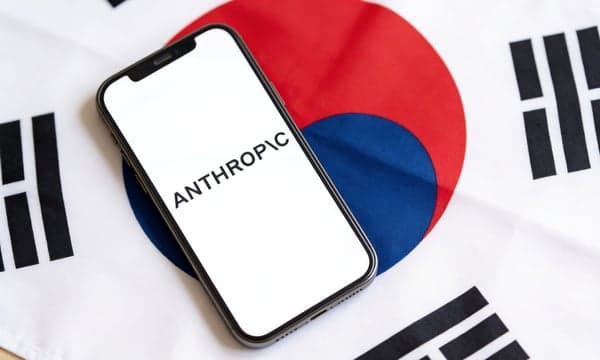
Anthropic's Export Control Crackdown: South Korea Caught in Washington's AI Crossfire
When Anthropic quietly suspended access to its most advanced AI model for users in South Korea, the move barely registered as a headline in the United States. But in Seoul, it landed like a geopolitical shockwave. The decision — driven by U.S. export control regulations and shaped in no small part by Silicon Valley lobbying — has thrust one of America's closest allies squarely into the crossfire of Washington's escalating technology war. And it raises urgent questions about who really pays the price when export policy is written to serve domestic industry interests.
What Happened: Anthropic Pulls Its Most Capable Model from South Korea
Anthropic, the San Francisco-based AI safety company behind the Claude family of AI models, restricted South Korean users from accessing its most powerful AI capabilities. The suspension was not framed as a punitive measure against Seoul, nor did it stem from any wrongdoing by South Korean businesses or citizens. Instead, it was the byproduct of tightening U.S. export control frameworks governing advanced AI systems — frameworks that are increasingly being shaped behind closed doors by the very companies they are meant to regulate.
For South Korean enterprises that had integrated Anthropic's tools into research pipelines, customer service operations, and software development workflows, the disruption was immediate and costly. Businesses were forced to scramble for alternatives, often at considerable expense and with significant workflow disruption. Startups that had built their product roadmaps around access to frontier AI capabilities suddenly found themselves stranded.
The Hidden Hand: Silicon Valley Lobbying and U.S. Export Policy
To understand why South Korea ended up in this position, it is essential to examine how U.S. AI export policy actually gets made. Over the past several years, a small cluster of dominant American AI companies has invested heavily in lobbying efforts designed to influence the shape of technology export controls. The ostensible goal is national security — preventing adversaries like China from accessing advanced AI systems that could be weaponized or used for mass surveillance. That goal is legitimate and widely shared.
But the mechanisms chosen to achieve it have had sweeping, largely unexamined consequences for allied economies. When export control rules are written broadly, without carve-outs or expedited licensing pathways for trusted partner nations, the collateral damage falls on countries like South Korea, Japan, Germany, and the United Kingdom — nations that are not adversaries but are instead critical nodes in the global technology supply chain.
Critics argue that this collateral damage is not entirely unintentional. By constraining allied access to advanced AI tools produced by American companies, U.S. export policy inadvertently — or perhaps deliberately — creates dependency and disadvantage. Allied nations cannot easily pivot to domestic alternatives when the frontier of AI development remains so concentrated in the United States. The lobbying that shapes these rules is conducted by the very companies that benefit from that concentration.
Why South Korea Is Especially Vulnerable
South Korea occupies a uniquely exposed position in this dynamic. It is among the most technologically advanced economies in the world, home to global giants in semiconductor manufacturing, consumer electronics, and telecommunications. Its businesses were among the earliest and most enthusiastic adopters of enterprise AI tools, and its government has made AI capability a cornerstone of its national economic strategy.
Yet South Korea also sits in a complex geopolitical neighborhood. Its proximity to China and North Korea makes it a sensitive theater for U.S. policymakers thinking about technology leakage and dual-use concerns. The result is that South Korea — despite its ironclad alliance with Washington and its deep integration into U.S.-led security frameworks — can find itself subjected to the same broad export restrictions that are nominally aimed at adversaries.
This is not merely a trade irritant. It represents a structural contradiction at the heart of U.S. alliance management in the Indo-Pacific. Washington asks its allies to take on the economic and security costs of decoupling from China while simultaneously imposing technology restrictions that handicap those same allies in the AI race.
The Broader Stakes: AI Access as a Geopolitical Issue
The Anthropic situation in South Korea should be understood as a preview of a much larger conflict to come. As AI systems become more central to economic productivity, scientific research, military capability, and national competitiveness, access to frontier AI will increasingly function as a geopolitical asset — one that governments will fight to secure and protect.
Export controls on advanced AI models are, in effect, a new form of technology diplomacy. The countries that have access to the best tools will compound their advantages over time. Those that are cut off — even temporarily, even inadvertently — will fall behind in ways that are difficult to reverse. For South Korea, which has staked its future prosperity on technological leadership, gaps in AI access are not a minor inconvenience. They are a strategic liability.
What Needs to Change
The episode points to several urgent policy reforms. First, the United States needs clearer, faster licensing pathways that allow trusted allied nations to access advanced AI capabilities without bureaucratic delay. Second, export control rulemaking processes need more transparency and more input from affected allied governments — not just from domestic industry lobbyists. Third, Anthropic and companies in similar positions need to engage proactively with allied governments rather than leaving them to absorb the consequences of decisions made in Washington and San Francisco.
South Korea is not asking for special treatment. It is asking to be treated as the close ally it has consistently proven itself to be. Until U.S. export policy catches up with that reality, Silicon Valley's AI crossfire will keep hitting the wrong targets.
- Anthropic suspended access to its most advanced AI model for South Korean users due to U.S. export control regulations.
- Silicon Valley lobbying plays a significant behind-the-scenes role in shaping which countries are affected by these restrictions.
- South Korea, despite being a key U.S. ally, faces structural disadvantages from broadly written AI export rules.
- The episode signals that AI access is becoming a central dimension of 21st-century technology geopolitics.
- Policy reform — including clearer allied licensing pathways and more transparent rulemaking — is urgently needed.