
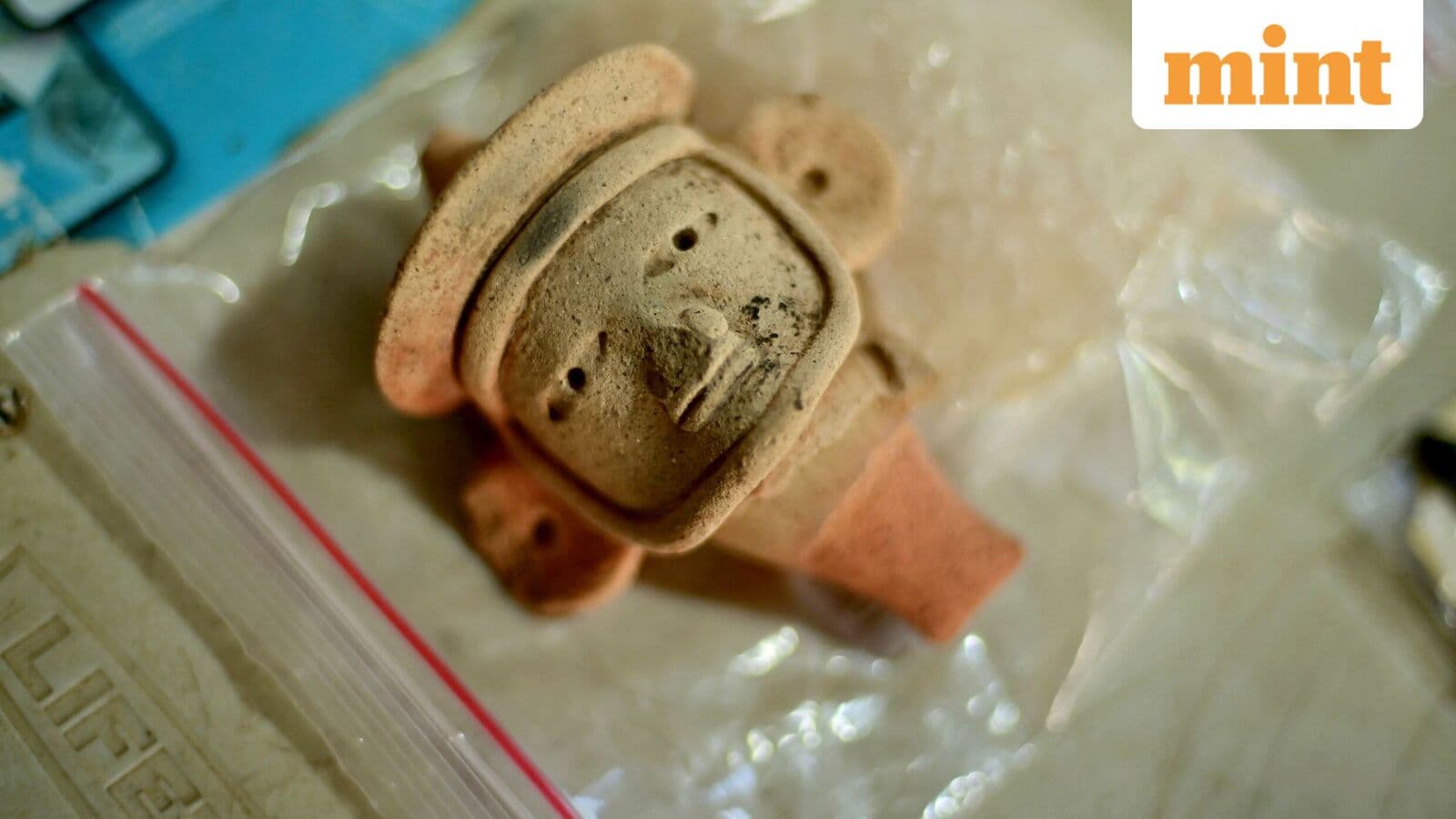
Archaeologists Discover 'Never-Before-Seen' Pre-Hispanic Ruins in Mexico
In a groundbreaking development that has sent ripples of excitement through the global archaeological community, researchers have uncovered a set of pre-Hispanic ruins in Mexico that have been described as "never-before-seen." The discovery, announced on June 20, 2026, is already being hailed as one of the most significant archaeological finds of the decade, offering an extraordinary window into the lives, culture, and architecture of ancient Mesoamerican civilizations that thrived long before European contact.
What Was Found? A Glimpse Into Mexico's Ancient Past
The newly discovered ruins feature architectural structures and artistic elements that do not match any previously catalogued pre-Hispanic site in Mexico. Researchers on the ground described the site as remarkably well-preserved, with stone carvings, ceremonial platforms, and spatial layouts that suggest a highly organized and culturally sophisticated society once flourished in the region.
Among the most striking features are intricate relief carvings that depict scenes believed to represent religious rituals, astronomical observations, and social hierarchies. Preliminary analysis suggests the site may date back over a thousand years, predating many of the more widely known Mesoamerican civilizations such as the Aztecs and later Maya urban centers. Archaeologists are now working meticulously to document, date, and interpret every aspect of the ruins before drawing definitive conclusions.
Why This Discovery Matters for World Archaeology
Pre-Hispanic Mexico is already recognized as one of the richest archaeological landscapes on the planet. Home to iconic sites like Teotihuacan, Chichen Itza, Monte Albán, and Palenque, Mexico has long been a focal point for scholars studying the origins and evolution of complex societies in the Americas. Yet despite centuries of exploration and modern scientific survey methods, the country continues to yield surprises — a testament to just how much of ancient human history remains hidden beneath its soil and jungle canopy.
This latest discovery is particularly significant because the ruins appear to exhibit characteristics that do not align neatly with any known regional culture. That means archaeologists may be looking at evidence of an entirely distinct cultural tradition — or at minimum, a previously undocumented phase of development within a known civilization. Either possibility carries enormous implications for how historians understand the diversity and complexity of pre-Hispanic Mesoamerica.
The Role of Modern Technology in Uncovering Ancient Sites
One of the key reasons discoveries like this are becoming more frequent is the widespread adoption of advanced archaeological survey technologies. LiDAR (Light Detection and Ranging), for instance, has transformed the field by allowing researchers to scan dense jungle terrain from the air and detect hidden structures beneath the vegetation. Satellite imaging, ground-penetrating radar, and drone surveys have similarly expanded archaeologists' ability to identify sites without extensive physical excavation.
It is likely that technologies such as these played a role in the initial identification of this newly announced site. Once a location of interest is flagged through remote sensing, field teams move in to conduct hands-on investigations, carefully excavating, recording, and preserving whatever they encounter. The combination of cutting-edge technology and traditional fieldwork is proving to be an extraordinarily powerful approach to uncovering the ancient world.
Mexico's Rich Archaeological Heritage Under the Spotlight
Mexico's federal archaeological authority, the Instituto Nacional de Antropología e Historia (INAH), oversees the protection and study of the country's vast archaeological resources. With thousands of registered sites across the country and an unknown number still waiting to be discovered, INAH plays a critical role in ensuring that new finds are properly managed and made accessible to both the scientific community and the public.
Discoveries of this magnitude also tend to generate significant cultural and economic interest. Archaeological tourism is a major industry in Mexico, with millions of visitors each year traveling to iconic sites. A newly discovered and genuinely unprecedented set of ruins has the potential to become a future destination of global significance, drawing researchers, students, tourists, and documentary filmmakers from around the world.
What Comes Next? The Road from Discovery to Understanding
The announcement of the discovery is really just the beginning of a long and painstaking process. Archaeologists will need to conduct detailed stratigraphic analysis, radiocarbon dating of organic materials, and thorough cataloguing of all artifacts recovered from the site. Epigraphers — specialists in ancient writing systems — will examine any inscriptions found, while physical anthropologists may study any human remains that are uncovered to learn more about the people who lived and died there.
International collaboration is also expected to play a role. Major discoveries in Mexico have historically attracted the involvement of universities, research institutions, and archaeological organizations from around the world, bringing diverse expertise to bear on complex interpretive questions.
Key Facts About the Discovery
- The ruins are described as unlike any previously documented pre-Hispanic site in Mexico.
- The site features ceremonial platforms, stone carvings, and complex spatial planning.
- Preliminary estimates suggest the ruins could be over a thousand years old.
- Modern survey technologies, including LiDAR and satellite imaging, are believed to have aided in its detection.
- Full excavation and analysis are expected to take several years to complete.
A Reminder of How Much History Remains to Be Written
Perhaps the most profound takeaway from this discovery is the humbling reminder that human history — particularly the history of the Americas — is far from fully understood. Every new site that emerges from the earth rewrites, refines, or deepens our collective knowledge of who we are and where we come from. The "never-before-seen" ruins now being studied in Mexico are not just stones and carvings. They are voices from a vanished world, and the work of bringing their stories back to life has only just begun.
As updates continue to emerge from the site throughout 2026, the global community will be watching closely — eager to learn what secrets this remarkable corner of Mexico still holds.