
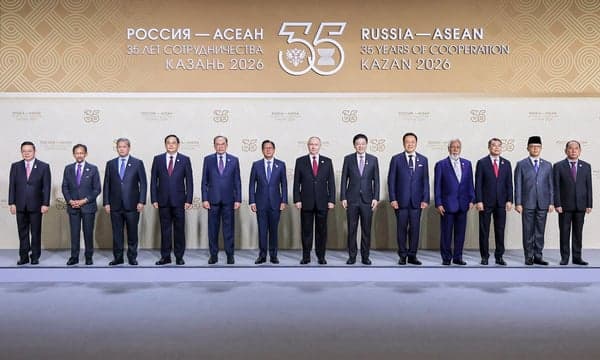
ASEAN and Russia Chart a New Course at the Kazan Special Summit
In a geopolitical landscape reshaped by energy insecurity, shifting trade alliances, and a realignment of global power, the Association of Southeast Asian Nations (ASEAN) and Russia have taken a significant step toward strengthening their bilateral relationship. At a landmark special summit held in the Russian city of Kazan, leaders from both sides agreed to deepen cooperation across a range of critical sectors, with the ongoing global energy crisis serving as one of the most powerful catalysts driving the two parties together.
The summit marked a turning point in what has historically been a cautious and transactional relationship. With Western sanctions continuing to isolate Moscow from traditional partners, and Southeast Asian nations navigating their own complex energy and economic challenges, the meeting in Kazan underscored how rapidly the geopolitical center of gravity is shifting toward a multipolar world order.
The Global Energy Crisis as a Catalyst for Closer Ties
Perhaps no single factor has done more to accelerate the deepening of ASEAN-Russia relations than the global energy crisis. Since the disruption of global energy markets in recent years — exacerbated by the conflict in Ukraine, production uncertainties, and extreme weather events — countries across Southeast Asia have been forced to diversify their energy sources and reduce their dependence on Western-dominated supply chains.
Russia, one of the world's largest exporters of oil, natural gas, and coal, presents an attractive option for energy-hungry ASEAN economies. Nations such as Vietnam, Indonesia, Thailand, and the Philippines have seen domestic energy demand rise sharply due to rapid industrialization and urbanization, making affordable and stable energy supplies a top national priority.
At the Kazan summit, energy cooperation was placed front and center on the agenda. Both sides discussed frameworks for long-term energy supply agreements, joint investment in liquefied natural gas (LNG) infrastructure, and collaborative research into nuclear energy — an area where Russia's state-owned Rosatom has been actively expanding its footprint across Asia and Africa.
What Was Agreed at the Kazan Summit?
The Kazan special summit produced a range of agreements and declarations that signal a more structured and ambitious relationship between ASEAN and Russia going forward. While full details of every accord require further diplomatic ratification, several key areas of agreement were highlighted during the proceedings.
- Energy Security Cooperation: Both parties agreed to explore long-term energy partnership mechanisms, including preferential pricing structures and co-investment in extraction and distribution infrastructure across the region.
- Trade and Economic Integration: ASEAN and Russia expressed mutual interest in increasing bilateral trade volumes, reducing barriers to commerce, and potentially working toward a free trade framework between Russia and select ASEAN member states.
- Food Security and Agriculture: Given Russia's role as a major global exporter of wheat and fertilizers, the two sides agreed to enhance cooperation in the agricultural sector — a particularly sensitive area for food-import-dependent ASEAN economies.
- Technology and Digital Infrastructure: The summit also opened dialogue on technology transfer, cybersecurity collaboration, and the development of digital payment systems that could reduce reliance on the US dollar in bilateral transactions.
- People-to-People Exchanges: Cultural diplomacy, educational exchanges, and tourism were also flagged as areas for expanded engagement, with both sides agreeing to ease visa restrictions and promote academic partnerships.
ASEAN's Strategic Balancing Act
It would be a mistake to interpret the Kazan agreements as a wholesale pivot by ASEAN toward Russia or away from the West. The 11-nation bloc — which includes Brunei, Cambodia, Indonesia, Laos, Malaysia, Myanmar, the Philippines, Singapore, Thailand, Timor-Leste, and Vietnam — has long prided itself on a policy of strategic autonomy and non-alignment.
ASEAN's engagement with Russia is best understood as a continuation of its longstanding tradition of hedging: maintaining productive relationships with all major powers without becoming a subordinate actor in any single geopolitical camp. The bloc continues to maintain strong economic ties with the United States, the European Union, China, Japan, and South Korea simultaneously.
Nevertheless, the Kazan summit signals that ASEAN is unwilling to let Western pressure dictate the full scope of its foreign policy choices. Several member states have publicly resisted calls to join Western-led sanctions against Russia, preferring instead to keep diplomatic and commercial channels open.
Russia's Strategic Pivot to the East
For Moscow, the Kazan summit represents a critical component of its broader "pivot to the East" strategy. Faced with unprecedented economic isolation from Western markets following the Ukraine conflict, Russia has aggressively sought to cultivate new partnerships across Asia, Africa, and Latin America. ASEAN, representing a combined GDP of over three trillion dollars and a population of more than 680 million people, is a high-value target for Russian diplomatic and commercial outreach.
The summit also provided Russia with an important symbolic victory: the image of a major multilateral gathering on Russian soil, attended by representatives of a globally significant regional bloc, helps counter the narrative of total diplomatic isolation that Western governments have sought to project.
Looking Ahead: Challenges and Opportunities
While the momentum from the Kazan summit is real, significant challenges remain. Logistical hurdles, sanctions compliance risks for ASEAN businesses operating internationally, and internal divisions within the bloc regarding the appropriate level of engagement with Russia all have the potential to limit the practical implementation of the agreements reached.
Moreover, the United States, European Union, and other Western partners are likely to monitor the evolving ASEAN-Russia relationship closely and may apply diplomatic pressure on individual member states to temper their engagement with Moscow.
Yet the structural drivers pushing ASEAN and Russia closer together — energy needs, economic diversification, and a shared preference for a multipolar global order — are not likely to disappear anytime soon. The Kazan summit may well be remembered as the moment when this relationship moved from the periphery to the center of both parties' foreign policy calculations, reshaping the strategic contours of the Indo-Pacific for years to come.