
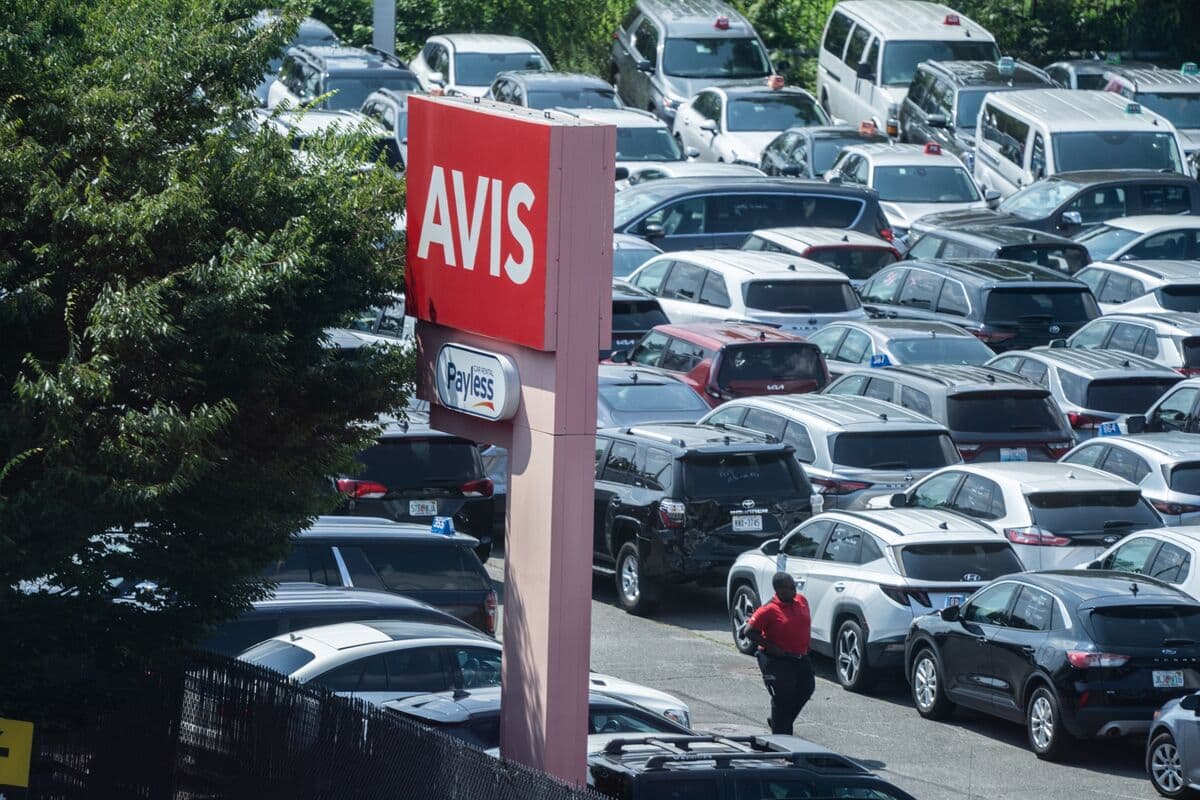
Avis Budget Group to Collect $650 Million from Pentwater Capital in Landmark Settlement
In a development that has sent ripples through Wall Street and the world of retail investing alike, Avis Budget Group Inc. is set to receive a staggering $650 million in cash from hedge fund Pentwater Capital Management. The payment comes as part of a settlement agreement designed to resolve a lawsuit centered on short-swing profits — a legal concept that is as consequential as it is misunderstood by most investors. The agreement, revealed through a regulatory filing, marks one of the most significant financial recoveries tied to the now-legendary short squeeze that sent Avis shares skyrocketing back in 2021.
To understand why this settlement matters, it helps to understand both the events that led to it and the legal framework that made such a large payout possible. This article breaks it all down.
What Is a Short Squeeze — and What Happened to Avis?
A short squeeze occurs when a heavily shorted stock experiences a rapid and dramatic rise in price, forcing traders who had bet against it — known as short sellers — to buy shares quickly in order to cover their positions. This buying pressure further drives up the price, creating a self-reinforcing cycle that can result in extraordinary gains for long investors and catastrophic losses for those on the short side.
Avis Budget Group became one of the most talked-about short squeeze stories of recent memory. In late October 2021, Avis shares surged by more than 100% in a single day following a bullish earnings report and comments from management suggesting the company intended to invest heavily in electric vehicles. The stock had also attracted significant attention from retail investors who were hunting for the next major short squeeze opportunity in the wake of the GameStop frenzy earlier that year.
The volatility was extreme. At one point, Avis shares climbed from roughly $100 to nearly $545 in a matter of days before pulling back sharply. For hedge funds and institutional investors holding large short positions, the squeeze was devastating. For those who managed to navigate the surge — buying low and selling high within a compressed window — the profits were enormous. It is precisely this type of rapid, high-profit trading activity that lies at the heart of the legal battle with Pentwater Capital Management.
Understanding Short-Swing Profit Rules Under Section 16(b)
The legal mechanism behind this settlement is Section 16(b) of the Securities Exchange Act of 1934, a federal law that is specifically designed to prevent corporate insiders and large shareholders from profiting unfairly from short-term trading in a company's securities.
Under Section 16(b), any profit made by a shareholder who owns more than 10% of a company's stock through the purchase and sale — or sale and purchase — of that company's equity within a six-month period can be reclaimed by the corporation. The rule exists to deter market manipulation and to ensure that those with access to potentially privileged information cannot engage in rapid trading to the detriment of ordinary shareholders.
Critically, Section 16(b) is a strict liability statute. This means that intent is irrelevant. A large shareholder does not need to have acted on insider information or engaged in any wrongdoing for the company to claw back profits. If the legal threshold is crossed — more than 10% ownership plus a purchase and sale within six months — the profits are recoverable, full stop.
Avis Budget Group alleged that Pentwater Capital Management crossed this threshold during the short squeeze period, generating significant short-swing profits that the company was legally entitled to recover under federal securities law. The $650 million settlement strongly suggests that Pentwater's trading activity during this volatile period was substantial.
The Scale of the Settlement and What It Means for Avis
A $650 million cash recovery is not a minor footnote in a quarterly earnings report. For a company like Avis Budget Group, which operates in the capital-intensive car rental industry and has been navigating the dual pressures of fleet management costs and shifting consumer travel patterns, an infusion of this size is highly material.
The funds could be deployed in several strategically significant ways, including debt reduction, fleet expansion, share buybacks, or reinvestment in technology and electric vehicle infrastructure — an area in which the company had already signaled ambitions before the short squeeze occurred. From an investor relations standpoint, a settlement of this magnitude also demonstrates that Avis management is actively monitoring its shareholder base and is willing to pursue legal remedies to protect company and shareholder value.
For the broader market, the settlement serves as a powerful reminder that short-swing profit laws have real teeth. Hedge funds and institutional investors that accumulate large positions in volatile, heavily shorted stocks need to be acutely aware of their ownership stakes relative to the 10% threshold and must carefully track the timing of their buy and sell transactions.
Implications for Hedge Funds and Institutional Investors
The Avis-Pentwater case is likely to serve as a cautionary tale for the hedge fund industry for years to come. Short squeezes, by their very nature, involve rapid, large-volume trading — precisely the conditions under which Section 16(b) liability can unexpectedly materialize for large players.
In the current environment, where meme stock culture has brought renewed attention to heavily shorted securities and where retail-driven squeezes can erupt with little warning, institutional investors face a complex compliance challenge. A fund that crosses the 10% ownership threshold — even briefly, even unintentionally during a period of extreme volatility — may find itself legally exposed to profit disgorgement claims long after the dust has settled.
- Compliance teams at hedge funds should implement real-time monitoring of ownership percentages in any heavily shorted position, particularly during periods of unusual price activity.
- Trading desks must maintain clear documentation of the timing and size of every transaction in securities where the fund's ownership could approach or exceed the 10% threshold.
- Legal counsel should routinely audit short-squeeze-related trading activity to identify any potential Section 16(b) exposure before it becomes the subject of litigation.
- Risk management frameworks should explicitly account for short-swing profit liability as a category of legal and regulatory risk, particularly for event-driven and long-short equity strategies.
What This Means for Avis Budget Group's Future Outlook
Beyond the immediate financial windfall, the settlement reinforces the narrative that Avis Budget Group is a company taking an aggressive stance in defense of its shareholders' interests. The car rental industry has undergone seismic changes since the pandemic, with companies having to rapidly adapt to fluctuating travel demand, the shift toward ridesharing, and the increasing expectation of electrified vehicle fleets.
Avis has previously discussed its ambitions to incorporate electric vehicles into its rental lineup, and the additional liquidity from the Pentwater settlement could meaningfully accelerate those plans. The $650 million payment represents a one-time cash event rather than recurring operational revenue, but its scale is large enough to shift the company's financial position in a measurable way.
Investors watching Avis Budget Group should monitor how management elects to deploy these funds, as the decision will likely serve as a signal of the company's broader strategic priorities heading into the next phase of its growth story.
Conclusion: A Landmark Case in Short-Squeeze Litigation
The Avis Budget Group and Pentwater Capital Management settlement stands as a landmark moment in the evolving legal landscape surrounding short squeezes and securities law. The $650 million payout underscores that the legal framework governing large shareholder trading activity — specifically Section 16(b) of the Securities Exchange Act — remains a potent enforcement tool even in the context of modern market dynamics driven by social media, retail investing, and algorithmic trading.
For Avis, the settlement is a significant financial event with the potential to reshape its near-term capital allocation strategy. For Wall Street more broadly, it is a stark reminder that dramatic short squeezes carry legal consequences that can linger long after the price chart has returned to earth. Investors, traders, and compliance professionals across the industry would do well to take note.