
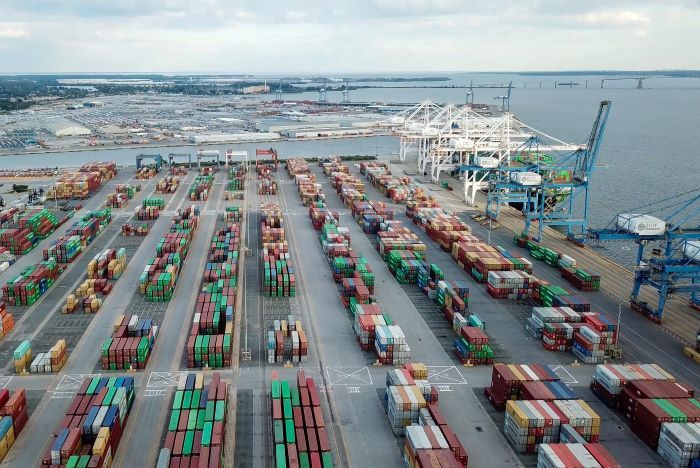
Baltimore Port Chief Jonathan Daniels Steps Down After Landmark Recovery Effort
Jonathan Daniels, the executive director of the Maryland Port Administration, is leaving his post in Baltimore to take on a new leadership role in Miami. His departure comes after a tenure of just over two years — a short run by most measures, but one that was defined by an extraordinary challenge that few port administrators anywhere in the world have ever faced. Daniels is widely credited with helping coordinate the massive state and federal response required to reopen the Port of Baltimore following the catastrophic collapse of the Francis Scott Key Bridge, one of the most dramatic infrastructure disasters in recent American history.
Who Is Jonathan Daniels?
Jonathan Daniels came to Baltimore with a background in maritime trade and port management, bringing professional experience that would prove essential in the months following the Key Bridge disaster. As the head of the Maryland Port Administration, he served as the primary civilian steward of one of the East Coast's most economically significant cargo hubs. The Port of Baltimore handles millions of tons of goods every year, playing an outsized role in Maryland's economy and in the regional supply chain that stretches across the mid-Atlantic states.
During his relatively brief time in the role, Daniels built relationships with federal maritime agencies, the U.S. Army Corps of Engineers, the U.S. Coast Guard, and a wide range of private shipping and logistics partners. Those relationships would become absolutely critical when the Key Bridge fell.
The Key Bridge Collapse: A Crisis That Defined His Tenure
In the early hours of March 26, 2024, the container ship Dali lost power and struck one of the support columns of the Francis Scott Key Bridge, causing the entire span to collapse into the Patapsco River. The disaster killed six construction workers and sent shockwaves through the maritime industry. Almost immediately, the main shipping channel into and out of the Port of Baltimore was blocked by a massive tangle of steel and concrete wreckage, effectively shutting down one of the busiest vehicle-import ports in the United States.
The economic consequences were severe and immediate. Shipping lines began rerouting cargo. Trucking companies scrambled to find alternatives. Workers at the port faced uncertainty about their livelihoods. The ripple effects extended far beyond Maryland, touching automakers, farmers, and importers who relied on Baltimore's unique logistical capabilities.
Daniels stepped into this crisis alongside state and federal officials, helping to organize a recovery effort that many observers described as remarkably swift given the scale of the destruction. Working in tandem with Governor Wes Moore's administration, the U.S. Army Corps of Engineers, and salvage crews from around the world, authorities managed to clear the main shipping channel and reopen the port to commercial traffic within weeks — a timeline that surprised many industry experts who had braced for a much longer disruption.
A Collaborative Recovery Built on Coordination
What set the Baltimore recovery effort apart, according to those who participated in it, was the level of interagency coordination that Daniels and his colleagues were able to sustain under intense pressure. Reopening a major international shipping channel is not simply a matter of removing debris. It requires:
- Continuous communication between state transportation authorities and federal agencies including the Coast Guard and Army Corps of Engineers
- Careful management of salvage operations to ensure the safety of divers and heavy equipment operators working in difficult underwater conditions
- Coordination with international shipping companies to manage vessel traffic once partial channels were reopened
- Engagement with insurers, legal teams, and the shipping company responsible for the Dali to address liability and cost-sharing questions
- Public communication to keep workers, businesses, and the broader community informed about the timeline for recovery
Daniels was a central figure in navigating all of these moving parts, and his performance during the crisis earned him broad recognition from both state officials and industry partners.
What's Next: A New Chapter in Miami
Details about Daniels' new role in Miami have not been fully disclosed, but his move to South Florida places him in another one of the nation's most strategically important port markets. The Port of Miami, also known as PortMiami, is a major hub for cruise ship traffic and cargo operations, serving as a gateway between the United States, Latin America, and the Caribbean. A leader with Daniels' experience in crisis management and intergovernmental coordination would bring significant value to any major port authority.
His departure will leave the Maryland Port Administration with a significant vacancy at a moment when Baltimore is still rebuilding confidence in its long-term infrastructure and attracting shipping lines back to full operational capacity. State officials will face the challenge of finding a successor who can both continue the recovery work and position the port for growth in the years ahead.
Baltimore's Port Looks Ahead
The Port of Baltimore's story in the wake of the Key Bridge collapse is ultimately one of resilience. The disaster tested the city, the state, and the port's workforce in profound ways. That the port returned to operation as quickly as it did speaks to the efforts of thousands of workers, officials, and coordinators — with Jonathan Daniels among the most visible leaders of that effort.
As Daniels moves on to his next challenge in Miami, Baltimore will be watching to see how the port authority manages this transition. The work of rebuilding — not just the physical infrastructure, but the commercial relationships and shipping volume that sustained the port before the collapse — is ongoing. Whoever steps into the executive director role next will inherit both a significant challenge and a port community that has already demonstrated it knows how to meet one.
Jonathan Daniels leaves Baltimore with a record shaped by one of the most difficult circumstances any port administrator could face. By most accounts, he rose to meet it.