
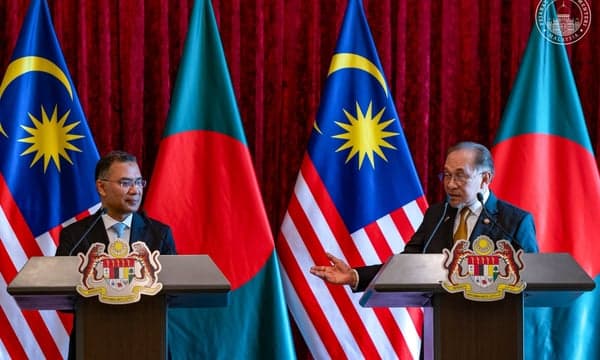
A Viral Moment That Sparked a Bigger Conversation
When a video from Malaysia began circulating widely on social media, it drew global attention to a diplomatic visit that might otherwise have remained largely under the radar. Bangladesh's Chief Adviser Muhammad Yunus traveled to Malaysia for what was described as a working visit, but the footage — capturing public enthusiasm, warm reception, and a kind of celebrity-like welcome — raised an inevitable question: beyond the optics and the viral clip, what did the trip actually deliver for Bangladesh?
The answer, it turns out, is more substantive than a single video could ever convey. The visit touched on labor migration, trade, investment, regional diplomacy, and the evolving identity of post-uprising Bangladesh on the world stage. To understand what was truly accomplished, it helps to look past the headlines and examine the diplomatic architecture being quietly assembled beneath the surface.
The Context: Why Malaysia Matters to Bangladesh
Malaysia is not a peripheral partner for Bangladesh — it is one of the most significant destinations for Bangladeshi migrant workers and one of the country's important trading partners in Southeast Asia. Hundreds of thousands of Bangladeshi nationals currently live and work in Malaysia, sending remittances home that form a critical pillar of Bangladesh's foreign exchange reserves.
The bilateral relationship has, however, been fraught with complications. Issues around irregular migration, worker exploitation, recruitment fraud, and the legal status of undocumented Bangladeshi workers have created persistent tension between the two countries. For Bangladesh's interim government, which came to power following the mass uprising of 2024 and is now navigating complex domestic and foreign policy pressures, the Malaysia visit represented an opportunity to reset and reframe that relationship.
Beyond labor concerns, Malaysia occupies a strategically important position within ASEAN. As Bangladesh looks to deepen its integration with Southeast Asian economies — both through bilateral channels and through its broader engagement with ASEAN as a dialogue partner — strengthening ties with Kuala Lumpur carries outsized significance.
What Was Actually on the Table?
Labor Migration and Worker Protections
One of the most pressing agenda items during the visit was the condition of Bangladeshi workers in Malaysia. Chief Adviser Yunus raised concerns about migrant worker welfare directly with Malaysian leadership, pushing for clearer frameworks around legal employment pathways, protections against exploitation, and a more organized system for labor recruitment that minimizes the role of predatory middlemen.
Both governments signaled interest in establishing more structured bilateral labor agreements — arrangements that would not only regulate the flow of workers but also provide them with enforceable legal protections once in Malaysia. For the millions of Bangladeshi families dependent on remittances from abroad, this is not an abstract diplomatic talking point; it is a matter of economic survival.
Trade and Investment Discussions
The visit also served as a platform for trade and investment dialogue. Bangladesh is currently navigating the impending graduation from Least Developed Country (LDC) status, which will eventually erode the preferential trade terms it currently enjoys in several major markets. Diversifying trade relationships and attracting foreign direct investment are therefore national priorities.
Malaysia, with its developed manufacturing base and capital markets, presents genuine opportunities for Bangladesh. Discussions reportedly covered areas including halal industry cooperation, digital economy partnerships, and potential Malaysian investment in Bangladesh's expanding industrial zones. Whether these conversations will translate into concrete agreements remains to be seen, but the groundwork laid during a face-to-face visit of this kind tends to move negotiations forward in ways that virtual diplomacy simply cannot replicate.
Regional Diplomacy and ASEAN Engagement
Perhaps the most geopolitically significant dimension of the visit was its role in signaling Bangladesh's broader regional ambitions. Under the interim government, Dhaka has been actively recalibrating its foreign policy posture — seeking to reduce overdependence on any single bilateral relationship and to position Bangladesh as a more autonomous, multi-aligned actor in South and Southeast Asia.
Engaging Malaysia at the leadership level reinforces Bangladesh's credentials as a serious regional player. It also keeps open important channels of communication within the ASEAN ecosystem at a time when Bangladesh is watching closely how regional trade architecture — including potential Free Trade Agreement negotiations — might benefit or bypass its interests.
The Viral Video as a Diplomatic Signal
It would be a mistake to dismiss the viral video entirely as mere spectacle. In contemporary diplomacy, public enthusiasm and soft power visibility matter. The warm reception that Yunus received in Malaysia — captured and amplified by social media — communicated something to multiple audiences simultaneously: to Bangladeshis at home, it projected an image of a leader welcomed on the world stage; to international observers, it suggested that Bangladesh's interim government is capable of generating goodwill abroad even while managing a turbulent domestic transition.
Soft power, in this sense, is not separate from hard diplomacy — it enables it. A leader who arrives with public credibility and visible goodwill has a stronger negotiating hand than one who arrives in obscurity.
Challenges That Remain
Despite the positive tone of the visit, significant challenges remain unresolved. The problem of undocumented Bangladeshi workers in Malaysia is deeply entrenched and will not be solved by a single diplomatic encounter. Recruitment corruption, both in Bangladesh and within the broader labor migration ecosystem, requires institutional reform that takes years to implement. And translating investment conversations into actual capital flows demands sustained follow-through, clear regulatory environments, and investor confidence — none of which can be conjured by a state visit alone.
The Yunus government, still consolidating authority domestically, will need to demonstrate that the diplomatic momentum generated in Kuala Lumpur translates into measurable outcomes for ordinary Bangladeshis — particularly the workers whose welfare formed such a central part of the visit's stated agenda.
Conclusion: Substance Behind the Spectacle
The viral video was, in many ways, the least important part of Bangladesh's Prime Minister's trip to Malaysia. What mattered far more were the labor negotiations, the trade dialogues, the investment signals, and the quiet work of repositioning Bangladesh within a shifting regional order. These are the unglamorous gears of modern diplomacy — slow-turning, rarely trending, but ultimately consequential. The camera caught a moment; the real story is still being written in meeting rooms, policy documents, and the lived experiences of Bangladeshi workers thousands of miles from home.