
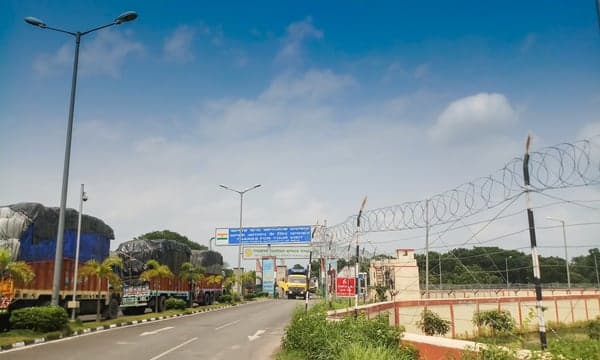
A Quiet Fear Along the Bangladesh-India Border
In the villages and towns that straddle the long, porous border between Bangladesh and the Indian state of West Bengal, a particular kind of silence has taken hold. Muslim residents and Rohingya refugees in the region have begun to lower their voices, watch their movements, and think carefully before speaking openly about their lives. Since the Bharatiya Janata Party (BJP) made significant electoral inroads into West Bengal — a state long governed by secular and left-leaning political forces — the atmosphere for religious minorities and stateless communities in the border areas has grown noticeably tense.
This is not the silence of peace. It is the silence of anxiety, of communities that feel newly exposed and uncertain about what political change means for their day-to-day safety, legal status, and long-term futures.
BJP's Rise in West Bengal: A Political Earthquake
For decades, West Bengal was considered a stronghold of left-wing and centrist politics. The Communist Party of India (Marxist) ruled the state for more than three decades, followed by Mamata Banerjee's Trinamool Congress (TMC). Throughout these eras, West Bengal's Muslim population — which accounts for roughly 27 percent of the state's total, one of the highest proportions in India — broadly found political representation and a degree of cultural security.
The BJP's aggressive push into West Bengal, backed by Prime Minister Narendra Modi's Hindu nationalist platform and the organizational muscle of the Rashtriya Swayamsevak Sangh (RSS), has fundamentally shifted the political terrain. While the TMC retained power in the 2021 state assembly elections, the BJP's dramatic surge in vote share and seat count signaled that the party's brand of politics had taken root in a state that once seemed immune to it. For Muslims and other minorities watching this transformation, the message was unsettling.
Who Is Most Vulnerable: Muslims and Rohingyas at the Border
The border districts of West Bengal — areas like North 24 Parganas, Murshidabad, Malda, and Cooch Behar — are home to dense Muslim populations with deep historical and cultural ties to Bangladesh. Many families on either side of the border share ancestry, language, and customs. The line between the two nations, drawn hastily during the 1947 Partition, has never fully severed those human connections.
Within this already complex demographic landscape, a separate and even more precarious population exists: Rohingya refugees who fled genocidal violence in Myanmar and made their way through Bangladesh into India, settling in informal communities in and around West Bengal's border zones. Stateless, undocumented, and already stigmatized, the Rohingya have no legal protections under Indian law. India is not a signatory to the 1951 UN Refugee Convention, meaning Rohingya individuals can be — and have been — detained and deported.
For both groups, the BJP's political ascent carries a specific kind of threat. The party has historically characterized undocumented migrants from Bangladesh as "infiltrators" and has used the language of demographic invasion to mobilize Hindu nationalist sentiment. The Citizenship Amendment Act (CAA) of 2019, which fast-tracks citizenship for non-Muslim migrants from neighboring countries while explicitly excluding Muslims, made clear how the BJP government views religious identity in the context of migration and belonging.
Living in Hushed Tones: The Everyday Reality of Fear
Reports from the region describe a community that has turned inward. People who once moved freely through markets, mosques, and community gatherings now describe a heightened self-consciousness. They are careful about what they say in public, cautious about whom they associate with, and acutely aware of how they might appear to authorities or to newly emboldened nationalist groups in their neighborhoods.
For Rohingya communities in particular, this vigilance is existential. Without documentation, any increased enforcement activity — whether driven by national policy or local political pressure — could mean arrest, detention, or forced return to conditions from which they originally fled. Several Rohingya individuals have already been deported from India back to Myanmar in recent years, in moves criticized by human rights organizations as violations of the principle of non-refoulement.
The Role of Nationalist Rhetoric in Shaping Local Dynamics
Political rhetoric does not stay confined to election rallies. When senior BJP leaders describe Rohingya as a "national security threat" or frame Muslim migrants from Bangladesh as illegal settlers undermining Indian culture, those words ripple outward into local communities. They shape how neighbors look at one another, how police engage with minority communities, and how local officials prioritize — or deprioritize — the protection of vulnerable groups.
In West Bengal's border districts, this dynamic plays out in granular, daily ways. Community leaders describe an erosion of trust, a reluctance to file complaints with police, and a general withdrawal from civic life among Muslims who once participated actively in local governance and commerce.
Regional Implications: Bangladesh Watches Closely
The situation is not lost on Bangladesh. Dhaka has watched the BJP's rise in West Bengal with concern, particularly given the two countries' shared border of nearly 4,157 kilometers and the complex history of migration, partition, and religious identity that defines the relationship. Any large-scale persecution or deportation of Bengali-speaking Muslims from West Bengal would have immediate humanitarian and political consequences for Bangladesh, a country already managing its own Rohingya refugee crisis involving more than a million people sheltering in Cox's Bazar.
Analysts warn that political instability and minority persecution in Indian border states can generate cross-border tensions, fuel misinformation, and deepen communal fault lines on both sides of the frontier.
Human Rights Concerns and the International Dimension
International human rights organizations have consistently flagged India's treatment of Rohingya refugees as a serious concern. Human Rights Watch, Amnesty International, and the UN High Commissioner for Refugees have all documented cases of arbitrary detention and deportation. The BJP government has pushed back against these characterizations, framing its migration enforcement policies as matters of national sovereignty and security.
Meanwhile, the people most affected — families huddled in border settlements, individuals without papers who cannot safely access healthcare or education — live with consequences that no policy debate fully captures.
Conclusion: The Human Cost of Political Transformation
Electoral politics has consequences that extend far beyond vote counts and party seat tallies. Along the Bangladesh-India border, the BJP's growing influence in West Bengal has translated into something visceral and immediate for Muslim communities and Rohingya refugees: a daily recalibration of risk, a tightening of community bonds for self-protection, and a deepening uncertainty about the future.
These communities are not abstractions in a geopolitical story. They are people — teachers, farmers, parents, children — navigating a political environment that has grown less hospitable to their presence. Their anxieties deserve to be heard, examined, and taken seriously, not only as a human rights matter but as a measure of what political change actually costs when its weight falls on those least able to bear it.