
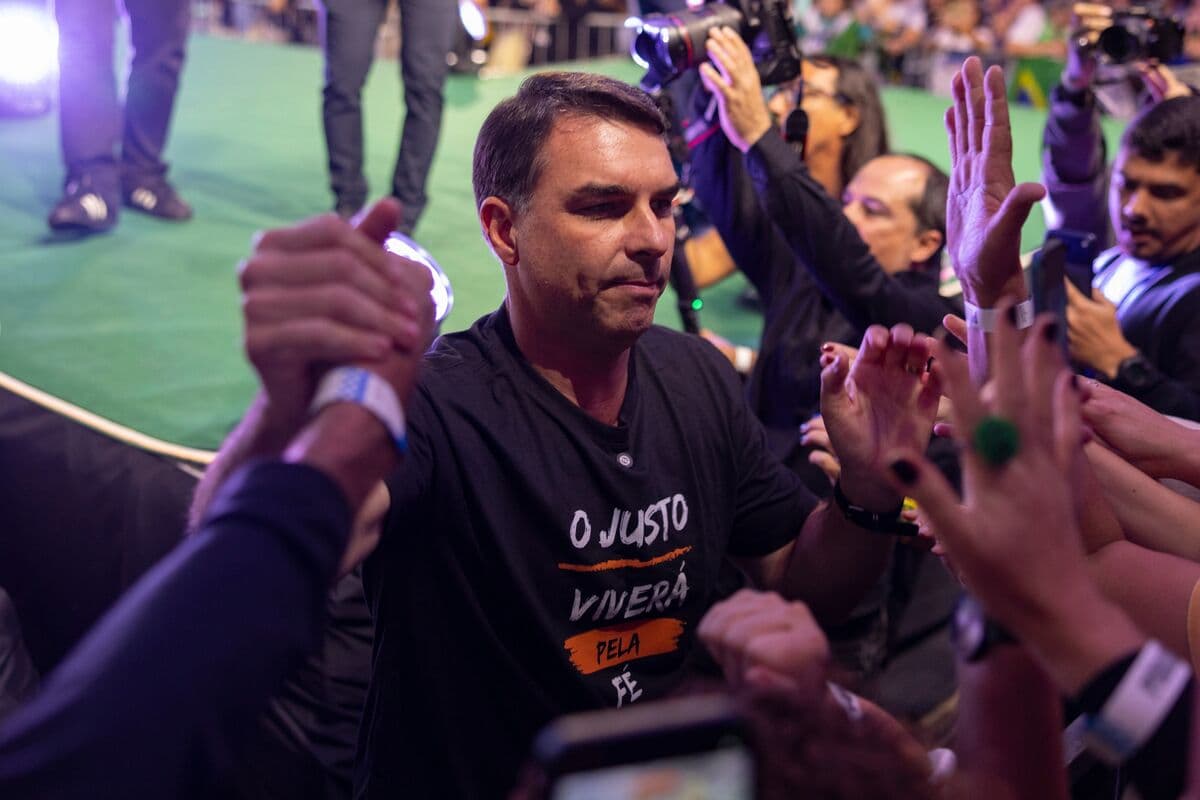
Bolsonaro Family Feud: Michelle Steps Back as Tensions With Flávio Spill Into the Open
The Bolsonaro family, long regarded as the beating heart of Brazil's right-wing opposition movement, is showing signs of serious internal strain. Former First Lady Michelle Bolsonaro has publicly signaled that she intends to remain on the sidelines of Flávio Bolsonaro's presidential campaign — a decision sparked, by her own account, by what she described as a disrespectful phone call with her stepson. The rift, however small it may appear on the surface, carries enormous implications for a political bloc that depends heavily on family unity to mobilize its base against President Luiz Inácio Lula da Silva's administration.
What Happened Between Michelle and Flávio Bolsonaro?
According to reports, the falling-out between Michelle Bolsonaro and Flávio Bolsonaro was triggered by a phone call that Michelle described as disrespectful in tone. While the specific details of the conversation have not been fully disclosed publicly, the fallout was significant enough for Michelle to make clear she would not be lending her political weight to Flávio's presidential ambitions — at least not in any active capacity.
Michelle Bolsonaro is not merely a peripheral figure in Brazilian politics. During her husband Jair Bolsonaro's presidency, she cultivated a substantial following of her own, particularly among evangelical Christian communities, which represent one of the most powerful and reliable voting blocs on the Brazilian right. Her ability to connect with that demographic made her one of the most strategically valuable assets the Bolsonaro political brand possessed. For Flávio to launch a credible presidential run without her active support represents a meaningful setback.
Who Is Flávio Bolsonaro and Why Is His Campaign Significant?
Flávio Bolsonaro is the eldest son of former President Jair Bolsonaro and currently serves as a federal senator. He has long been considered a natural heir to the Bolsonaro political dynasty, working to expand the family's influence across Brazil's legislative and executive landscape. His decision to pursue the presidency signals an attempt to keep the Bolsonaro name at the forefront of right-wing opposition politics even as his father continues to face legal and electoral challenges.
Flávio's campaign is built on the same ideological foundations that propelled Jair Bolsonaro to power in 2018 — a combination of social conservatism, opposition to the left, and a populist anti-establishment message. However, replicating that formula in 2026 will require more than a familiar surname. It will require coalition building, broad family solidarity, and the kind of grassroots evangelical energy that Michelle uniquely commands.
The Political Stakes of a Divided Bolsonaro Family
In Brazilian politics, perception often matters as much as policy. The Bolsonaro brand has always drawn strength from an image of family cohesion and ideological unity. Any visible fracture in that image — particularly one played out in the press — can be exploited by political opponents and used to cast doubt on the viability of the right-wing project as a whole.
President Lula's supporters and allies within the Workers' Party have been watching developments within the Bolsonaro family closely. A divided opposition is, in many respects, an opportunity for the incumbent government to consolidate its own base and present itself as a stable alternative to the infighting on the right.
Beyond the electoral math, there is also the question of what this tension reveals about the internal dynamics of Brazil's conservative movement more broadly. If key figures within the Bolsonaro orbit are unwilling to fall in line behind Flávio's candidacy, it may open the door for other right-wing politicians to position themselves as more unifying alternatives ahead of the 2026 general elections.
Michelle Bolsonaro's Growing Political Identity
One of the more underappreciated dimensions of this story is what it suggests about Michelle Bolsonaro's own political evolution. There has been ongoing speculation in Brazilian political circles about whether Michelle herself might pursue higher office. Her popularity among evangelical voters, her polished public image, and her ability to command media attention have all contributed to a growing sense that she is a political force in her own right — not simply an extension of her husband's legacy.
By choosing not to subordinate herself to Flávio's campaign after what she perceived as a slight, Michelle is sending a message about her own sense of political independence. Whether that independence ultimately translates into a candidacy of her own or simply a more selective approach to political alliances remains to be seen. But the signal is clear: Michelle Bolsonaro will not be taken for granted.
What This Means for Brazil's Right-Wing Opposition
The tension between Michelle and Flávio Bolsonaro is more than a family squabble. It is a window into the broader challenges facing Brazil's right-wing opposition as it attempts to regroup, reorganize, and present a credible challenge to Lula's government. Without a unified front, the right risks fragmenting at precisely the moment when cohesion matters most.
- Michelle's evangelical base may be less enthusiastic about Flávio's campaign without her visible endorsement and active participation.
- Other right-wing politicians could seize on the family division to position themselves as more reliable unifiers of the conservative electorate.
- The Bolsonaro brand, while still powerful, may face increasing pressure to prove it can operate as a political movement rather than purely a family dynasty.
- Flávio will need to find alternative paths to mobilize the grassroots networks that Michelle helped build during Jair Bolsonaro's presidency.
Looking Ahead to 2026
Brazil's 2026 general elections are still on the horizon, but the groundwork being laid now will determine which candidates are positioned to compete and which political families retain their influence. The Bolsonaro name remains one of the most recognizable in Brazilian politics, and that carries real electoral value. But a name alone is not enough. It must be backed by resources, alliances, and above all, internal solidarity.
The phone call between Michelle Bolsonaro and Flávio Bolsonaro may seem like a private matter, but in the intensely personal world of Brazilian political dynasties, private matters rarely stay private for long. As the 2026 campaign season gradually takes shape, all eyes will remain on how — or whether — the Bolsonaro family manages to close this very public wound before it costs them something they cannot afford to lose: the trust and enthusiasm of their own base.