
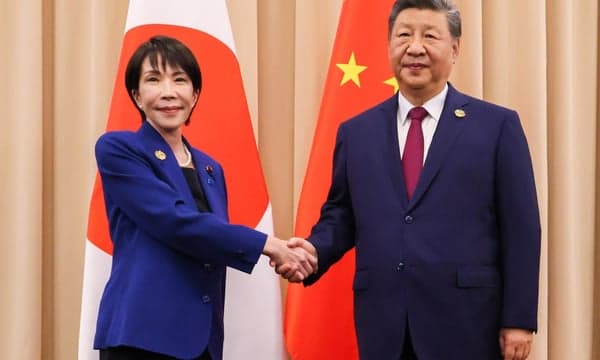
Japan-China Relations: Stuck in a Tense New Normal
For two of Asia's most powerful nations, separated by just a narrow stretch of ocean, Japan and China have never felt further apart. Trade figures remain enormous, cultural ties run deep, and yet the diplomatic relationship between Tokyo and Beijing has settled into something deeply uncomfortable — a state of managed tension that neither side seems willing, or able, to fully resolve. Is this the new normal? And if so, is there any realistic path out of the deadlock?
Understanding the Roots of the Deadlock
The friction between Japan and China is not a recent development. Its roots stretch back decades, shaped by unresolved historical grievances, competing territorial claims, and increasingly divergent strategic visions for the region. What has changed in recent years is the degree to which these fault lines have hardened into something resembling a permanent structural reality rather than a temporary diplomatic rough patch.
At the heart of the tension lies the dispute over the Senkaku Islands — known in China as the Diaoyu Islands — a cluster of uninhabited rocks in the East China Sea that both nations claim as sovereign territory. Japan administers the islands, but China has been increasingly assertive in challenging that administration, regularly sending coast guard vessels into waters Japan considers its own. Each incursion raises the temperature between the two governments, making substantive dialogue more difficult and feeding nationalist sentiment on both sides.
History compounds the problem. Japan's actions during World War II, and the question of whether Tokyo has ever adequately acknowledged and atoned for them, remain deeply sensitive in China. Visits by Japanese politicians to Yasukuni Shrine — which honors Japan's war dead, including convicted war criminals — reliably trigger furious responses from Beijing and set back whatever incremental diplomatic progress had been made. The historical wound, for China, has never fully healed, and it serves as a ready political tool for Chinese leadership whenever relations need to be recalibrated.
The Strategic Dimension: Where the US Fits In
Any honest assessment of the Japan-China deadlock must account for the United States. Japan is a cornerstone ally of Washington, hosting tens of thousands of American troops and anchoring the US security architecture in the Indo-Pacific. As US-China relations have deteriorated sharply over the past decade — driven by trade disputes, technology competition, tensions over Taiwan, and broader strategic rivalry — Japan has found itself drawn more tightly into Washington's orbit.
This is not simply a passive drift. Tokyo has made deliberate choices. Japan significantly increased its defense budget in 2022, committing to reach two percent of GDP in military spending — a historic shift that drew direct criticism from Beijing. Japan has also deepened security cooperation with South Korea, Australia, and NATO members, moves that China interprets as part of a broader containment strategy. From Beijing's perspective, Japan is no longer simply a neighboring country with which it has bilateral disputes; it is an active participant in what China views as an American-led effort to constrain its rise.
This framing makes compromise harder. Concessions to Japan feel, in Chinese domestic politics, like concessions to Washington. That is a very difficult thing for Beijing to sell to its own population.
Is Economic Interdependence a Path to Stability?
One of the persistent hopes for Japan-China relations has been that economic interdependence would act as a moderating force — that the sheer scale of bilateral trade would give both sides a powerful incentive to avoid letting political tensions spiral into something worse. China remains Japan's largest trading partner. Japanese companies have deep investments across Chinese manufacturing and consumer markets. The business ties are real, significant, and not easily unwound.
Yet the evidence from recent years suggests that economic interdependence is a weaker stabilizer than theorists once hoped. Both governments have moved to reduce supply chain vulnerabilities and decrease strategic dependencies on the other. Japan has joined international efforts to diversify semiconductor supply chains away from China. China has used trade as a coercive tool against other nations, a pattern that has not gone unnoticed in Tokyo. The economic relationship endures, but it no longer generates the goodwill it once did, and both sides are quietly hedging against the day when it might deteriorate further.
Points of Potential Engagement
Despite the bleak landscape, there remain areas where Japanese and Chinese interests genuinely overlap, and where engagement is not only possible but arguably necessary.
- Climate and environmental cooperation: Both nations have ambitious decarbonization goals and share an interest in the stability of global energy markets. Climate diplomacy has historically served as a relatively low-stakes arena for engagement even during periods of broader diplomatic friction.
- People-to-people exchange: Tourism, academic partnerships, and cultural exchange programs have long served as ballast in the relationship. Rebuilding these ties after pandemic-era disruptions could help soften public attitudes on both sides.
- Regional economic frameworks: Both Japan and China are members of RCEP, the Regional Comprehensive Economic Partnership, which provides at least one institutional forum for engagement on trade and economic rules.
- Disaster response and humanitarian coordination: Practical cooperation in response to natural disasters or public health emergencies offers opportunities to build trust at working levels without requiring high-profile political gestures from leadership.
The Leadership Variable
Diplomatic deadlocks are rarely broken by structural forces alone. Leadership matters. The history of Japan-China relations includes periods of genuine engagement and even warmth, often driven by individual leaders who chose to prioritize the relationship despite domestic political pressure to do otherwise. Whether the current generation of leadership in both countries has the political will and the political space to make similar choices remains an open question.
What seems clear is that neither side currently views a breakthrough as a domestic political asset. In Japan, being seen as soft on China carries electoral risk. In China, making visible concessions to a US ally is ideologically awkward at best. Until those political calculations shift — whether because of a change in leadership, a change in the broader regional environment, or a crisis that forces both sides to find common ground — the deadlock is likely to persist.
Is the New Normal Here to Stay?
Japan-China relations are not heading toward open conflict, at least not in the near term. Both governments understand the catastrophic consequences that would follow from any serious military confrontation. But neither are they heading toward genuine reconciliation. What they appear to be settling into is something in between: a relationship defined by economic coexistence, strategic competition, periodic flare-ups, and carefully managed communication channels designed to prevent accidents from becoming crises.
Whether that is sustainable over the long run, or whether it will eventually give way to either a genuine thaw or a more serious deterioration, is one of the defining geopolitical questions of our era. For the rest of the world, which has an enormous stake in stability between Asia's two great powers, the answer matters enormously. The deadlock may feel like a new normal — but hoping it holds indefinitely is not a strategy.