
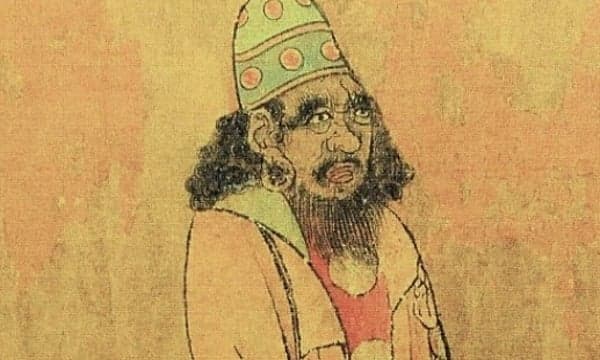
A Partnership Built on Utility, Not Intimacy
Few bilateral relationships in world history are as quietly fascinating as the one between China and Iran. These are two of the oldest continuous civilizations on earth, separated by thousands of miles of mountain, desert, and steppe, yet connected by millennia of trade, diplomacy, and cautious mutual respect. And yet, despite all of that history, the defining characteristic of China-Iran relations has never been warmth or deep alliance — it has been something far more pragmatic: usefulness.
From the camel caravans of the ancient Silk Road to the oil tankers and infrastructure deals of the 21st century, China and Iran have consistently found each other valuable. But they have rarely, if ever, invested emotionally or strategically in their partnership beyond what immediate interests demanded. Understanding why requires a journey through history, geography, and the enduring logic of realpolitik.
The Silk Road Connection: Commerce Without Closeness
The story of China-Iran relations begins on the Silk Road, the legendary network of trade routes that stretched from the Chinese imperial capitals of Chang'an and Luoyang all the way to the Mediterranean world. Iran — or Persia, as it was known for much of its history — sat at the geographic heart of this network. The Parthian Empire, which ruled Persia from around 247 BCE to 224 CE, was among the first Iranian states to establish formal contact with Han Dynasty China.
The Parthians served as crucial middlemen, controlling the flow of silk, spices, glassware, and other luxury goods between East and West. Chinese emperors valued Persian merchants and diplomats, and Iranian rulers understood that their position along the trade routes gave them considerable leverage. Yet this relationship was transactional at its core. There was no military alliance, no deep cultural assimilation, and no sustained effort to forge a unified strategic front. When goods stopped flowing — due to war, plague, or political upheaval — the connection between the two civilizations would quietly diminish until trade resumed.
This pattern established an early template: China and Iran would engage warmly when it served their interests and retreat to comfortable distance when it did not.
The Mongol Interlude and Shared Subjugation
The 13th century brought a dramatic, if brutal, reshuffling of Eurasian politics when the Mongol Empire conquered both China and Persia. Under the Pax Mongolica — the relative stability enforced by Mongol rule across vast stretches of Asia — Chinese and Iranian scholars, artists, and merchants mingled more freely than at almost any other point in history. Persian administrators served in the Yuan Dynasty court in Beijing. Chinese artisans influenced Iranian ceramic traditions. Ideas flowed in both directions.
But even this period of unusually close contact did not produce lasting strategic alignment. Once the Mongol Empire fragmented, China and Iran retreated into their respective regional orbits. The intimacy of the Mongol period left cultural fingerprints — visible even today in Chinese blue-and-white porcelain, which bears the unmistakable influence of Persian artistic aesthetics — but it did not produce lasting political bonds.
Modern Geopolitics: The Logic Remains the Same
Fast-forward to the modern era, and the essential dynamic has changed remarkably little. After the 1979 Islamic Revolution brought Ayatollah Khomeini to power in Tehran, Iran found itself increasingly isolated from the Western-dominated international order. China, meanwhile, was navigating its own complex relationship with the United States and the global economic system.
The two countries found each other useful once again. Iran needed buyers for its oil, especially as Western sanctions tightened. China needed energy to fuel its extraordinary economic growth. The arrangement was mutually beneficial and, crucially, conducted at arm's length. Beijing was careful never to antagonize Washington so severely that the China-Iran relationship became a liability, and Tehran was careful not to become so dependent on China that it surrendered its strategic autonomy.
This caution was on full display in 2021, when China and Iran signed a sweeping 25-year cooperation agreement covering trade, infrastructure, and security. Western analysts initially described it as a game-changing alliance. In practice, Chinese investment materialized slowly and selectively. China continued to abstain from, rather than veto, certain UN Security Council discussions on Iran. The partnership expanded, but it did not deepen into a full strategic embrace.
Why Deep Alliance Has Never Materialized
Several structural factors explain why China and Iran have never converted their long relationship into genuine closeness. First, geography matters. The two countries do not share a border and have no overlapping territorial disputes that would force them into close coordination. Second, China's global economic interests require it to maintain workable relationships with Iran's rivals, including Saudi Arabia, Israel, and the United States. A genuine alliance with Tehran would jeopardize all of those relationships simultaneously.
Third, and perhaps most importantly, both China and Iran are ancient civilizations with strong senses of their own uniqueness and historical grandeur. Neither country has historically been eager to subordinate itself to any external power, including a friendly one. The idea of genuine strategic fusion runs against the grain of both nations' self-conception.
What History Teaches Us About Today
For policymakers and analysts watching China-Iran relations today, the historical record offers an important corrective to both alarmism and complacency. The relationship is real, consequential, and growing — but it is unlikely to become the tight anti-Western axis that some fear. The same logic that kept China and Iran at a useful but comfortable distance for two thousand years continues to operate.
Both civilizations have learned, through long experience, that the partnership works best when it remains flexible, transactional, and free of the burdens that come with deep entanglement. In a world of shifting alliances and unpredictable great-power competition, that ancient instinct for strategic restraint may prove to be one of the most durable features of one of history's longest-running bilateral relationships.
Understanding China-Iran relations through this historical lens is not just an academic exercise. It is essential context for anyone seeking to make sense of the evolving balance of power across Asia, the Middle East, and the broader global order in the decades ahead.