
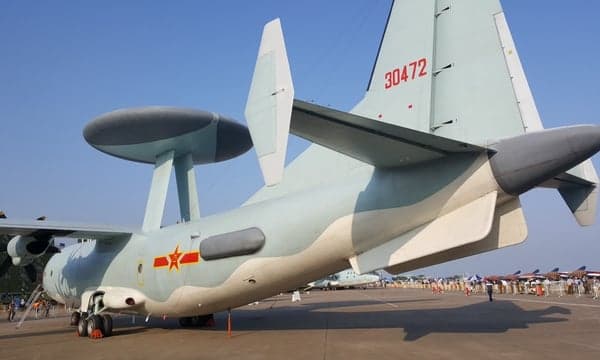
China's 'Special Mission' Aircraft Boom: How the PLA Is Reshaping Airpower
Over the past decade, the People's Liberation Army (PLA) has embarked on one of the most ambitious military modernization programs in modern history. Among the most telling indicators of this transformation is the rapid expansion of China's so-called "special mission" aircraft fleet. These are not frontline fighters or strategic bombers — they are the often-overlooked workhorses of modern warfare: intelligence gatherers, electronic warfare platforms, airborne early warning systems, and specialized support aircraft that multiply the effectiveness of every other asset in the inventory. Understanding this boom offers a window into how China envisions fighting — and winning — future conflicts.
What Are Special Mission Aircraft?
The term "special mission aircraft" covers a wide range of platforms designed to perform roles beyond traditional air combat or transport. This category broadly includes intelligence, surveillance, and reconnaissance (ISR) aircraft, airborne early warning and control (AEW&C) platforms, electronic warfare (EW) aircraft, maritime patrol aircraft, and signals intelligence (SIGINT) collectors. While these platforms rarely dominate headlines the way stealth fighters do, military strategists widely regard them as force multipliers — systems that dramatically enhance the combat effectiveness of conventional assets by providing commanders with battlefield awareness, communications dominance, and the ability to blind or deceive adversaries.
For decades, China's special mission aircraft inventory lagged significantly behind that of the United States and even some of its regional rivals. That gap has been closing rapidly, and in some categories, it has effectively disappeared.
A Decade of Rapid Expansion
The acceleration in China's special mission aircraft capabilities can be traced to a broader PLA modernization drive that intensified around 2012–2015. During this period, defense spending climbed steadily, domestic aerospace manufacturing matured, and the PLA shifted its doctrinal focus toward what Chinese military literature calls "informatized warfare" — a concept that places data, communications, and electronic dominance at the heart of military operations.
The results have been tangible. China has developed and fielded a growing number of indigenous airborne early warning and control aircraft, most notably variants of the KJ-500 and KJ-2000 series. These platforms are now regularly observed conducting operations over the South China Sea, the Taiwan Strait, and the East China Sea, providing the PLA Air Force and Navy with persistent wide-area surveillance coverage that would have been impossible to achieve just ten years ago.
In the electronic warfare domain, China has developed dedicated jamming and signals intelligence aircraft derived from both military and commercial airframes. These platforms allow the PLA to map adversary radar networks, disrupt communications, and support offensive cyber and electronic operations — capabilities that are essential in any high-end conflict scenario.
Quality Improvements Alongside Quantity
What makes China's special mission aircraft boom particularly significant is that it is not merely a numbers game. The quality of these platforms has improved substantially alongside their quantity. Earlier generations of Chinese AEW&C aircraft were often criticized for their limited sensor integration, restricted data links, and dependence on foreign components. Today's platforms reflect the maturation of China's domestic aerospace and electronics industries.
Modern Chinese special mission aircraft increasingly feature domestically produced phased array radars, advanced mission management systems, and secure data links compatible with the PLA's evolving command-and-control architecture. This means that a KJ-500 operating over the South China Sea can now share targeting data in near-real time with surface warships, submarines, and fighter aircraft — creating a networked, integrated picture of the battlespace that was previously beyond China's reach.
Maritime Patrol and Anti-Submarine Warfare
One of the most strategically significant areas of growth involves maritime patrol and anti-submarine warfare (ASW) aircraft. China has invested heavily in platforms such as the Y-8 and Y-9 variants configured for maritime patrol, as well as newer purpose-built ASW aircraft. As China's blue-water naval ambitions grow — reflected in the rapid expansion of the PLAN's submarine and surface fleet — the need for effective ASW capabilities has become urgent. These aircraft are now a regular presence in contested waters, tracking submarine activity and asserting China's presence across its claimed maritime territories.
Strategic Implications for the Indo-Pacific
The expansion of China's special mission aircraft fleet carries significant strategic implications for the broader Indo-Pacific region. For neighbors like Japan, South Korea, Taiwan, and Australia — as well as for U.S. forces stationed throughout the region — China's growing ISR and electronic warfare capabilities mean that the era of operating with relative freedom from Chinese surveillance is over. Chinese AEW&C aircraft can now extend radar coverage deep into contested airspace, complicating the operational planning of any potential adversary.
For Taiwan in particular, the implications are acute. A well-coordinated Chinese military operation would likely be preceded by intensive electronic intelligence collection and jamming operations aimed at disrupting Taiwan's air defense network. China's expanding special mission fleet gives the PLA a credible capacity to conduct precisely such operations at scale.
Looking Ahead
There is little indication that China's investment in special mission aircraft will slow. With domestic aerospace manufacturers now capable of producing competitive platforms, and with PLA doctrine explicitly prioritizing information dominance, this segment of the Chinese military aviation inventory is likely to continue its upward trajectory in both breadth and sophistication.
For analysts, policymakers, and military planners watching the balance of power in the Indo-Pacific, China's special mission aircraft boom deserves far more attention than it typically receives. These are not the weapons that make for dramatic news stories — but they may well be the ones that matter most when it counts.