
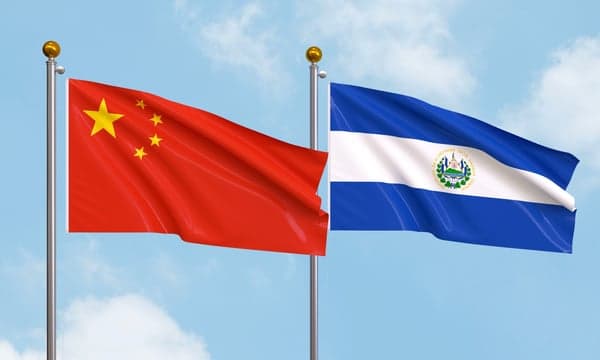
China's Limited Advance in El Salvador: A Contradictory Relationship Under Bukele
When President Nayib Bukele swept into power in El Salvador, the world braced for dramatic shifts across virtually every dimension of Salvadoran society — and it has largely delivered on that expectation. From Bitcoin adoption to sweeping security crackdowns, Bukele has repositioned his small Central American nation on the global stage in ways that few analysts anticipated. Yet one relationship has remained conspicuously underdeveloped amid this whirlwind of change: El Salvador's ties with China. Despite the significant diplomatic groundwork laid in 2018, when El Salvador severed relations with Taiwan and formally recognized the People's Republic of China, Beijing's actual footprint in the country remains surprisingly modest, contradictory, and far from the transformative partnership many initially predicted.
The 2018 Diplomatic Switch: High Hopes, Modest Results
El Salvador's decision in 2018 to abandon its decades-long recognition of Taiwan and align with Beijing was seen at the time as a major geopolitical victory for China. It was part of a broader regional trend, with Panama in 2017 and the Dominican Republic earlier that same year also making the switch. Observers expected a flood of Chinese investment, infrastructure projects, and economic partnerships to follow — a pattern consistent with China's behavior elsewhere in Latin America and across the developing world through its Belt and Road Initiative.
Yet the anticipated wave of Chinese economic engagement never fully materialized. While some agreements were signed and preliminary projects discussed, the volume and depth of Chinese investment in El Salvador remained well below what comparable diplomatic realignments had produced in other countries. This tepid outcome raised important questions about the limits of transactional diplomacy and the conditions under which China chooses to deploy its economic resources.
Bukele's Priorities and the China Question
Understanding why the China-El Salvador relationship has stalled requires looking closely at Bukele's own governing priorities. His administration has been primarily focused on security, consolidating political power, and cultivating a carefully managed international image — particularly toward the United States, which remains El Salvador's most important economic partner through remittances, trade, and historical ties.
Bukele has navigated a delicate balancing act. On one hand, maintaining nominal diplomatic relations with China keeps a strategic door open. On the other hand, pushing too aggressively into Beijing's orbit risks alarming Washington at a time when Bukele still needs American goodwill — or at minimum, American tolerance — for his unconventional governance model to sustain itself economically and politically.
This calculation has effectively placed the China relationship in a kind of holding pattern, acknowledged formally but not actively developed. El Salvador keeps its seat at the Beijing table without sitting down to a full meal.
The Contradictions at the Heart of the Relationship
What makes the China-El Salvador dynamic particularly interesting is its internal contradictions. Consider the following tensions that define the bilateral relationship today:
- Diplomatic recognition without deep economic integration: El Salvador recognized China but has not become a major destination for Chinese foreign direct investment, infrastructure financing, or state-enterprise activity in the way that Ecuador, Venezuela, or even smaller Caribbean nations have experienced.
- Bitcoin versus the Yuan: Bukele's landmark decision to adopt Bitcoin as legal tender runs philosophically counter to China's domestic crackdown on cryptocurrency and its push to internationalize the digital yuan. These divergent monetary visions create an ideological friction that limits natural alignment on economic policy.
- Security model divergence: While Bukele has drawn unflattering comparisons to authoritarian governance styles that China might theoretically embrace, his mass incarceration strategy and militarized security state were built largely without Chinese security assistance or technology exports, which have proven important tools in China's engagement with other developing nations.
- US shadow: El Salvador's economy is deeply tethered to the United States through its dollarized monetary system and the critical importance of remittances from the Salvadoran diaspora in America. This structural dependency sets a ceiling on how far Bukele can lean toward Beijing without triggering serious economic consequences.
China's Calculus in Central America
From Beijing's perspective, Central America represents a secondary theater compared to South America, Africa, or Southeast Asia. China's engagement in the region has been partly motivated by the Taiwan recognition competition — chipping away at Taipei's remaining diplomatic allies — but the economic rewards in small, heavily US-influenced economies like El Salvador are limited. Central American countries offer relatively small markets, complex security environments, and strong American institutional presence, all of which reduce the return on China's diplomatic and economic investment.
This does not mean China has abandoned the region. It continues to invest in neighboring countries and maintains active diplomatic missions. But the strategic calculus suggests that El Salvador, under Bukele's particular brand of governance, is not a priority destination for the kind of transformative Chinese engagement seen elsewhere.
What the Future Holds for China-El Salvador Ties
Looking ahead, the China-El Salvador relationship is likely to remain in its current state of productive ambiguity for the foreseeable future. Neither side has strong incentives to dramatically escalate the relationship, and both benefit from keeping formal ties intact without pushing them toward confrontation or deep integration.
For El Salvador, maintaining the China option provides diplomatic flexibility and a counterweight — however symbolic — to total dependence on Washington. For China, a cooperative if shallow relationship with El Salvador costs little and preserves influence in a region where any foothold has symbolic value in the ongoing competition with Taiwan and the United States.
Conclusion: A Relationship Defined by Its Limits
The story of China's limited advance in El Salvador is ultimately a story about the constraints that shape international relations in the modern era. Geopolitical proximity to the United States, domestic economic realities, leadership priorities, and structural incompatibilities have all conspired to keep one of Central America's most watched diplomatic realignments from delivering on its original promise. As Bukele continues to reshape El Salvador in his own image, his relationship with Beijing will likely remain exactly what it has been so far — present, acknowledged, and carefully contained.