
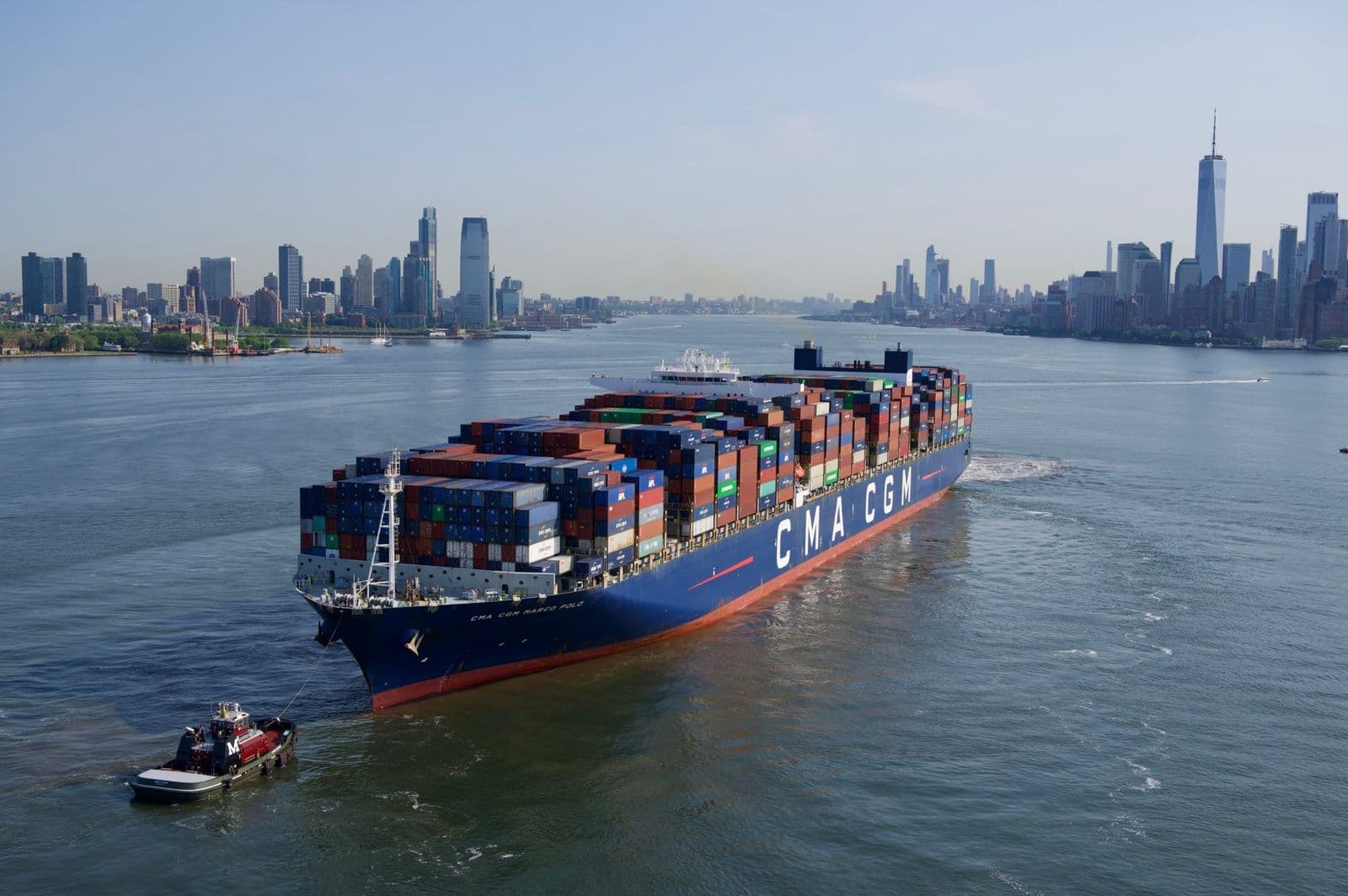
CMA CGM Suspends Asia-US Pendulum Service: A Major Shift in Trans-Pacific Shipping
French shipping giant CMA CGM has officially suspended its Asia-to-United States pendulum service, marking one of the most significant route restructurings the Marseille-based carrier has announced in recent years. The service, which handled an estimated 14,000 TEUs (twenty-foot equivalent units) per week and connected major ports across Asia with both the US East Coast and the US West Coast, has now been retired. In its place, CMA CGM is deploying larger vessels on an existing East Coast service while simultaneously launching a new West Coast express service. This strategic pivot reflects the carrier's broader ambition to optimize capacity, improve transit times, and respond to shifting demand patterns in the trans-Pacific trade lane.
What Was the Asia-US Pendulum Service?
A pendulum service in container shipping refers to a single vessel string that swings between two distinct geographic regions — in this case, Asia and both coasts of the United States — much like the arc of a pendulum. These services are designed to maximize vessel utilization by allowing a single rotation to serve multiple markets without requiring cargo to be transshipped at an intermediate hub.
CMA CGM's now-suspended pendulum route offered shippers the convenience of a single-carrier connection between Asian export hubs and US import gateways on both coasts. At 14,000 TEUs of weekly capacity, it was a meaningful artery in the global supply chain, handling everything from electronics and machinery to consumer goods and raw materials. Its discontinuation is therefore not a trivial event — it signals a deliberate strategic recalibration by one of the world's largest container shipping companies.
Why Did CMA CGM Suspend the Service?
While CMA CGM has not publicly issued an exhaustive rationale, the decision aligns with several macro trends reshaping the container shipping industry in 2025. Pendulum services, despite their operational elegance, can suffer from schedule reliability issues due to their sheer length and complexity. A single delay at one port can cascade across the entire rotation, frustrating shippers who depend on predictable arrival windows.
By contrast, dedicated point-to-point or shorter-loop services offer tighter schedule integrity and faster port-to-port transit times. As e-commerce growth continues to demand faster delivery cycles, and as beneficial cargo owners (BCOs) increasingly prioritize reliability over pure cost savings, carriers like CMA CGM are under pressure to restructure their networks accordingly.
Additionally, the deployment of larger vessels on focused routes allows carriers to benefit from economies of scale. Bigger ships spread fixed costs — fuel, port fees, crew — across more containers, lowering the per-unit cost and improving margin profiles, particularly on high-volume corridors like the trans-Pacific.
The New Network Configuration: East Coast and West Coast Changes
Enhanced East Coast Service
On the US East Coast side, CMA CGM is channeling the capacity previously absorbed by the pendulum service into an existing East Coast route, now operated by larger vessels. This upgrade is likely to benefit importers and exporters in major East Coast markets such as New York, Savannah, Charleston, and Houston. Larger vessels on this corridor mean more cargo space per sailing, potentially easing capacity constraints that have periodically driven up spot freight rates on the Asia–East Coast trade lane.
For shippers, this could translate to more competitive contract rates and greater booking availability, provided that port infrastructure on the receiving end can accommodate the larger vessel sizes. The ongoing investments in East Coast port deepening and crane upgrades in cities like Savannah and Baltimore should support this transition over time.
New West Coast Express Service
On the West Coast, CMA CGM is launching an entirely new express service, a move that signals renewed confidence in gateways like Los Angeles, Long Beach, and Seattle-Tacoma. After years of congestion-driven disruptions that pushed some shippers to reroute cargo via the Panama Canal to East Coast ports, the West Coast is staging a competitive comeback, and carriers are responding by investing in premium, faster service options.
An express service typically means fewer port calls and tighter transit times, making it particularly attractive for time-sensitive cargo categories. Technology products, fast-fashion goods, and perishable commodities could all benefit from a streamlined West Coast express option. For importers located in the US Midwest and Mountain West, where the West Coast remains the most geographically logical gateway, this new service could offer a compelling upgrade over slower, multi-stop alternatives.
Broader Implications for the Trans-Pacific Trade Lane
CMA CGM's restructuring is part of a wider industry trend toward network simplification and capacity rationalization. Several major carriers — including Maersk, MSC, and Hapag-Lloyd — have been reconfiguring their alliance and independent service offerings as the industry adjusts to post-pandemic demand normalization and ongoing geopolitical uncertainties affecting global trade flows.
The suspension of the pendulum service also reflects the evolving economics of the trans-Pacific route. With freight rates more volatile than at any point in recent memory and shippers demanding greater reliability, carriers that can offer dependable, high-frequency, and fast services are likely to capture a larger share of long-term contract business.
What Should Shippers Do Now?
For cargo owners and freight forwarders who relied on CMA CGM's pendulum service, the immediate priority should be to engage directly with the carrier or their logistics provider to understand how their bookings will be transitioned to the new service configurations. Key questions to ask include revised transit times, port rotation changes, any temporary capacity limitations during the transition period, and whether service contract terms will be adjusted to reflect the new vessel deployments.
It is also worth monitoring whether competing carriers elect to absorb displaced demand from the suspended pendulum service by launching or expanding their own Asia-to-both-coasts offerings. In a competitive market, one carrier's withdrawal from a service pattern often creates a commercial opportunity that rivals are quick to exploit.
Conclusion
CMA CGM's decision to suspend its 14,000-TEU Asia-US pendulum service is a bold but strategically coherent move. By redeploying larger vessels on a dedicated East Coast route and launching a new West Coast express service, the carrier is positioning itself to deliver better reliability, faster transit, and greater capacity efficiency on the world's most commercially vital trade lane. For the broader shipping industry, it serves as another signal that the era of complex, long-loop pendulum services may be giving way to leaner, faster, and more focused network architectures built for the demands of modern global trade.