
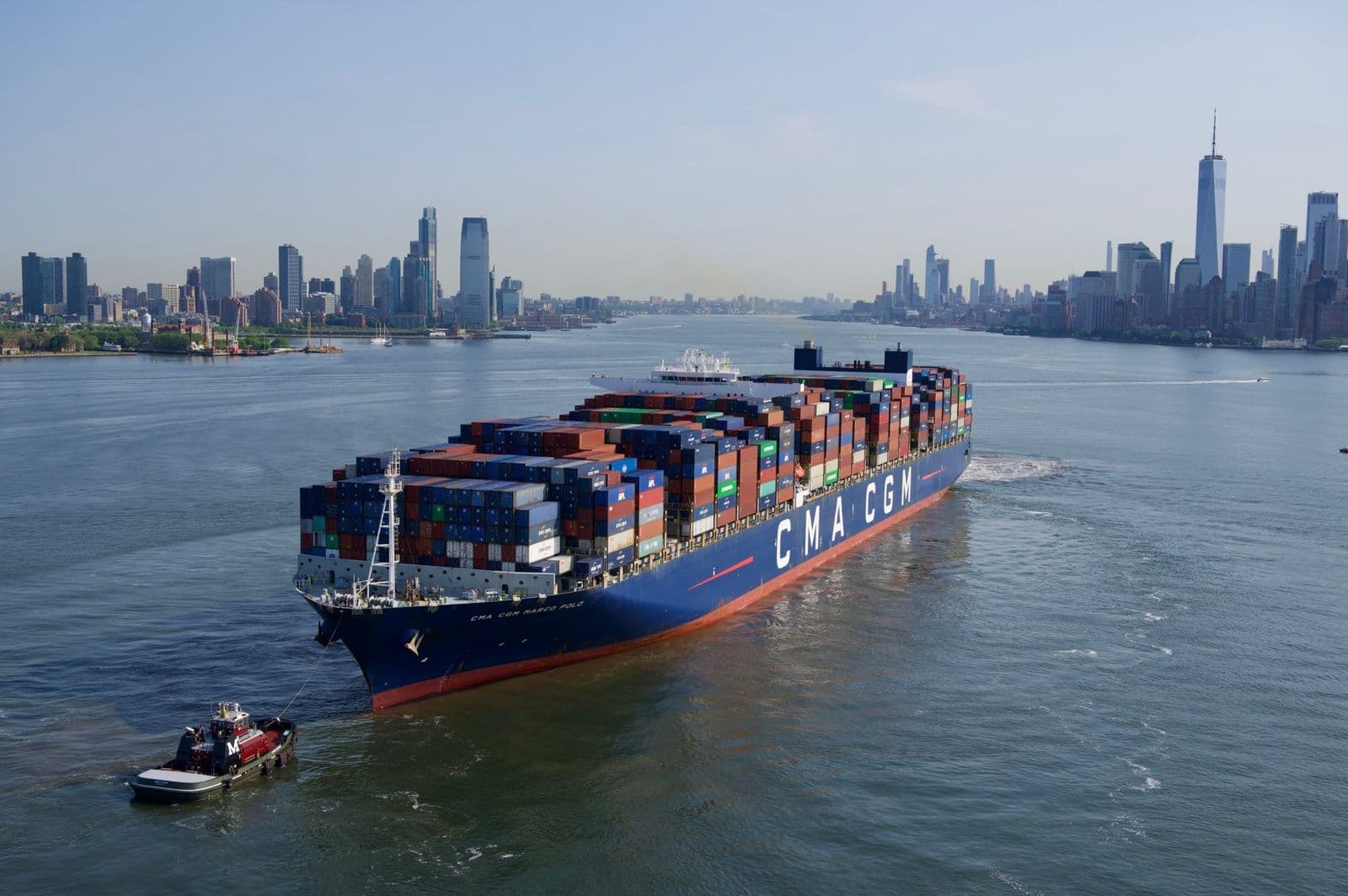
CMA CGM Suspends Asia-US Pendulum Service: What Shippers Need to Know
In a significant development for transpacific trade, Marseille-based container shipping giant CMA CGM has officially suspended its Asia-US pendulum service — a loop that had been providing approximately 14,000 TEUs of weekly capacity connecting Asia with both the US East Coast and the US West Coast. In place of the discontinued pendulum loop, the French carrier is deploying larger vessels on an existing East Coast service and launching a brand-new West Coast express service. For importers, exporters, freight forwarders, and logistics professionals who depend on reliable transpacific capacity, this restructuring carries meaningful implications worth understanding in detail.
What Was the CMA CGM Asia-US Pendulum Service?
A pendulum service, in ocean freight terms, is a liner shipping route that swings between two distinct trade lanes — in this case, Asia and both coasts of the United States — on a single, continuous loop. This structure allows a carrier to maximize vessel utilization by combining two high-demand corridors into one rotating deployment. CMA CGM's now-discontinued pendulum service offered roughly 14,000 TEUs of weekly capacity, making it a substantial contributor to total transpacific shipping supply.
Pendulum services have long been a tool used by major carriers to serve multiple markets efficiently, but they also come with operational trade-offs. Transit times can be longer than dedicated point-to-point services, and a single disruption at one port can ripple across the entire loop. As the market has evolved and shipper expectations around speed and reliability have grown, carriers like CMA CGM have been reassessing whether pendulum structures remain the most competitive solution.
Why Did CMA CGM End the Pendulum Service?
While CMA CGM has not publicly detailed every factor behind the decision, the strategic logic is apparent when viewed in the context of broader market trends. The carrier's move to redeploy larger vessels on its existing East Coast service and to launch a dedicated West Coast express service signals a pivot toward specialization over consolidation.
Several factors are likely driving this shift. First, larger vessels deployed on focused routes typically deliver better economies of scale, allowing carriers to offer more competitive freight rates while maintaining or improving profitability. Second, shippers on both coasts have increasingly demanded faster and more predictable transit times — something that a dedicated express service is inherently better positioned to deliver than a wide-swinging pendulum loop. Third, the ongoing reconfiguration of global shipping alliances and the continued pressure on transpacific rates have pushed major carriers to sharpen their network strategies rather than rely on legacy route structures.
What Replaces the Pendulum Service?
CMA CGM is channeling the capacity and vessels previously committed to the pendulum service into two distinct deployments. Understanding each one is key for shippers planning their supply chains going forward.
Enhanced East Coast Service
The carrier is deploying bigger ships on its existing Asia-US East Coast service. This upgrade in vessel size means more capacity on a route that has seen sustained demand, particularly as US importers have continued to rely heavily on East Coast gateways including ports like New York/New Jersey, Savannah, and Charleston. Larger vessels on a dedicated loop can also help stabilize schedules and improve reliability scores — a metric that has become a critical differentiator for carriers competing for long-term shipper contracts.
New West Coast Express Service
Perhaps the more notable development is CMA CGM's launch of a new, dedicated West Coast express service. West Coast ports such as Los Angeles and Long Beach remain among the busiest container gateways in the world, serving as critical entry points for goods bound for major US consumer markets. An express service on this corridor suggests CMA CGM is responding to competitive pressure from other carriers and from rail alternatives, positioning itself to offer shippers faster door-to-distribution-center transit times than a pendulum loop could realistically provide.
Implications for Shippers and Freight Rates
For shippers who were booking capacity on the suspended pendulum service, the immediate priority will be confirming alternative bookings and assessing whether the new dedicated services align with their routing requirements. While the total weekly capacity figure of 14,000 TEUs is being redistributed rather than removed from the market entirely, the restructuring may temporarily create booking complexity during the transition period.
From a freight rate perspective, the net effect of redistributing capacity into two specialized services is nuanced. More capacity on the East Coast corridor could help moderate rate pressures on that lane, while the new West Coast express service — depending on its premium positioning — may introduce a tiered pricing dynamic where shippers pay more for guaranteed faster transit. Freight forwarders will want to monitor spot and contract rate movements closely across both lanes in the weeks following this announcement.
- Shippers using the pendulum service should proactively confirm space on alternative CMA CGM services or with other carriers as soon as possible.
- Importers prioritizing speed to market on the West Coast should evaluate the new express service as a potential upgrade to their current routing.
- Logistics managers overseeing inventory planning should factor in the possibility of brief scheduling adjustments during the transition period.
- Freight forwarders should update their carrier matrix to reflect the revised CMA CGM network and communicate changes clearly to their shipper clients.
The Bigger Picture: Carrier Network Optimization Continues
CMA CGM's decision is part of a broader and ongoing trend of network rationalization among the world's largest container shipping carriers. As the post-pandemic demand surge has moderated and capacity has increased, carriers have been forced to compete more aggressively on both price and service quality. Blanket sailings, route suspensions, and service redesigns have become routine tools in carrier strategy — and the suspension of a 14,000-TEU pendulum service is a clear example of a major player optimizing its network for the competitive realities of today's transpacific trade environment.
For shippers, this underscores the importance of maintaining flexible supply chain strategies, cultivating relationships with multiple carriers, and working with experienced freight forwarders who can navigate network changes quickly and effectively. The transpacific trade lane remains one of the most dynamic and high-stakes corridors in global logistics, and staying informed about carrier developments like this one is essential for maintaining competitive supply chains.
Final Thoughts
CMA CGM's suspension of its Asia-US pendulum service and the simultaneous launch of enhanced dedicated routes represent a calculated bet that specialization beats consolidation in today's transpacific market. Whether through the beefed-up East Coast service or the new West Coast express offering, the carrier is clearly prioritizing scale efficiency and transit speed. Shippers and logistics professionals should treat this development as both a logistical consideration and a signal of where one of the world's largest carriers sees the market heading — toward faster, more focused, and more purpose-built ocean freight solutions.