
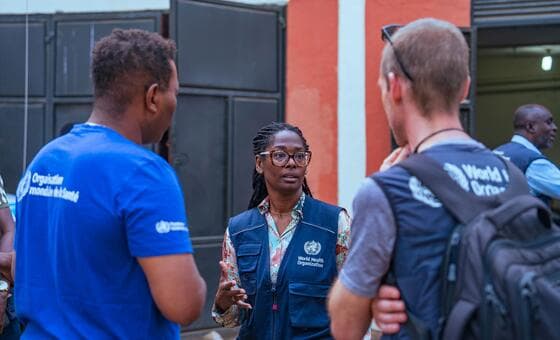
Ebola in DR Congo: One Month On, the Scaled-Up Response Remains Insufficient
One month after the declaration of a Bundibugyo Ebola outbreak in the Democratic Republic of the Congo (DRC) and Uganda, the situation on the ground remains deeply alarming. Case numbers continue to climb, and despite intensified efforts from governments, international health agencies, and humanitarian organizations, the response has so far proven insufficient to bring the outbreak under control. This article examines what the Bundibugyo Ebola virus is, how the current outbreak unfolded, why the response is struggling, and what needs to happen next to protect vulnerable communities.
What Is the Bundibugyo Ebola Virus?
The Bundibugyo species of Ebola virus is one of six known species within the Orthoebolavirus genus. It was first identified in 2007 during an outbreak in Bundibugyo District, Uganda — hence its name. While Bundibugyo Ebola is generally considered to carry a somewhat lower case fatality rate than the more frequently discussed Zaire Ebola virus species, it remains an extremely dangerous pathogen capable of causing severe hemorrhagic fever, multi-organ failure, and death.
Transmission occurs through direct contact with the blood, secretions, or other bodily fluids of infected humans or animals, as well as contact with surfaces contaminated by such fluids. Healthcare workers, family caregivers, and those involved in burial practices are historically among the highest-risk groups. There is currently no universally approved specific treatment or licensed vaccine for the Bundibugyo species, which complicates outbreak control significantly compared to Zaire Ebola, for which several vaccines and therapeutics now exist.
How the Current Outbreak Unfolded
The current Bundibugyo Ebola outbreak was officially declared in the Democratic Republic of the Congo one month ago, with cases quickly identified on both sides of the DRC-Uganda border. The cross-border nature of the outbreak immediately raised the complexity of the response, requiring coordinated action between two national governments, their respective public health institutions, and a wide array of international partners including the World Health Organization (WHO), Médecins Sans Frontières (MSF), and UNICEF.
Initial case identification occurred in areas that, like much of eastern DRC, are already burdened by years of armed conflict, displacement, and weakened health infrastructure. These pre-existing vulnerabilities create the ideal conditions for a viral hemorrhagic fever to spread before containment measures can be effectively deployed. Movement of populations fleeing violence further complicates contact tracing — one of the most critical tools in any Ebola response.
Why the Response Has Been Insufficient
Scaling up an Ebola response in one of the world's most complex humanitarian settings is never straightforward, but several specific factors have combined to make the current response particularly challenging.
Weak Health Infrastructure
Eastern DRC has suffered through multiple Ebola outbreaks in recent years, including the devastating 2018–2020 Kivu outbreak, the second largest in recorded history. Despite lessons learned from those experiences, the health system in the region remains critically underfunded and understaffed. Many health facilities lack the basic protective equipment, trained personnel, and isolation capacity necessary to safely manage Ebola patients without putting others at risk.
Ongoing Armed Conflict and Insecurity
Active armed conflict across parts of eastern DRC continues to hamper response teams' ability to safely access affected communities. Humanitarian organizations report that security constraints have delayed the deployment of medical teams, slowed the distribution of supplies, and prevented timely contact tracing in some of the most heavily affected areas. When response workers cannot safely reach patients or their contacts, the chain of transmission simply cannot be broken.
Community Mistrust and Misinformation
Past outbreaks have left deep scars of mistrust in some communities toward outside health workers and government authorities. Misinformation — spread through social networks and word of mouth — can discourage people from seeking care, reporting symptoms, or cooperating with contact tracers. Community engagement is not a secondary concern in an Ebola outbreak; it is central to success. Where trust has not been adequately rebuilt, the virus finds space to spread.
Funding Gaps
Mounting an effective Ebola response is extraordinarily expensive, requiring rapid deployment of specialized personnel, personal protective equipment, Ebola Treatment Units, laboratory capacity, and community awareness campaigns — all simultaneously. Funding appeals for the current response have not yet been fully met, leaving critical gaps in operational capacity at precisely the moment when speed matters most.
What Needs to Happen Now
Containing this outbreak before it escalates further will require a significant and urgent uplift across multiple areas of the response. Health authorities and their international partners must prioritize the following:
- Immediate funding mobilization: Donor governments and international institutions must close existing funding gaps without delay. Every day without adequate resources translates directly into missed opportunities to break transmission chains.
- Accelerated community engagement: Sustained, culturally sensitive dialogue with affected communities is non-negotiable. Local leaders, community health workers, and trusted voices must be empowered and resourced to lead these conversations.
- Cross-border coordination: The DRC and Uganda must maintain and deepen their coordination mechanisms, ensuring that case information, contact tracing data, and response assets flow freely across the border wherever needed.
- Security guarantees for health workers: International pressure must be applied to ensure that humanitarian access is protected, allowing response teams to reach all affected areas safely.
- Research into Bundibugyo-specific countermeasures: The absence of a licensed vaccine or proven therapeutic for Bundibugyo Ebola is a critical gap that the global health community must address with urgency, both for this outbreak and as a preparedness investment for the future.
The Broader Global Health Warning
The Bundibugyo Ebola outbreak in DRC and Uganda is a stark reminder that the conditions that allow dangerous pathogens to emerge and spread — poverty, conflict, weak health systems, and underfunded preparedness — have not been adequately addressed. Ebola outbreaks do not remain local problems for long in an interconnected world, and the international community's repeated pattern of underfunding preparedness while scrambling to fund responses is a cycle that must be broken.
One month in, the window to bring this outbreak under control without further loss of life and livelihoods remains open — but it is narrowing. The scaled-up response must match the scale of the threat, and it must happen now.