
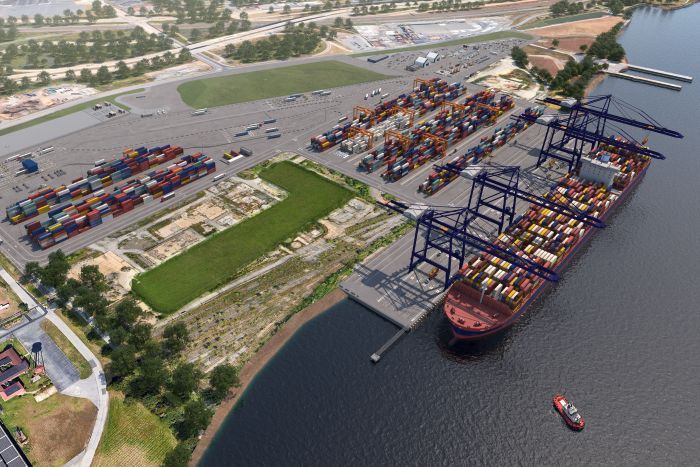
Enstructure Moves Forward on Long-Awaited Delaware River Container Terminal
After years of planning and delays, North American terminal operator and stevedore Enstructure has officially taken its first steps toward building a new container terminal along the Delaware River. The project, designed to accommodate large modern vessels, aims to become a vital hub for mid-Atlantic shippers seeking expanded and more efficient port access on the East Coast. This development marks a significant milestone not only for Enstructure but for the broader regional supply chain landscape, which has been under increasing pressure to modernize infrastructure and keep pace with surging cargo volumes.
What Is the Enstructure Delaware Container Terminal Project?
The proposed facility is positioned along the Delaware River, a strategically important waterway that connects to the Port of Philadelphia and services a dense network of mid-Atlantic logistics corridors. The terminal has been characterized as a "big-ship terminal," meaning it is being engineered to handle the ultra-large container vessels (ULCVs) that have become the dominant force in global ocean shipping over the past decade. These massive ships — some capable of carrying more than 20,000 twenty-foot equivalent units (TEUs) — demand deeper berths, longer quay walls, and more sophisticated crane infrastructure than older legacy terminals were built to support.
Enstructure, which operates a portfolio of terminal and stevedoring operations across North America, has long identified the Delaware River corridor as an underserved market with considerable untapped potential. The region sits within reach of major population centers including Philadelphia, Baltimore, New York, and Washington D.C., making it an attractive distribution gateway for importers and exporters alike.
Why Has the Project Been Delayed?
The Delaware container terminal has been described as "long-delayed," a characterization that reflects the complex web of regulatory, financial, and logistical hurdles that large-scale port infrastructure projects routinely face in the United States. Environmental permitting along navigable waterways is notoriously rigorous, requiring reviews under the Clean Water Act, the National Environmental Policy Act, and coordination with the U.S. Army Corps of Engineers, among other federal and state agencies.
Beyond permitting, projects of this scale require significant capital investment and often depend on securing anchor customers or long-term service agreements before financing can be fully structured. Market conditions, including fluctuations in container shipping demand and shifts in carrier alliance strategies, also play a meaningful role in determining when a terminal developer feels confident enough to break ground.
Despite these challenges, Enstructure appears to have reached the threshold of readiness necessary to move the project from planning into active development — a signal that confidence in long-term demand along the Delaware River corridor remains strong.
The Strategic Importance of Mid-Atlantic Port Expansion
The mid-Atlantic region has experienced growing demand for port capacity, particularly as supply chain disruptions over recent years exposed the fragility of over-reliance on a small number of gateway ports. Diversification of port entry points has become a strategic priority for many importers and third-party logistics providers, and terminals capable of handling today's largest vessels are at a premium.
The Port of New York and New Jersey has historically dominated the East Coast container market, but congestion at major hubs has repeatedly highlighted the need for alternative options. The Port of Baltimore has grown its share of the market steadily, and a competitive Delaware River terminal could further redistribute cargo flows in a way that benefits shippers through improved transit times and reduced landside transportation costs.
- Proximity to major population centers: The Delaware Valley region is home to tens of millions of consumers, making it a high-value distribution corridor for retail, e-commerce, and industrial goods.
- Intermodal connectivity: Rail and highway networks in the region provide extensive inland reach, allowing cargo to move efficiently to markets across the Northeast and Midwest.
- Reduced port congestion risk: An additional terminal option gives shippers and carriers a viable alternative during periods of peak demand or disruption at neighboring ports.
- Support for reshoring and nearshoring trends: As manufacturers look to shorten supply chains, a modern, capable terminal in the mid-Atlantic strengthens the region's appeal as a logistics hub.
Enstructure's Role in North American Terminal Operations
Enstructure has built its reputation as a flexible and capable operator across a range of terminal environments, offering stevedoring, terminal management, and port logistics services at multiple locations. Its approach tends to emphasize operational efficiency and customer-focused service models, which has allowed it to compete effectively against larger, more established port operators.
Taking on the development of a greenfield big-ship terminal represents a meaningful expansion of Enstructure's ambitions. Rather than simply managing an existing facility, the company is now positioning itself as a developer and long-term operator of a purpose-built asset — a move that, if successful, could substantially elevate its standing in the North American container terminal sector.
What Comes Next for the Delaware Terminal?
With initial work now underway, the focus will shift to construction timelines, equipment procurement, and the commercial agreements that will define the terminal's customer base at launch. Crane orders, dredging requirements, and wharf construction are typically among the longest-lead elements of any terminal development, meaning that stakeholders should expect a multi-year path from groundbreaking to full operational capacity.
Industry observers and regional shippers will be watching closely to see how quickly Enstructure can advance the project and whether the Delaware River terminal can ultimately deliver on its promise as a next-generation gateway for mid-Atlantic cargo. If successful, the terminal could reshape competitive dynamics across the entire East Coast port market for years to come.