
Congress Moves to Close a Dangerous Loophole in Trucking Safety Regulations
A new piece of federal legislation is making waves in the trucking industry, and for good reason. Two Republican members of the U.S. House of Representatives have introduced a bill specifically designed to address what they describe as a serious vulnerability in the federal regulations governing commercial truck drivers. The target: foreign-based dispatchers who may be altering Electronic Logging Device (ELD) records from outside the United States, potentially putting lives at risk on American highways.
The bill, introduced by Reps. Greg Steube of Florida and Dave Taylor of Ohio, carries the acronym GHOSTRUCK Act — short for the Guarding Hours-of-Service Oversight and Stopping Tampering by Remote Unofficial Carrier Keeper Act. Rep. Taylor, who chairs the Congressional Trucking Caucus and sits on the House Transportation and Infrastructure Committee, is a key figure behind this legislative push. Together, the two lawmakers argue that current federal law contains a critical gap that must be closed before more harm is done.
What Is the GHOSTRUCK Act and Why Does It Matter?
At its core, the GHOSTRUCK Act is designed to explicitly prohibit foreign-based personnel from making edits or annotations to ELD records that track commercial drivers' Hours of Service (HOS). This may sound like a narrow technical issue, but its implications for public safety are anything but minor.
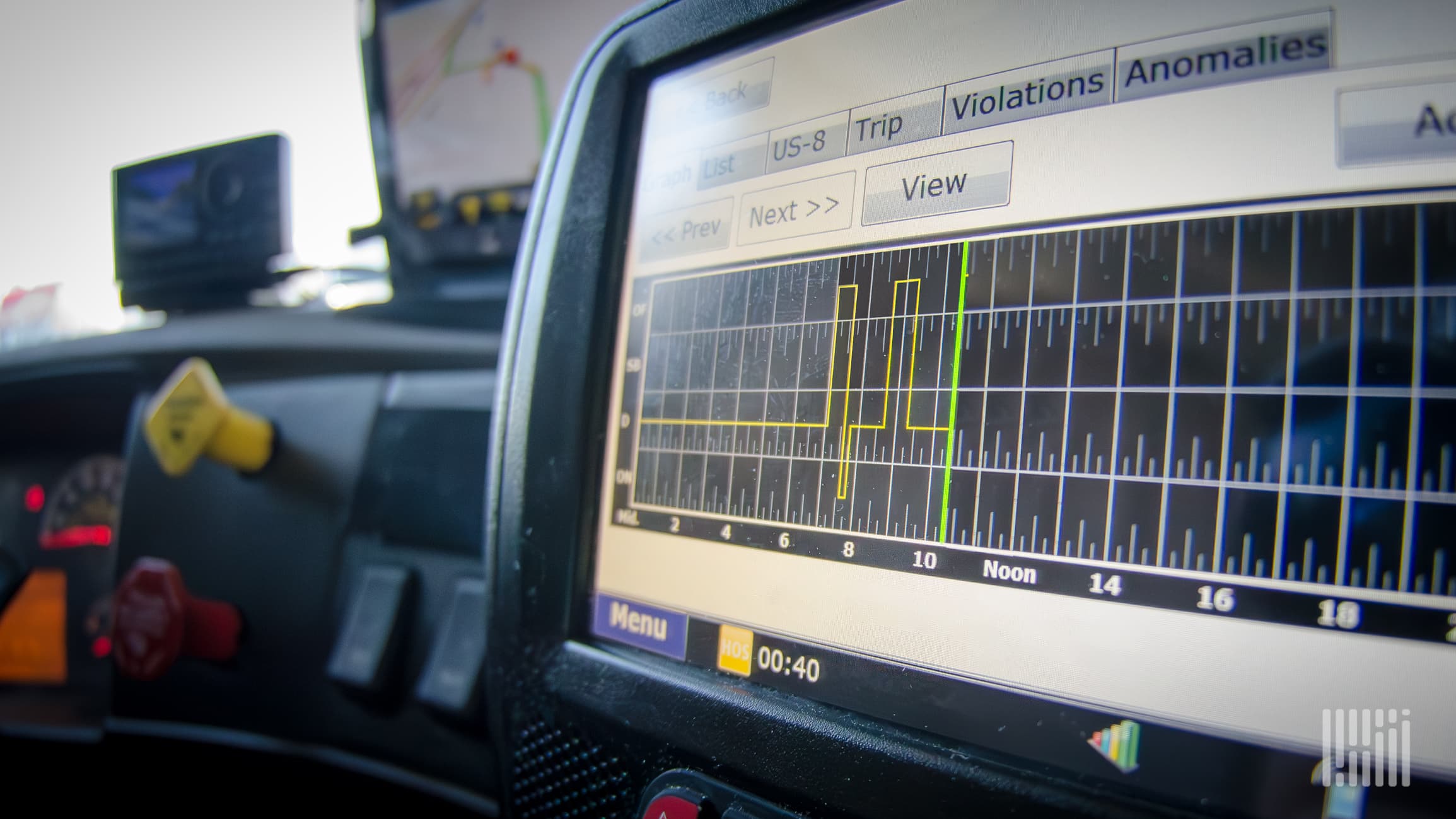
Electronic Logging Devices were mandated by federal regulation to replace paper logbooks and bring greater transparency and accuracy to the trucking industry. ELDs automatically record a driver's driving time, ensuring compliance with HOS rules — federal regulations that strictly limit how many hours a commercial truck driver can be on the road before they must rest. These limits exist for one fundamental reason: fatigued driving kills.
When ELD records are tampered with — whether by a driver, a carrier, or a third-party dispatcher operating from another country — the integrity of the entire HOS system is undermined. Drivers can be pushed beyond safe limits without leaving a traceable domestic paper trail, creating enormous safety risks for the driver and everyone sharing the road with a multi-ton commercial vehicle.
The Loophole: What Current Law Fails to Address
According to the bill's sponsors, the root of the problem lies in an ambiguity in existing federal regulations. Current law does not clearly prohibit foreign-based personnel from editing or annotating ELD records. This means that a dispatcher operating from another country — potentially beyond the reach of U.S. regulatory enforcement — could alter a truck driver's hours-of-service records without violating any explicit statute.
The implications are significant. If a foreign-based dispatcher can modify HOS data remotely, carriers could use this workaround to pressure drivers to stay on the road longer than federal law permits, while maintaining records that appear to show full compliance. This is not a hypothetical concern — it is a gap that bad actors have been able to exploit, and the GHOSTRUCK Act is a direct legislative response to documented abuses.
The legislation's supporters argue that as the trucking industry has become increasingly globalized, with many carriers relying on dispatch operations based in countries like India, Pakistan, and others, the regulatory framework has simply not kept pace. Foreign dispatch operations manage routes, communicate with drivers, and in some cases have access to back-end systems that interact with ELD data — and U.S. regulators currently have limited tools to hold those overseas entities accountable.
Key Provisions and Goals of the GHOSTRUCK Act
While the full legislative text continues to develop through the Congressional process, the stated goals of the GHOSTRUCK Act center on several important principles:
- Explicit prohibition: The bill would clearly make it illegal for any foreign-based individual or entity to edit, annotate, or otherwise alter ELD records for commercial drivers operating in the United States.
- Accountability: By closing this loophole, the legislation aims to ensure that any changes to HOS records can be traced to domestic parties who are subject to U.S. jurisdiction and enforcement.
- Strengthened oversight: The act supports the broader mission of federal agencies like the Federal Motor Carrier Safety Administration (FMCSA) to maintain the integrity of driver safety data.
- Deterrence: Clear statutory language sends a strong signal to carriers that using foreign intermediaries to manipulate compliance records is not a viable or legal strategy.
The Broader Context: Trucking Safety and Hours-of-Service Rules
Hours-of-service regulations have been a cornerstone of commercial trucking safety for decades. The FMCSA enforces strict limits on how long a driver can operate a commercial motor vehicle, including rules governing daily driving time, mandatory rest breaks, and weekly limits. These rules are grounded in extensive research linking driver fatigue to increased crash risk.
The ELD mandate, which went into full effect in 2019, was meant to bring the industry into the modern era of data-driven compliance. Before ELDs, paper logbooks were notoriously easy to falsify — a practice sometimes referred to in the industry as keeping "two sets of books." ELDs were supposed to eliminate that problem by automating the recording process. The loophole targeted by the GHOSTRUCK Act represents, in a sense, a digital evolution of the old paper-log fraud problem.
For law-abiding trucking companies, professional drivers, and safety advocates, closing this loophole is a matter of basic fairness and public safety. Carriers that play by the rules should not be undercut by competitors who exploit regulatory gray areas to push their drivers beyond safe limits and still appear compliant on paper.
Industry Reaction and the Road Ahead
The introduction of the GHOSTRUCK Act is likely to draw strong support from driver advocacy groups, safety organizations, and domestic trucking companies that have long called attention to the problem of foreign dispatch operations and compliance manipulation. The Congressional Trucking Caucus, led by Rep. Taylor, has consistently worked to address the unique challenges facing the American trucking industry, and this legislation fits squarely within that mission.
As the bill moves through the legislative process, stakeholders from across the industry — including carriers, drivers, technology providers, and safety regulators — will be watching closely. The core message of the GHOSTRUCK Act is straightforward: when it comes to the safety of America's roads, there should be no loopholes, no matter where they originate.
With millions of commercial trucks operating on U.S. highways at any given time, the integrity of hours-of-service records is not a bureaucratic detail — it is a matter of life and death. The GHOSTRUCK Act represents a meaningful step toward ensuring that the systems designed to keep drivers and the public safe cannot be quietly undermined from thousands of miles away.