
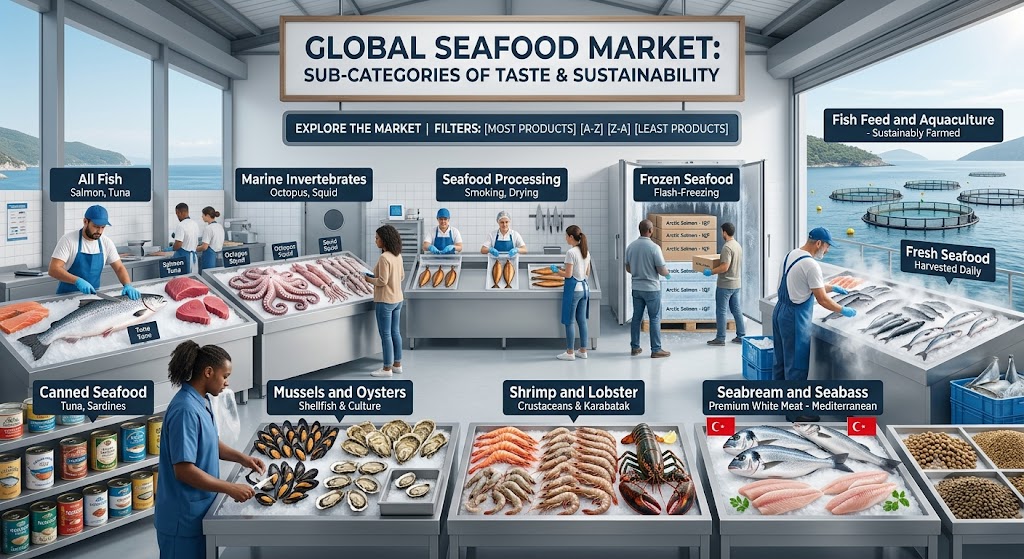
Global Seafood Market: Discover the Subcategories of Taste and Sustainability
With the growing world population and increasing awareness of healthy nutrition, seafood has become one of the most dynamic sectors in global trade. This abundance offered by oceans, seas, and inland waters is not just a source of food; it is also a massive economic ecosystem.
Whether you are a consumer looking for a fresh dinner or an entrepreneur searching for the right supplier in the global market, understanding the seafood world begins with exploring its subcategories.
Here are the 10 essential seafood subcategories leading the global market:
1. All Fish
This is the first and broadest category that comes to mind when mentioning seafood. It covers both freshwater and saltwater fish, ranging from salmon to tuna, and mackerel to migratory fish. This category accounts for a major share of the global trade volume.
2. Marine Invertebrates
Invertebrate creatures like octopus, squid, cuttlefish, and jellyfish are indispensable parts of Asian and Mediterranean cuisines. They rank among the highest value-added product groups for gourmet restaurants and export markets.
3. Seafood Processing
This is where technology touches the journey from the catch to the counter. Processes such as gutting, filleting, smoking, and drying extend the shelf life of products while offering practical, "ready-to-eat" alternatives in the global market.
4. Frozen Seafood
The hero of the logistics chain! Preserving freshness and nutritional value through "flash-freezing" technology, frozen seafood overcomes seasonal barriers, bringing flavors from one side of the world to the other without compromising quality.
5. Fresh Seafood
The ultimate favorite for seafood enthusiasts and traditional markets. Harvested or caught daily and displayed on ice, this category represents the heart of local economies and gastronomy in its purest form.
6. Canned Seafood
Canned tuna, sardines, and anchovies... Practical, long-lasting, and packed with protein, canned seafood is a staple in every household pantry in today's fast-paced lifestyle. It also plays a vital role in global food security.
7. Mussels and Oysters
The branch of aquaculture and the shellfish sector that brings luxury and street food flavors together. While oysters fetch high prices in the global gourmet market, mussels maintain a strong commercial volume in both local and international markets.
8. Shrimp and Lobster
The kings of the crustacean family! Shrimp, in particular, is one of the most valuable commodities in global seafood trade. Thanks to aquaculture (farm) production, its supply can be maintained uninterrupted throughout the year. (Note: In commercial categorization, terms like "Karabatak" or regional variations often correlate with lobsters, crabs, and similar crustaceans).
9. Seabream and Seabass
The twin jewels of the Mediterranean basin, where countries like Turkey play a leading role in global exports. Sustainably farmed in modern facilities, seabream and seabass are in high demand across the globe, especially in Europe, as premium white meat choices.
10. Fish Feed and Aquaculture
The hidden powerhouse behind the seafood industry. To feed a growing population and secure a sustainable future, proper nutrition for fish farms is essential. High-quality fish feed and advanced aquaculture technologies build the future of the entire sector.
Market Tip: You can use the filtering options on our website to sort products by categories with the Most Products. If you are looking for a specific species, you can quickly explore niche markets (Least Products) using the A-Z or Z-A sorting functions.
The global seafood industry is undergoing a massive transformation from traditional fishing to modern, sustainable farming. By exploring these 10 subcategories, you can grow your business with the right strategy or choose the perfect flavor for your table.