
The U.S. Housing Market Is a Tale of Two Realities
On the surface, the national housing market appears to be holding steady. According to the Zillow Home Value Index, U.S. home prices — encompassing both single-family homes and condos — rose 0.8% between May 2025 and May 2026. That modest growth rate mirrors the 0.4% year-over-year increase recorded in May 2025 and marks a recovery from the recent low of -0.01% posted in August 2025.
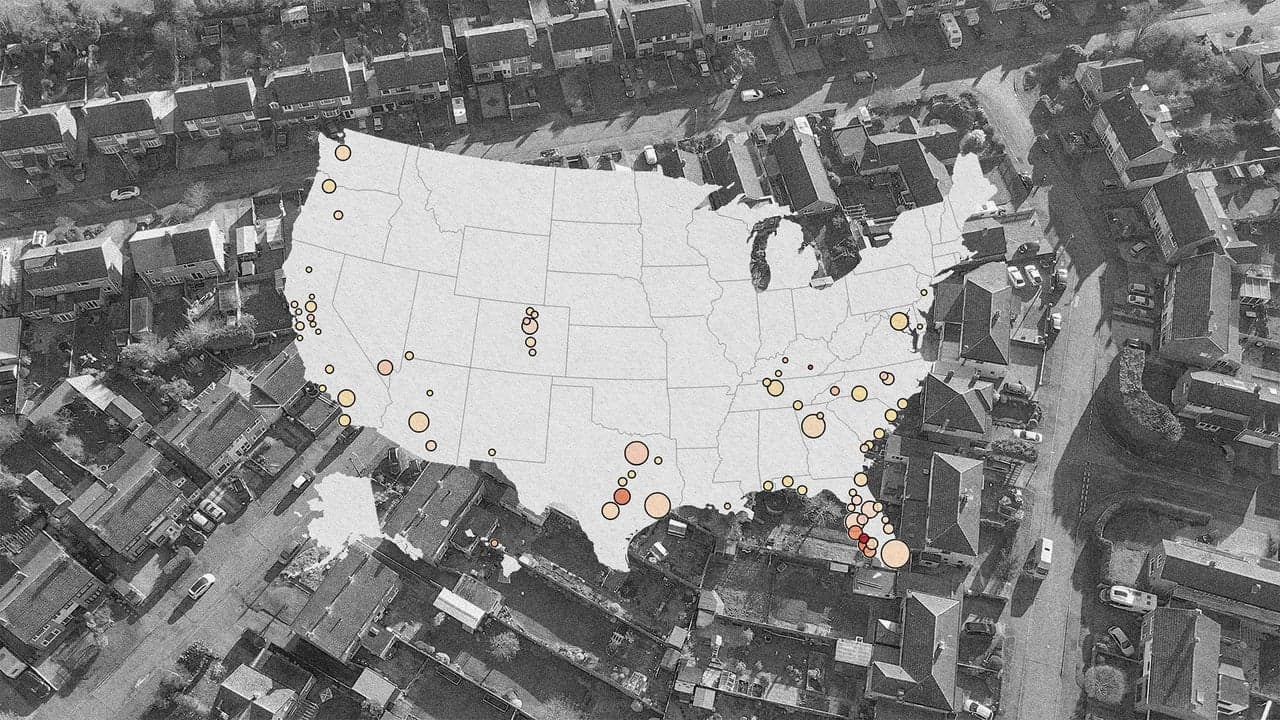
But here's the catch: those national averages can be deeply misleading. Beneath that relatively flat headline number lies a starkly divided landscape — one where dozens of local housing markets are still experiencing meaningful home price declines, even as others continue to appreciate steadily. According to data analyzed by ResiClub's Lance Lambert, 77 of the nation's 300 largest housing markets are currently seeing year-over-year home price declines. That's more than one in four of the country's biggest metro areas moving in the wrong direction for sellers.
For buyers, sellers, investors, and anyone tracking the real estate market, understanding where prices are falling — and why — is critical. Let's break down what the data shows and what it could mean for your next move.
How We Got Here: The Rise and Partial Retreat of Declining Markets
To appreciate the current moment, it helps to understand the trajectory. Throughout the first half of 2025, the number of major metro housing markets experiencing year-over-year price declines was climbing rapidly. The progression was striking:
- January 2024 to January 2025: 31 of the nation's 300 largest housing markets (10%) posted year-over-year price declines.
- February 2024 to February 2025: That number climbed to 42 markets, representing 14% of the top 300.
- March 2024 to March 2025: The count jumped significantly to 60 markets, or 20% of major metros.
- April 2024 to April 2025: The tally grew to 80 markets — 27% of the nation's largest housing areas.
- May 2024 to May 2025: The peak emerged, with 96 major markets, or nearly a third (32%) of the top 300, seeing year-over-year declines.
That accelerating wave of declining markets raised serious concerns about whether a broader housing correction was underway. However, the most recent data suggests the spread has slowed. The number of markets posting declines has pulled back from that high of 96 to approximately 77, a sign that some of the softest markets may be beginning to stabilize — even if they haven't yet returned to positive territory.
Why Are So Many Local Markets Still Declining?
The reasons behind localized price declines vary by region, but several key factors tend to drive softness in specific housing markets.
Affordability Pressure and Elevated Mortgage Rates
Mortgage rates have remained elevated by historical standards, keeping monthly payments high and pricing many would-be buyers out of the market. In metros where home values surged sharply during the pandemic-era boom, affordability has become severely stretched. When buyers can't or won't pay asking prices, sellers are forced to cut — and that eventually shows up in the year-over-year price data.
Inventory Expansion in Certain Sun Belt Markets
Several markets that experienced outsized price growth between 2020 and 2022 — particularly in the Sun Belt — have seen inventory levels rise substantially. Cities in Florida, Texas, and parts of the Mountain West have welcomed a surge of new construction, which has added supply just as demand cooled. More homes competing for fewer buyers naturally pushes prices downward.
Remote Work Demand Normalization
Some smaller and mid-tier markets saw dramatic price spikes during the remote work boom as urban residents fled to more affordable or scenic locations. As return-to-office mandates and hybrid work policies have shifted the calculus, demand in some of those markets has softened, leaving behind inflated price levels that the local economy simply can't sustain.
What This Means for Buyers
If you're in the market to purchase a home, the current environment in one of these 77 declining markets could represent a genuine opportunity. Year-over-year price reductions mean that buyers today may be able to negotiate more effectively than they could a year or two ago. Longer days on market and more seller concessions are increasingly common features in softening markets.
That said, buyers should resist the temptation to assume that falling prices will continue indefinitely. The fact that the number of declining markets has pulled back from 96 to 77 suggests that the correction may be moderating. Timing the bottom of a local market is notoriously difficult, and waiting too long can mean missing out if conditions shift quickly.
What This Means for Sellers
Sellers in declining markets face a more challenging environment. Pricing a home correctly — and resisting the urge to anchor to pandemic-era peak values — is more important than ever. Overpriced listings are sitting on the market longer, and price reductions have become more common across a broad swath of metro areas.
Working with a knowledgeable local real estate agent who understands current comparable sales data is essential. In markets where prices are still falling on a year-over-year basis, sellers who price competitively from day one are far more likely to close successfully than those who hold out for peak-level offers that the market no longer supports.
The Bigger Picture: A Market in Transition
The broader U.S. housing market appears to be in a slow, uneven stabilization phase. National home price growth is hovering near zero — not quite declining, but nowhere near the heated appreciation of 2021 and 2022. The pullback in the number of declining markets from 96 to 77 is a cautiously encouraging signal, but it doesn't mean the adjustment is over for every local market.
Geographic divergence is likely to remain a defining feature of real estate in the near term. Markets with strong job growth, constrained land supply, and resilient local economies will continue to hold their value or appreciate modestly. Markets burdened by excess inventory, affordability ceilings, or weakening local demand will continue to face pressure.
Whether you're buying, selling, investing, or simply watching the market, the key takeaway is this: the national number is a starting point, not a destination. The real story in U.S. housing right now is happening at the local level — and in 77 major markets, that story still involves falling prices.