
How the Iran War Is Leaving Lasting Scars Across Asia
When conflict erupts in the Middle East, the economic tremors rarely stay contained. But the ongoing war involving Iran has proven to be something far more destabilizing than a regional dispute — it has carved deep wounds into economies across Asia, many of which were already navigating fragile recoveries. From energy price shocks to disrupted trade corridors, the ripple effects have been wide, painful, and, most worryingly, potentially permanent.
As analysts and policymakers increasingly warn, even a negotiated peace deal is unlikely to undo the structural damage that has accumulated. Understanding why requires a closer look at how Asia's relationship with Middle Eastern stability — and Iranian oil in particular — made the continent uniquely exposed from the very start.
Why Asia Was Always the Most Vulnerable
Asia's vulnerability to an Iran conflict is not accidental. It is the product of decades of deepening energy dependency. Countries such as China, India, South Korea, and Japan together account for the lion's share of global oil demand, and a significant portion of that demand has historically been met through imports from the Persian Gulf region. Iran, even under Western sanctions, remained a meaningful supplier to several Asian buyers — most notably China and India — who continued to purchase discounted Iranian crude when others stepped back.
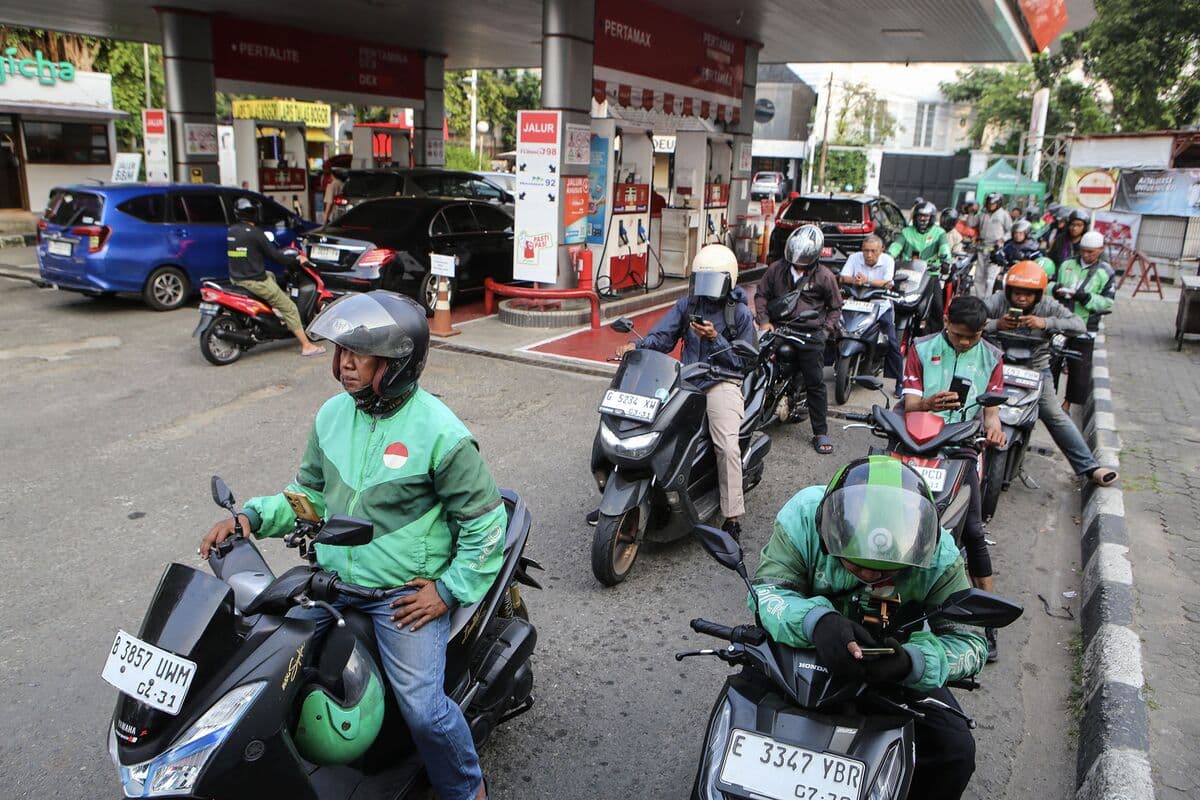
When armed conflict erupted, that supply chain didn't just slow down — in many cases, it snapped entirely. Shipping insurance costs in the region spiked. Tanker routes were rerouted or suspended. Energy prices surged at a moment when several Asian governments were already stretched thin trying to manage inflation, currency depreciation, and post-pandemic fiscal strain.
The consequences landed with particular force on energy-importing nations in Southeast and South Asia. Countries like Pakistan, Bangladesh, Sri Lanka, and the Philippines — where fuel subsidies had already become fiscally unsustainable — found themselves absorbing price shocks with few buffers remaining.
Trade Routes and Supply Chains Under Pressure
Energy was only the beginning. The broader disruption to Middle Eastern trade corridors has exposed just how deeply integrated Asia's supply chains have become with routes passing through or near the conflict zone. The Strait of Hormuz, through which roughly 20 percent of the world's oil and a significant share of liquefied natural gas (LNG) flows, became a focal point of anxiety for logistics planners across the continent.
Shipping delays cascaded through manufacturing sectors in ways that are difficult to fully quantify. Electronics manufacturers in East Asia waiting on components, garment factories in South Asia dependent on imported synthetic materials, and agricultural processors relying on fertilizer inputs — all felt the knock-on effects of a disrupted maritime order in the Gulf.
Beyond physical shipping, the war introduced a new layer of geopolitical risk premium into investment decisions across Asia. Foreign direct investment flows into several markets slowed as global capital grew more cautious. Infrastructure projects with Middle Eastern financing partners were either paused or renegotiated under less favorable terms.
Structural Problems That Won't Disappear With Peace
Here is where the analysis becomes particularly sobering. Conventional wisdom might suggest that a peace deal — currently reported to be in the works — would allow Asian economies to exhale and reset. But economists and regional analysts are increasingly skeptical that a ceasefire or diplomatic agreement will be sufficient to undo what has already taken root.
Several structural shifts are already underway that are likely to outlast the conflict itself.
- Energy infrastructure investment has been redirected. Asian governments and private investors, rattled by the exposure to Gulf supply disruptions, have accelerated pivots toward diversified energy sourcing, renewables buildout, and LNG terminal expansion. These are multi-year commitments that reshape energy markets regardless of what happens in Tehran or Washington.
- Debt burdens have deepened. To cushion their populations from the worst of the energy price shock, several Asian governments borrowed heavily or drew down foreign exchange reserves. That fiscal damage doesn't disappear when hostilities end — it has to be repaid, often through austerity measures or currency adjustments that dampen growth for years.
- Supply chain rewiring is accelerating. Corporations that had already begun diversifying supply chains away from over-concentrated geographies used the Iran war as additional justification to accelerate that process. The beneficiaries and losers of this rewiring will be determined over years, not months.
- Investor confidence is structurally impaired. Risk models used by institutional investors now price in a higher baseline probability of Middle Eastern disruption. That means certain categories of Asian infrastructure and manufacturing investment will carry higher cost-of-capital for the foreseeable future.
China and India: A Tale of Two Giants
Among Asia's major economies, China and India occupy a complicated position. Both had maintained some degree of energy trade with Iran prior to the conflict, meaning both faced direct supply disruptions. At the same time, both have the economic scale and diplomatic leverage to adapt in ways smaller economies simply cannot.
China has moved aggressively to lock in alternative supply agreements and has used the moment to deepen energy partnerships across Central Asia and Russia. India, meanwhile, has accelerated domestic refining investments and renewed outreach to Gulf suppliers outside the conflict zone. These are rational responses — but they also represent permanent shifts in the architecture of Asian energy geopolitics, shifts that will define the continent's economic relationships for a generation.
What Comes Next
For Asia, the Iran war is not a story with a clean ending in sight. A peace deal, if it materializes, will remove the acute phase of the crisis. But the continent is already living inside a new economic reality — one defined by higher energy costs, heavier debt loads, reconfigured supply chains, and a heightened awareness of geopolitical fragility. Policymakers who plan as though a return to the pre-war status quo is simply a matter of waiting for hostilities to cease are likely to be disappointed. The scars, as it turns out, run far deeper than the headlines suggest.