
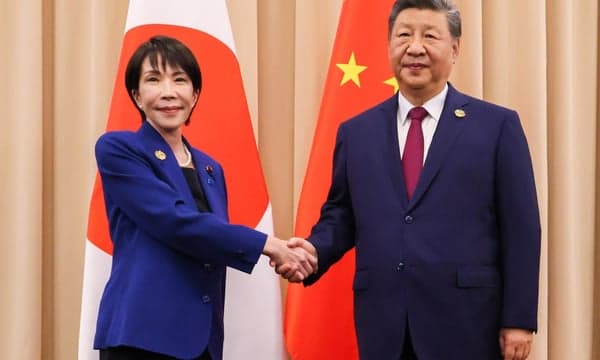
Japan-China Relations: Is the Deadlock the New Normal?
For decades, the relationship between Japan and China has oscillated between cautious cooperation and sharp confrontation. Trade ties have deepened, people-to-people exchanges have grown, and yet the two nations repeatedly find themselves at a diplomatic impasse. Today, many analysts are asking a pressing question: is the current deadlock in Japan-China relations simply the new normal — and if so, is there any realistic path out of it?
Understanding the roots of this stalemate requires looking beyond headlines and into the structural, historical, and geopolitical forces that have shaped East Asia's most consequential bilateral relationship. The answer is not simple, but it is increasingly urgent.
The Historical Weight That Neither Side Can Escape
Any honest conversation about Japan-China relations must begin with history. The wounds inflicted during Japan's imperial expansion in the first half of the twentieth century — particularly the Second Sino-Japanese War and events such as the Nanjing Massacre — have never fully healed on the Chinese side. For Beijing, historical grievances are not merely sentimental; they are politically useful and deeply embedded in national identity.
Japan, for its part, has expressed remorse on multiple occasions through official statements and treaties, yet repeated visits by Japanese politicians to Yasukuni Shrine — which honors Japan's war dead, including convicted war criminals — continue to inflame public opinion in China and South Korea alike. This cycle of apology and provocation makes it extraordinarily difficult to build lasting goodwill.
The historical dimension is not going away. It functions as a fault line that can be managed during periods of strategic necessity but which ruptures almost predictably whenever political pressures rise on either side.
Territorial Disputes and Military Posturing
The ongoing dispute over the Senkaku Islands — known in China as the Diaoyu Islands — represents one of the most volatile flashpoints in the entire Asia-Pacific region. Japan administers the uninhabited chain in the East China Sea, while China asserts its own sovereign claim. Chinese Coast Guard vessels regularly enter waters around the islands, drawing formal protests from Tokyo.
These incursions have accelerated in recent years, and Japan has responded by expanding its defense posture in ways that would have been unimaginable just a decade ago. Tokyo has increased its defense budget to historic levels, acquired counterstrike capabilities, and deepened its security alignment with the United States and like-minded partners through frameworks such as the Quad. Each Japanese military step is perceived in Beijing as evidence of a revanchist streak, while Tokyo views China's maritime assertiveness as direct provocation.
The risk of accidental escalation in the East China Sea remains real and underappreciated. A miscalculation by either side could rapidly shift a diplomatic deadlock into something far more dangerous.
Economic Interdependence as Both a Bridge and a Trap
Despite the political friction, Japan and China remain deeply economically intertwined. China is Japan's largest trading partner, and hundreds of Japanese companies have substantial operations on the Chinese mainland. This economic interdependence has historically served as a stabilizing force, giving both governments a material reason to avoid outright conflict.
However, the nature of that interdependence is shifting. Japan has been actively working to diversify its supply chains, reduce dependence on Chinese rare earth minerals, and encourage its companies to adopt a so-called "China plus one" strategy — maintaining a presence in China while building manufacturing capacity elsewhere in Southeast Asia and South Asia.
China, meanwhile, has demonstrated a willingness to use economic leverage as a foreign policy tool, as seen in its restrictions on Japanese seafood imports following the discharge of treated water from the Fukushima nuclear plant in 2023. This kind of economic coercion erodes trust and accelerates Japan's push for strategic autonomy. The economic relationship, once a reliable buffer, is slowly losing that function.
The Role of the United States and Regional Architecture
No analysis of Japan-China relations is complete without acknowledging the overwhelming influence of the United States. Japan hosts tens of thousands of American troops and is bound to Washington through a mutual security treaty. For China, the U.S.-Japan alliance represents a structural constraint on its regional ambitions — a permanent reminder of what Beijing regards as an American strategy of encirclement.
As U.S.-China competition has intensified across technology, trade, and military domains, Japan has found itself increasingly positioned as a frontline ally. This makes independent Japanese diplomacy with China more difficult, because Tokyo must always weigh bilateral engagement against the expectations of its most important security partner.
Regional frameworks such as ASEAN, the Regional Comprehensive Economic Partnership, and ongoing negotiations around a China-Japan-South Korea free trade agreement offer partial venues for dialogue. But none of these mechanisms have the weight or urgency to genuinely reset the bilateral dynamic on their own.
Is a Breakthrough Possible?
The structural conditions driving the deadlock — historical grievance, territorial rivalry, shifting economic interdependence, and great-power competition — are not easily dissolved. Yet history also shows that even deeply adversarial relationships can shift when the right combination of leadership, strategic necessity, and external pressure converges.
What might a credible path forward look like? Analysts point to several potential levers:
- Sustained high-level dialogue: Regularizing leader-level and ministerial meetings, even without immediate breakthroughs, helps maintain communication channels and reduces the risk of miscalculation.
- Crisis communication mechanisms: Establishing robust military hotlines and agreed-upon rules of engagement around disputed waters could prevent accidents from escalating into confrontations.
- Functional cooperation on shared challenges: Climate change, pandemic preparedness, and regional economic stability all provide areas where cooperation serves both nations' interests and can build incremental trust.
- People-to-people and cultural exchange: Rebuilding tourism, academic exchange, and civil society dialogue after years of pandemic-era isolation and political tension can gradually shift public attitudes on both sides.
None of these measures resolves the underlying structural tensions. But they may be enough to prevent the deadlock from hardening into something irreversible.
Living With Managed Tension
Perhaps the most honest conclusion is that Japan and China are not heading toward a warm partnership anytime soon — but they are also not inevitably heading toward open conflict. The challenge for policymakers in Tokyo, Beijing, and Washington is to manage the relationship in ways that preserve stability, allow for economic engagement where it is mutually beneficial, and reduce the risk of catastrophic escalation.
If the current deadlock is indeed the new normal, the task is not to wish it away but to manage it with clear eyes, steady nerves, and more strategic creativity than either side has shown in recent years. The stakes — for East Asia and for global stability — could not be higher.