
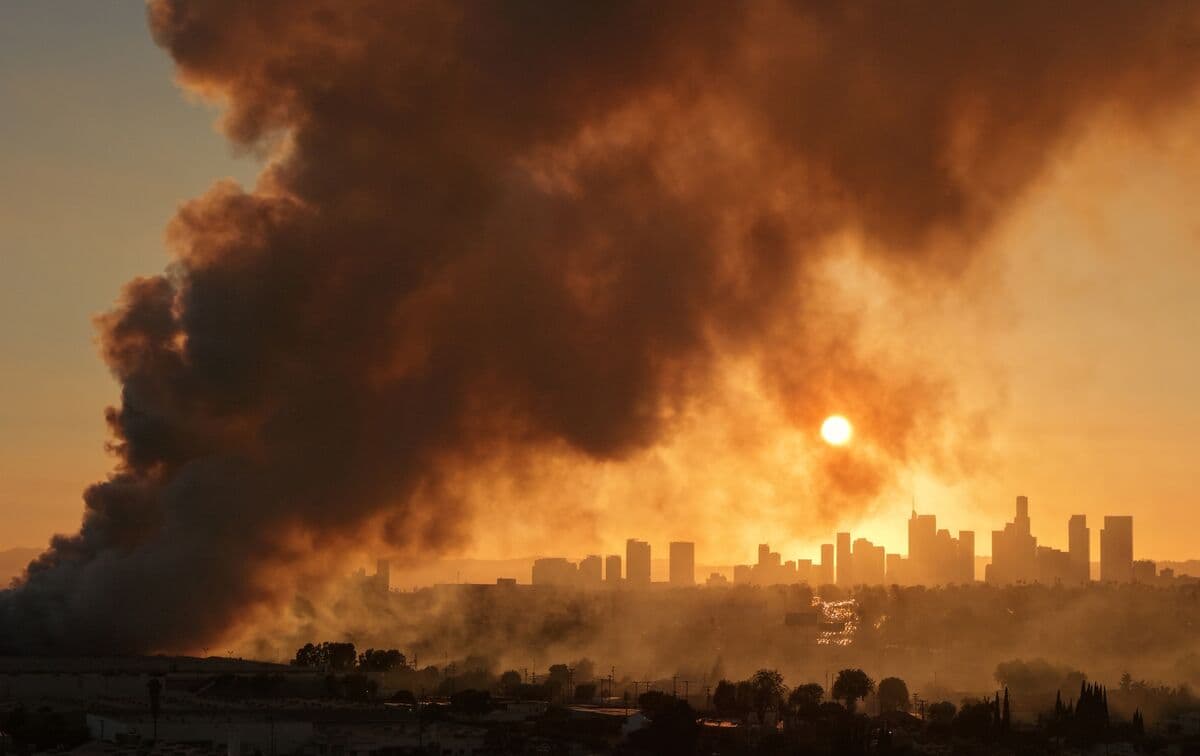
Los Angeles Warehouse Fire Smoke Chokes Southern California for Fifth Day
A massive fire at a cold storage warehouse near downtown Los Angeles has continued to pump thick, toxic fumes across Southern California for a fifth consecutive day, forcing authorities to issue emergency declarations and prompting widespread air quality warnings throughout the region. The persistent blaze has raised serious concerns about public health, fire containment efforts, and the broader consequences for millions of residents breathing dangerously polluted air.
What We Know About the Los Angeles Warehouse Fire
The fire broke out at a cold storage facility located near downtown Los Angeles and quickly grew into one of the most prolonged urban industrial blazes the region has seen in recent memory. Cold storage warehouses present unique firefighting challenges — they are typically built with insulated panels and materials designed to retain temperature, which can also trap heat, fuel combustion, and make it extremely difficult for crews to reach the source of the fire.
Despite days of sustained firefighting efforts involving hundreds of personnel and significant resources, the blaze continued to smolder and reignite deep within the structure, defying containment. Thick plumes of dark smoke billowed into the sky, visible for miles in every direction, turning the Southern California skyline into a hazy gray curtain that stretched across multiple counties.
Air Quality Reaches Unhealthy Levels Across the Region
Perhaps the most immediate and widespread consequence of the ongoing fire has been the dramatic deterioration of air quality across Southern California. Air quality monitoring stations throughout the region recorded readings that climbed into the "unhealthy" range on the Air Quality Index (AQI), with some areas registering even more alarming levels classified as "very unhealthy" or "hazardous" for sensitive groups.
The smoke from an industrial fire of this nature is not simply unpleasant — it is potentially dangerous. Cold storage facilities often house refrigerants, insulating foams, industrial chemicals, and a wide range of commercial goods. When these materials burn, they release a toxic cocktail of particulate matter, volatile organic compounds, and other hazardous substances into the air. Prolonged exposure to this kind of smoke can trigger or worsen respiratory conditions such as asthma, bronchitis, and chronic obstructive pulmonary disease (COPD), and can pose risks even to otherwise healthy individuals.
Who Is Most at Risk?
- Children and infants, whose lungs are still developing and are more susceptible to airborne pollutants
- Elderly residents, who often have reduced lung capacity and pre-existing health conditions
- People with asthma, COPD, or other respiratory illnesses, who may experience severe symptom flare-ups
- Outdoor workers, including construction crews, landscapers, and delivery drivers, who face prolonged exposure throughout the day
- Individuals with heart disease, as fine particulate matter is closely linked to cardiovascular stress
Health officials urged residents across the affected area to limit outdoor activity, keep windows and doors closed, use high-efficiency air filters indoors, and wear properly fitted N95 or KN95 masks if they must be outside.
Emergency Declarations Signal the Scale of the Crisis
In response to the ongoing fire and the resulting public health emergency, local and regional authorities moved quickly to issue formal emergency declarations. These declarations serve a critical function — they unlock additional resources, streamline interagency coordination, and signal to state and federal authorities that the situation has exceeded routine capacity to respond.
Emergency declarations also give officials greater authority to deploy public health messaging, coordinate shelter operations for displaced residents, and potentially seek reimbursement from state or federal disaster funds for the mounting costs of the response. With the fire entering its fifth day, the logistical and financial toll of the ongoing operation was becoming increasingly significant for the agencies involved.
Residents living nearest to the fire were advised to remain indoors as much as possible, and in some cases were given guidance on temporary relocation options if indoor air quality in their homes could not be adequately maintained.
Firefighting Challenges Prolonging the Blaze
Industrial warehouse fires are notoriously difficult to extinguish, and this incident has been no exception. The cold storage facility's construction — featuring thick, insulated walls and tightly sealed compartments — created conditions where fire could persist deep within the building long after surface flames appeared controlled. Firefighters faced the constant risk of structural collapse as the building's integrity was compromised over days of burning.
Additionally, the sheer volume of stored goods within the warehouse provided an enormous amount of combustible material, feeding the fire and making it resistant to conventional suppression efforts. Crews rotated in shifts around the clock, battling fatigue while maintaining containment lines to prevent the blaze from spreading to neighboring structures in the densely developed area near downtown Los Angeles.
What Residents Can Do Right Now
If you are in the Southern California region and are affected by smoke from the Los Angeles warehouse fire, health authorities recommend taking the following precautions:
- Check your local AQI regularly using apps like AirNow or IQAir before spending time outdoors
- Run your home's HVAC system with a MERV-13 or higher rated filter, or use a portable HEPA air purifier indoors
- Avoid strenuous outdoor exercise, which causes you to breathe more deeply and increases pollutant intake
- Keep pets indoors as much as possible, as animals are also vulnerable to smoke inhalation
- Watch for symptoms such as chest tightness, difficulty breathing, persistent cough, or eye irritation, and seek medical attention if they worsen
The Broader Impact on Southern California
Beyond the immediate health concerns, the Los Angeles warehouse fire has underscored the vulnerability of densely populated urban areas to prolonged industrial disasters. Southern California's geography — with its surrounding mountains and frequent temperature inversions — can trap pollutants close to ground level, amplifying the impact of events like this one on millions of people across the basin.
As investigations into the cause of the fire continue and authorities work toward full containment, the incident serves as a sobering reminder of the importance of industrial fire safety standards, emergency preparedness, and robust public health infrastructure in one of America's most populous regions. Residents are encouraged to stay informed through official channels and to follow guidance from local health departments as the situation continues to develop.