
The U.S. Housing Market Is Splitting in Two
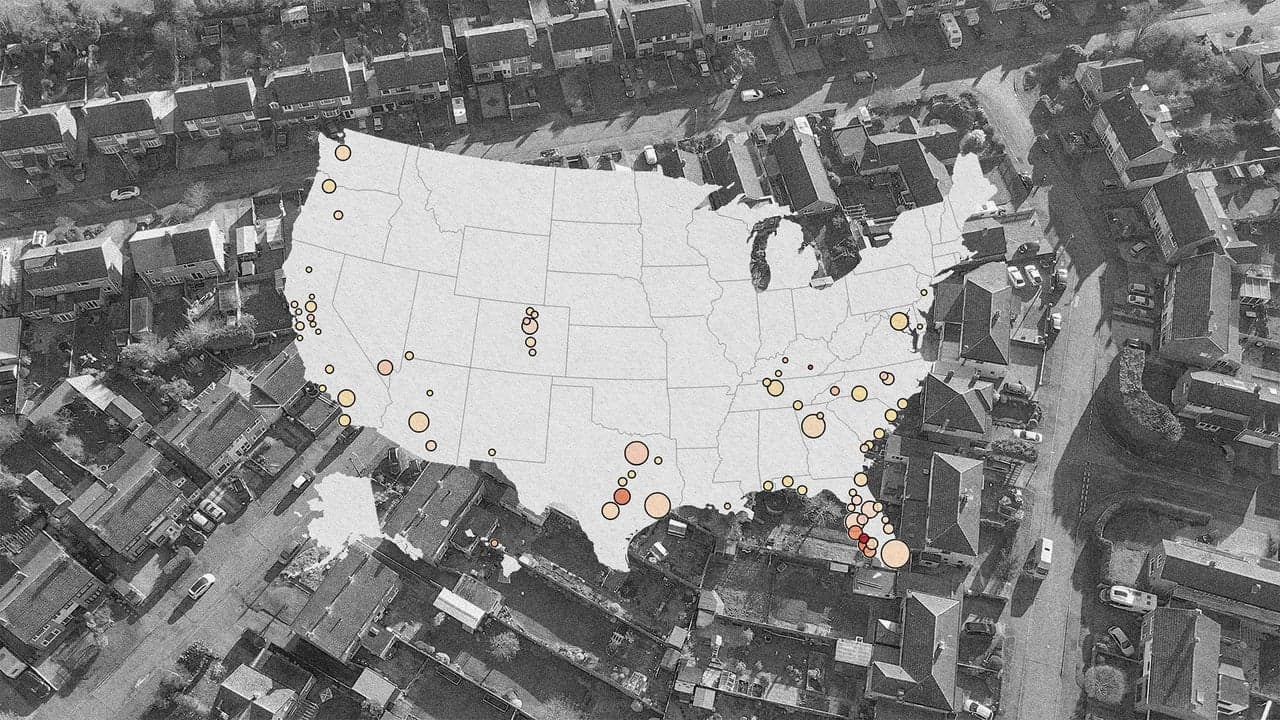
If you've been watching the housing market closely, you've likely noticed something unusual: the national headlines tell one story, but what's happening in your city might tell a completely different one. While U.S. home prices are technically still rising at a modest pace on the national level, a significant and growing number of local markets are quietly seeing prices move in the opposite direction. According to an analysis of the Zillow Home Value Index, 77 of the nation's 300 largest housing markets are now experiencing year-over-year home price declines — a figure that reflects a housing landscape more fragmented than any single headline can capture.
Understanding where prices are falling, how fast that list has grown, and what may be driving these local downturns is critical for anyone looking to buy, sell, or invest in real estate in 2025 and beyond.
What the National Numbers Are Saying
At the national level, the picture appears relatively stable. Based on the Zillow Home Value Index, U.S. home prices — encompassing both single-family homes and condominiums — rose 0.8% between May 2025 and May 2026. That pace closely mirrors where things stood a year earlier, when the national year-over-year growth rate sat at 0.4%. It also represents a recovery from a brief dip into negative territory, with the recent year-over-year low recorded at -0.01% in August 2025.
On the surface, that sounds like a market that has found its footing. And to a degree, it has — at least in aggregate. But aggregate data has a way of masking the fault lines beneath, and in this housing cycle, those fault lines run deep.
How the Number of Declining Markets Has Grown
The story of this housing cycle is really a story of acceleration followed by stabilization. In the early months of 2025, the number of major metro areas experiencing year-over-year price declines climbed steadily and at times sharply. Here's how the progression unfolded across the 300 largest housing markets in the country:
- January 2024 to January 2025: 31 markets, or 10% of the 300 largest, posted a falling year-over-year reading.
- February 2024 to February 2025: That number jumped to 42 markets, representing 14% of major housing markets.
- March 2024 to March 2025: The count climbed further to 60 markets, or 20% of the total.
- April 2024 to April 2025: By April, 80 markets — 27% — were seeing annual price declines.
- May 2024 to May 2025: The count peaked at 96 markets, meaning nearly one in three of the nation's 300 largest housing markets had fallen into negative year-over-year territory.
Since that May 2025 peak, the count has pulled back and appears to have stabilized. The most recent data places the number of declining major markets at 77 — still a substantial portion of the country, but no longer accelerating. Whether that stabilization marks the beginning of a genuine recovery in these markets or simply a pause remains one of the central questions hanging over the 2025 housing market.
Why Are Home Prices Falling in These Markets?
There's no single explanation that fits every declining market, but several overlapping forces have been at work throughout this cycle. Elevated mortgage rates have meaningfully reduced purchasing power for millions of potential buyers, cooling demand in markets that experienced some of the sharpest price run-ups during the pandemic era. Sun Belt cities — particularly in Florida, Texas, and parts of the Mountain West — that saw explosive growth between 2020 and 2022 have been especially vulnerable to corrections as affordability stretched well beyond what local incomes could support.
In addition, rising inventory levels in certain metros have shifted the balance of power back toward buyers. When more homes are available and fewer buyers are actively competing, sellers are forced to adjust their expectations — and prices follow. This inventory dynamic has been particularly pronounced in markets where new construction remained robust even as demand softened, adding additional supply pressure on top of an already fragile equilibrium.
What This Means for Buyers
For buyers, particularly those who have been priced out or sitting on the sidelines, this data carries some encouraging news. If you're targeting one of the 77 markets experiencing annual price declines, your negotiating position is meaningfully stronger than it would have been even 18 months ago. Sellers in these markets are generally more motivated, price reductions on listings are more common, and the risk of overpaying in a frenzied bidding war has diminished significantly.
That said, buying in a declining market comes with its own risks. If prices continue to fall after you purchase, you could find yourself underwater on your mortgage in the short term. Careful analysis of local inventory trends, job market health, and new construction pipelines can help you assess whether a given market is bottoming out or still has further to fall.
What This Means for Sellers
If you're trying to sell a home in one of these 77 declining markets, realistic pricing is more important than ever. Overpriced listings are sitting longer, accumulating days on market that can stigmatize a property and lead to even lower eventual sale prices. Working with an experienced local agent who understands current comparable sales — not the prices from 2022 — is essential to positioning your home competitively and closing a successful transaction.
The Road Ahead
The fact that the number of declining markets has stopped climbing is a meaningful data point, but it shouldn't be mistaken for a clear all-clear signal. Seventy-seven major markets still represents a wide swath of the country where homeowners are watching their equity erode, and where the broader forces of affordability, interest rates, and inventory have not yet fully resolved.
Whether the national housing market can sustain even its modest 0.8% annual growth rate — and whether the markets currently in decline can claw their way back to positive territory — will depend heavily on where mortgage rates go from here, how employment holds up in rate-sensitive sectors, and whether the supply of homes for sale continues to grow, stabilize, or contract.
For now, the U.S. housing market remains a tale of two realities: a national average that suggests calm, and a local landscape that, in dozens of cities, tells a far more complicated story. Staying informed, working with knowledgeable local professionals, and grounding your decisions in current data rather than recent memory are the most reliable ways to navigate it.