
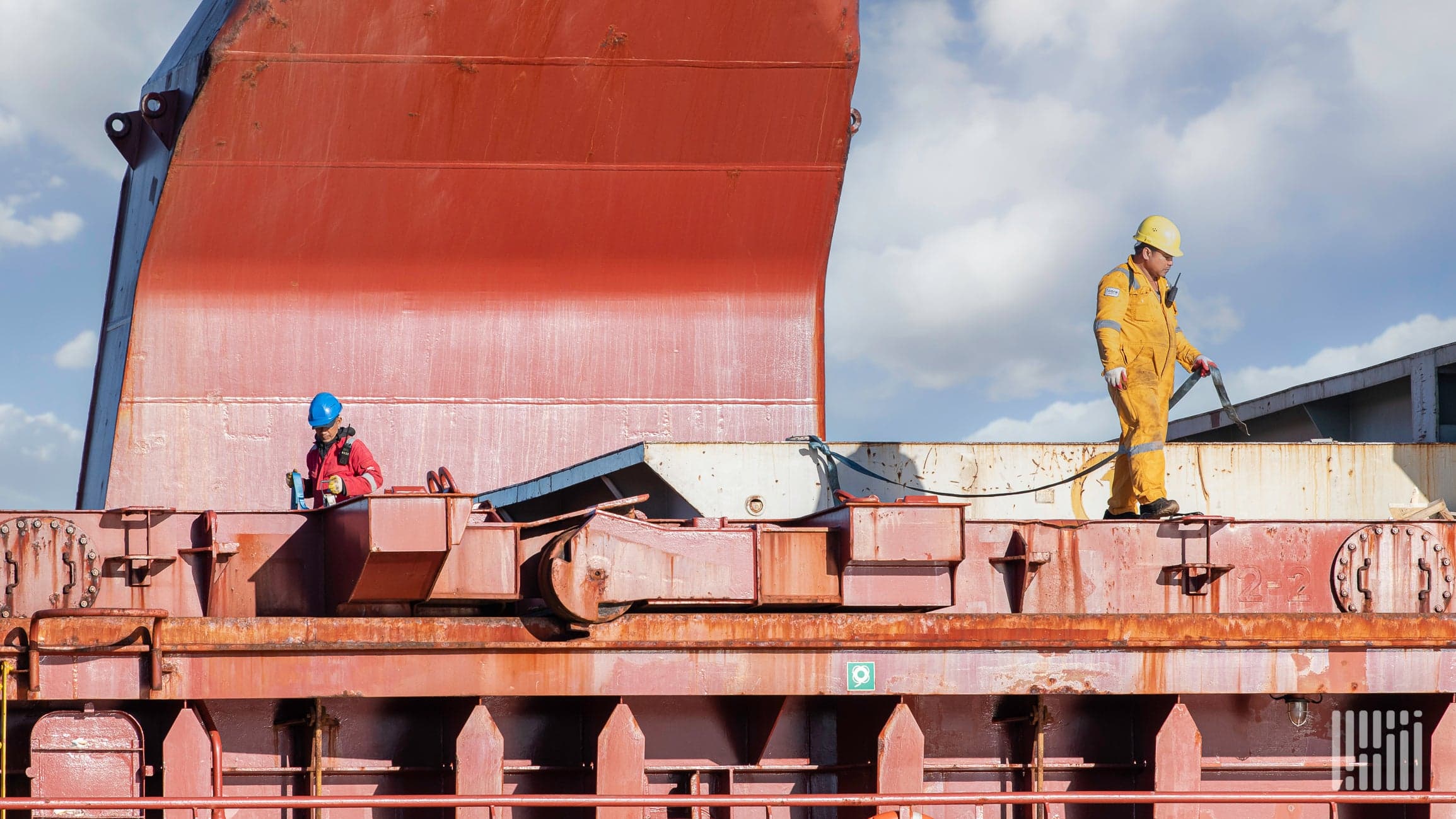
The Global Shipping Industry Is Facing a Serious Talent Crisis
The maritime industry quietly powers the global economy, moving more than 80% of the world's traded goods across oceans and waterways. Yet behind this critical infrastructure lies a growing and urgent problem: a deepening shortage of skilled talent. Much like the trucking and railroad industries before it, the global shipping sector is now confronting a workforce crisis that threatens both its operational capacity and its long-term sustainability. With approximately 2 million men and women currently crewing the world's commercial maritime fleet, shipowners and operators are locked in an intensifying global fight for talent that shows no signs of easing.
A Crisis Playing Out on the World Stage
The workforce challenge in maritime shipping is not happening in isolation. It is unfolding against a backdrop of geopolitical tension, economic uncertainty, and rapid technological change. Speaking at a seminar held in Athens by the Baltic and International Maritime Council (BIMCO), the organization's president Paul Pathy drew direct attention to the human cost of the current climate.
"This could hardly be more topical at a time when around 20,000 seafarers are stuck in the Persian Gulf," Pathy said. "At times like these, it's not only the principle of freedom of navigation that is compromised, but also the freedom of our seafarers who are prevented from going home to their families. Once again, they are paying a very high price in the middle of a conflict. Their freedom of navigation should never be negotiable."
His words underscore a painful reality: seafarers are often invisible to the public eye until something goes dramatically wrong. BIMCO Secretary General and Chief Executive David Loosley echoed this sentiment, noting that "when shipping makes the headlines, it's usually because something has gone wrong, and too often what gets lost behind the headlines is the human dimension — the people."
Copenhagen-based BIMCO is one of the world's largest and most influential associations representing shipowners, charterers, shipbrokers, and agents. The Athens seminar took place ahead of the release of a major new report detailing the full scope of maritime workforce issues, signaling that the industry is taking the challenge seriously at the highest levels.
Recruitment vs. Retention: Understanding the Distinction
One of the most important insights emerging from industry discussions is the distinction between recruiting new talent and retaining existing expertise. Julia Anastasiou, chief crew management officer at OSM Thome — a leading ship management company headquartered in Norway with offices in the United States — made a point of clarifying where the real pressure lies.
"There are gaps in the recruitment and training processes," Anastasiou said, adding that what the industry is truly experiencing is "a fight for talent as opposed to a fight for recruitment." The nuance is significant. It is not simply a matter of finding enough people to fill available roles; it is about finding the right people with the right skills, mindset, and commitment to build a long-term maritime career.
This distinction matters because it shapes how companies, training institutions, and industry bodies must respond. Blanket recruitment campaigns may generate applicants, but without the proper training infrastructure, career development pathways, and support systems in place, new hires are unlikely to stay long enough to build the deep expertise that the industry depends on.
The Challenge of an Aging Maritime Workforce
Like trucking and railroads, shipping faces a generational transition that is straining the pipeline of experienced professionals. Veteran seafarers who have spent decades at sea are increasingly moving into shore-based roles, taking with them invaluable institutional knowledge that is difficult to replace. If this knowledge transfer is not managed carefully, the industry risks losing critical expertise faster than it can develop new talent to fill the void.
Elpi Petraki, an executive with Greek shipowner Enea Management and president of the Women's International Shipping and Trading Association (WISTA), stressed the importance of a dual focus: attracting the next generation of seafarers while simultaneously preserving the experience of those transitioning off the water. "It's not only about attracting the younger generation of seafarers," Petraki told a panel discussion, "but also focusing on retaining the experience and institutional knowledge of individuals who are transitioning to shore-based roles."
This aging workforce dynamic is compounded by the fact that life at sea remains a demanding career choice. Extended periods away from family, exposure to geopolitical risk, and physically challenging working conditions make it harder to attract younger candidates who have access to a wider range of career options than ever before.
Why Diversity and Inclusion Are Central to the Solution
Broadening the talent pool is widely seen as one of the most practical ways to address the shortage. Women remain significantly underrepresented in maritime careers, particularly in seafaring roles, and industry leaders like Petraki are pushing hard to change that. Increasing gender diversity, improving working conditions, modernizing training programs, and creating clearer career progression routes are all part of the conversation.
- Expanding outreach to underrepresented communities and demographics to widen the applicant pool.
- Investing in modernized maritime education and training facilities that reflect the realities of today's vessels and technology.
- Developing mentorship and knowledge-transfer programs that capture institutional expertise before experienced professionals leave the workforce.
- Improving onboard welfare, mental health support, and communication infrastructure to make seafaring a more attractive long-term career.
- Strengthening partnerships between shipping companies, governments, and maritime academies to align training with real-world demand.
Technology, Transition, and the Future of Maritime Careers
The maritime industry is also undergoing a significant technological transformation. The shift toward digitalization, automation, alternative fuels, and greener shipping practices means that the skills required of tomorrow's seafarers will look different from those needed today. This transition creates both a challenge and an opportunity: while it raises the bar for technical competency, it also makes maritime careers more intellectually engaging and future-facing — qualities that can help attract a new generation of talent.
Training programs must evolve to prepare seafarers not just for the ships of today but for those being built and deployed in the decade ahead. This requires close collaboration between industry stakeholders, regulatory bodies, and educational institutions to ensure that the curriculum remains relevant, rigorous, and responsive to change.
The Stakes Have Never Been Higher
The global shipping industry's talent crisis is not a niche workforce issue — it is a systemic risk to international trade and supply chain resilience. As the industry grapples with geopolitical disruptions, decarbonization demands, and demographic shifts, the ability to attract, train, and retain skilled maritime professionals has become one of its defining strategic challenges. The seafarers who crew the world's fleet deserve to be recognized not just when crises hit the headlines, but as the essential and often underappreciated backbone of global commerce. Solving the talent crisis means starting with that recognition — and building an industry worthy of the people it needs most.