
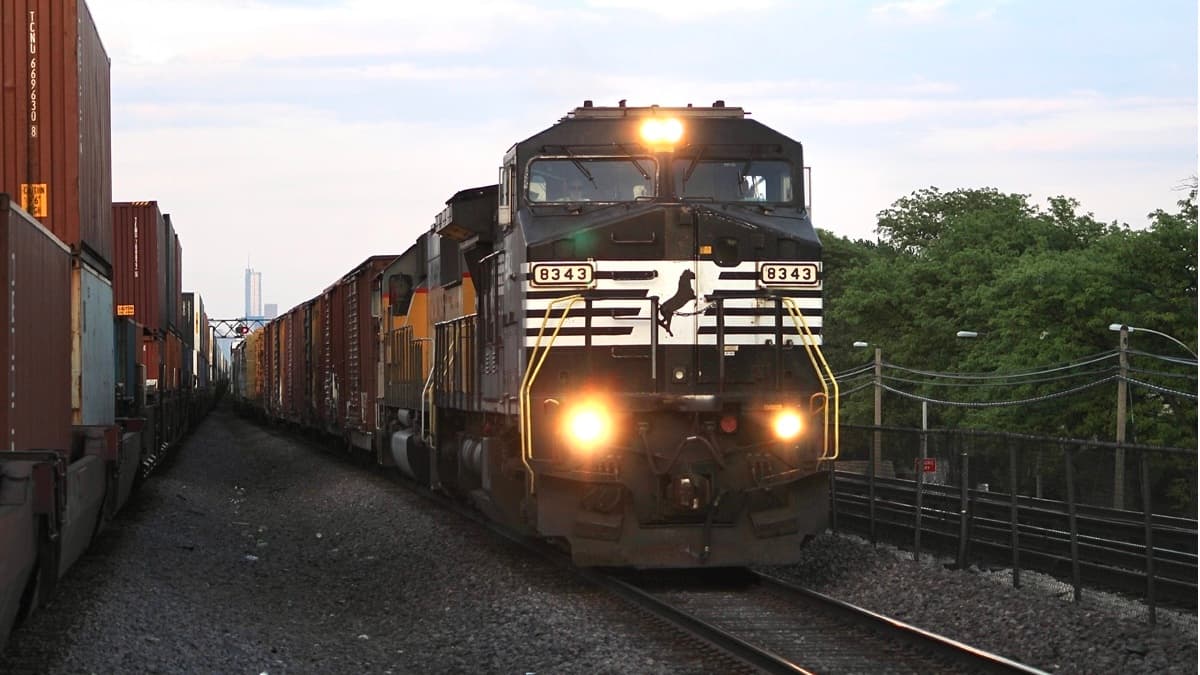
Norfolk Southern CEO Mark George Calls for Dual Focus on Operations and Union Pacific Merger
Norfolk Southern Chief Executive Mark George is sending a clear message to employees, customers, and investors alike: the railroad does not get to choose between running well today and building for tomorrow. It must do both. In a candid LinkedIn post published Monday, George addressed ongoing service challenges while reaffirming Norfolk Southern's commitment to its proposed merger with Union Pacific — and insisted that neither priority can be sacrificed for the other.
No Trade-Off Between Today and Tomorrow
George's public remarks come at a pivotal moment for one of North America's largest Class I railroads. Since announcing its plan to merge with Union Pacific (NYSE: UNP), Norfolk Southern (NYSE: NSC) has faced questions about whether executive attention and organizational energy are being diverted away from day-to-day performance. George pushed back firmly against that narrative.
"From the outset of our announcement to merge strengths with Union Pacific Railroad, we have been clear: Norfolk Southern is not singularly focused on closing a transaction," George wrote. He emphasized that responsible leadership demands more than a one-track mind, stating: "There is no trade-off between evaluating long-term opportunities to strengthen the freight rail network and executing at a high level for customers today. Responsible leadership requires both."
This dual mandate is not merely a talking point. For a railroad of Norfolk Southern's scale — spanning roughly 19,500 route miles across 22 states and the District of Columbia — falling short on either front carries significant consequences. Customers depend on reliable freight service to move goods efficiently, while shareholders and regulators scrutinize every operational and strategic move the company makes.
Merger With Union Pacific: What's at Stake
The proposed combination of Norfolk Southern and Union Pacific would create one of the most expansive rail networks in North American history, linking the eastern and western halves of the continent under a single corporate umbrella. Proponents argue the merger would unlock new routing options, reduce costs through operational efficiencies, and make freight rail a more competitive alternative to trucking.
George framed the merger as a vehicle for unlocking greater value for customers and employees alike, not just shareholders. "We also have to think about what will unlock their ability to tap a more competitive rail ecosystem," he wrote, positioning the transaction as a strategic investment in the future of freight rail rather than a financial engineering exercise.
However, any merger of this magnitude will face intense regulatory scrutiny from the Surface Transportation Board, the federal agency responsible for overseeing railroad consolidation. Demonstrating strong, consistent operational performance in the meantime is not just good business — it is a strategic necessity heading into the regulatory review process.
Current Service Struggles: Crew Shortages and Rising Volume
While George's forward-looking message was clear, he did not shy away from acknowledging the operational turbulence Norfolk Southern is currently navigating. The railroad has been struggling with a combination of crew shortages and rising freight volume — two factors that, when they collide, can quickly strain a rail network's capacity to deliver consistent service.
The challenges were compounded by a series of unfortunate events earlier in the year. Harsh winter weather in February disrupted normal operations across the network. Then, on March 7, a derailment forced the closure of Norfolk Southern's main line through Pennsylvania for 48 hours — a critical artery for freight moving between the Midwest and the East Coast. The ripple effects of that disruption lingered well into the spring, with terminal dwell times rising and average train speeds declining.
Signs of Recovery — With More Work to Do
There is cautious optimism that Norfolk Southern's operational situation is beginning to stabilize. George noted that service metrics showed improvement following the traditional volume dip around Memorial Day weekend, a seasonal pattern common across the freight rail industry. Lower volume periods typically give railroads a window to reset network fluidity, reposition equipment, and catch up on deferred maintenance.
Yet the CEO made clear that a temporary reprieve is not the same as a sustainable recovery. Customers expect consistent, reliable service — not just improvement during slow periods. The railroad's long-term credibility with shippers, and its standing heading into the merger review process, depends on demonstrating that its operational improvements are durable rather than seasonal.
What This Means for Customers, Employees, and Investors
George's message carries distinct implications for each of Norfolk Southern's key stakeholders:
- Customers can take his remarks as a commitment that service improvement remains a top priority, even as the merger dominates headlines. Shippers who have experienced delays or reliability issues should watch operational metrics closely in the coming months.
- Employees are being told that their work matters on both fronts — keeping the railroad competitive today is just as important as building the case for a stronger rail ecosystem tomorrow.
- Investors receive reassurance that management is not losing sight of near-term execution in pursuit of a transformational deal that may take years to close and integrate.
The Bigger Picture: Freight Rail at a Crossroads
Norfolk Southern's situation reflects a broader tension running through the freight rail industry. Class I railroads have faced mounting pressure from shippers, regulators, and legislators to improve service quality following years of complaints about reliability. At the same time, industry leaders are increasingly convinced that scale and network consolidation are essential to competing with the trucking industry and attracting new freight customers.
Mark George's central argument is that these two imperatives are not in conflict — that a railroad which executes well today is better positioned to win regulatory approval and customer trust for the larger vision it is pursuing. Whether Norfolk Southern can deliver on both simultaneously will be one of the most closely watched stories in freight transportation over the next several years.
For now, the CEO's message is unambiguous: there are no excuses, no trade-offs, and no permission to take your eye off the ball. Norfolk Southern must earn its future by performing in the present.