
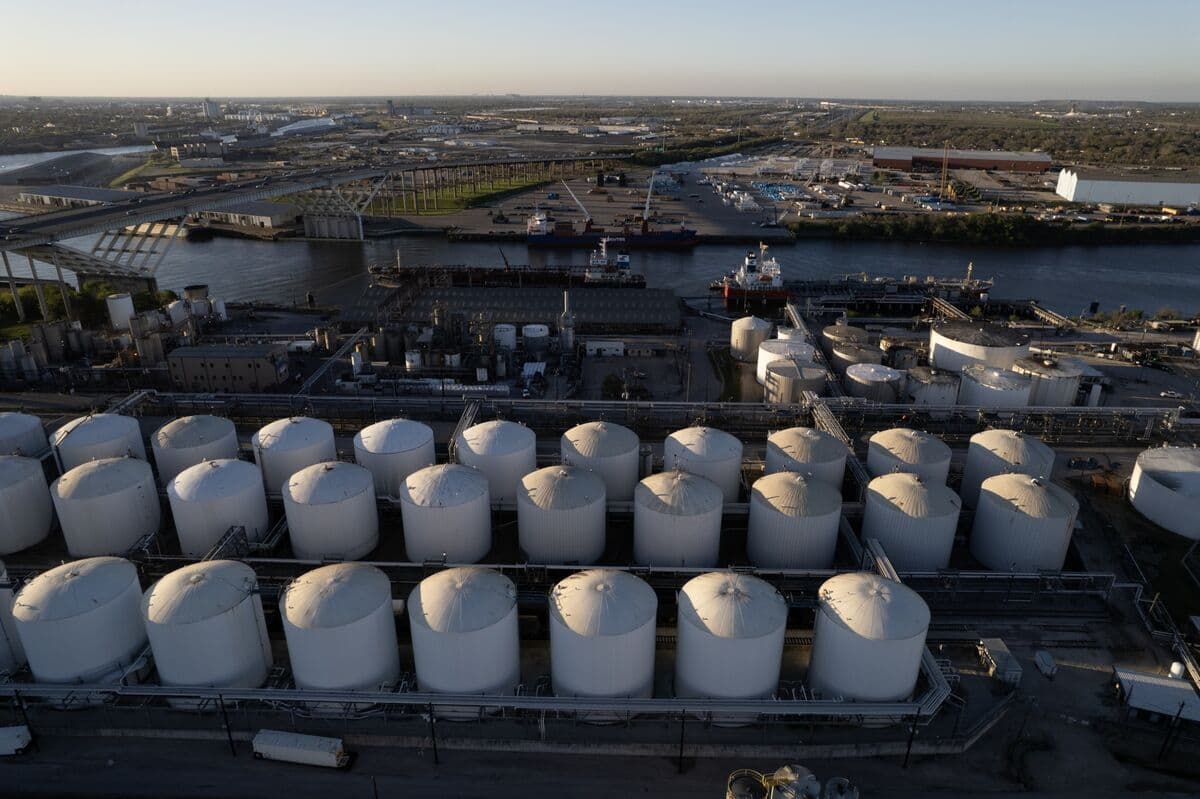
Oil Prices Tumble as US-Iran Interim Deal Raises Hopes of Hormuz Reopening
Global oil markets reacted swiftly and decisively as news broke that the United States and Iran had agreed to an interim deal aimed at ending their prolonged armed conflict. Crude oil prices sank sharply on the announcement, with traders and analysts interpreting the agreement as a potential turning point that could reopen the Strait of Hormuz — one of the world's most critical energy chokepoints — to international shipping. For energy markets already navigating a complex web of supply pressures and demand uncertainties, the development marked a seismic shift in the geopolitical landscape.
What the US-Iran Interim Deal Means for Global Energy Markets
The interim agreement between Washington and Tehran represents a significant diplomatic breakthrough after a period of intense military and economic tension. While the full details of the deal continue to be negotiated and verified, the immediate market signal was unambiguous: the prospect of Iranian crude returning to global supply, combined with the potential reopening of the Strait of Hormuz, is bearish for oil prices.
Analysts noted that the sheer speed of the market reaction reflected just how much of a geopolitical risk premium had been baked into oil prices during the conflict. With that premium now unwinding, benchmark crude contracts — both Brent and West Texas Intermediate (WTI) — experienced some of their steepest single-session declines in recent months.
The deal, even in its interim form, sends a clear message to energy traders: the era of Hormuz blockage risk, at least in its current acute phase, may be drawing to a close. That signal alone was enough to trigger significant selling pressure across crude futures markets.
Why the Strait of Hormuz Matters So Much to Oil Supply
To understand why the potential reopening of the Strait of Hormuz carries such enormous weight for global energy markets, it helps to appreciate the strategic importance of this narrow waterway. Situated between Iran and Oman at the mouth of the Persian Gulf, the Strait of Hormuz is the single most important oil transit chokepoint in the world.
According to the U.S. Energy Information Administration (EIA), roughly 20 to 21 million barrels of oil per day — equivalent to approximately 20% of global petroleum liquids consumption — pass through the strait under normal circumstances. The waterway is the only sea route linking the vast oil reserves of Saudi Arabia, Iraq, the United Arab Emirates, Kuwait, and Iran itself to global markets.
- Any sustained disruption to Hormuz traffic directly threatens energy security across Europe, Asia, and beyond.
- Countries like Japan, South Korea, China, and India are particularly exposed, as they rely heavily on Persian Gulf crude imports.
- Even temporary closures or threats of closure have historically sent oil prices surging, as markets price in supply shock scenarios.
During the height of the US-Iran conflict, fears of a Hormuz blockade had contributed meaningfully to elevated crude prices, tightened shipping insurance premiums, and rerouting of tanker traffic at significant additional cost. A confirmed reopening would begin to unwind all of these pressures simultaneously.
How Iranian Oil Supply Could Re-Enter the Market
Beyond the Hormuz reopening, traders are already beginning to factor in the longer-term implications of a normalized relationship between Washington and Tehran — specifically, the possibility that Iranian crude oil could begin flowing more freely into global markets again.
Iran holds some of the largest proven oil reserves in the world, estimated at over 200 billion barrels. Under the weight of sanctions and conflict, Iranian output had been significantly constrained. A diplomatic resolution, even a partial one, raises the real prospect of Iranian production capacity being unlocked over time.
Analysts are divided on how quickly and how significantly Iranian barrels could re-enter the market. Some argue that infrastructure damage and years of underinvestment mean Iran would require substantial time and capital to ramp production meaningfully. Others suggest that with international energy companies potentially able to re-engage, the timeline could be shorter than pessimists expect.
Either way, the directional pressure on oil prices from additional Iranian supply is clear: downward. OPEC+ members, particularly Saudi Arabia, are already watching developments closely, knowing that any Iranian supply surge could complicate their own carefully managed production agreements.
Market Reaction: What Traders and Analysts Are Saying
The sell-off in crude markets was broad-based and immediate. Energy traders who had positioned for continued supply disruption found themselves rapidly unwinding those trades. Hedge funds and institutional investors with long oil positions faced mounting losses as the geopolitical risk premium evaporated in real time.
Several commodity analysts noted that while the deal is described as interim — meaning final terms are yet to be locked in — markets rarely wait for confirmation before pricing in a directional shift of this magnitude. The precedent of diplomatic engagement alone is enough to recalibrate risk models.
Oil-sensitive equities also felt the pressure. Shares of major energy producers and oil services companies declined, reflecting expectations that the windfall environment created by elevated crude prices could begin to normalize. Refining margins, which had been boosted in part by supply tightness, also came under pressure.
What Comes Next for Oil Prices
While the initial market reaction has been decisively bearish for oil, the path forward remains uncertain. Interim deals can break down, implementation can stall, and geopolitical situations rarely move in a straight line. Traders will be watching closely for the following developments in the coming weeks and months.
- Confirmation that the Strait of Hormuz is formally reopened and safe for commercial tanker traffic.
- Any signs of diplomatic backsliding or new flashpoints between the US, Iran, or regional powers.
- OPEC+ response strategy, as the group may choose to adjust production quotas to defend a price floor.
- The pace at which Iranian crude can realistically re-enter export markets, subject to sanctions relief timelines.
- Demand-side signals from major consuming nations, particularly China, which remains the world's largest crude importer.
For consumers and businesses worldwide, lower oil prices — if sustained — translate into relief at the pump, reduced transportation and logistics costs, and broader disinflationary pressure at a time when many economies are still grappling with elevated price levels. Central banks will be monitoring energy price dynamics carefully as they calibrate monetary policy decisions.
The Bigger Picture: Geopolitics and Energy Security
The US-Iran interim deal and the prospect of a reopened Strait of Hormuz serve as a powerful reminder of just how deeply intertwined geopolitics and global energy markets remain. Despite years of investment in renewable energy and efforts to diversify supply chains, the world's dependence on Persian Gulf oil — and on the narrow waterways through which it travels — has not fundamentally changed.
The episode also underscores the speed at which geopolitical risk can be priced into and out of commodity markets. In an era of algorithmic trading and real-time global information flows, market participants react to diplomatic headlines within minutes, creating volatility that can have real-world consequences for producers, consumers, and financial markets alike.
As negotiations continue and the situation develops, the energy world will be watching Hormuz closely. The reopening of that narrow strait would mark not just a logistical milestone, but a genuine turning point in one of the most consequential geopolitical stories affecting global oil markets today.