
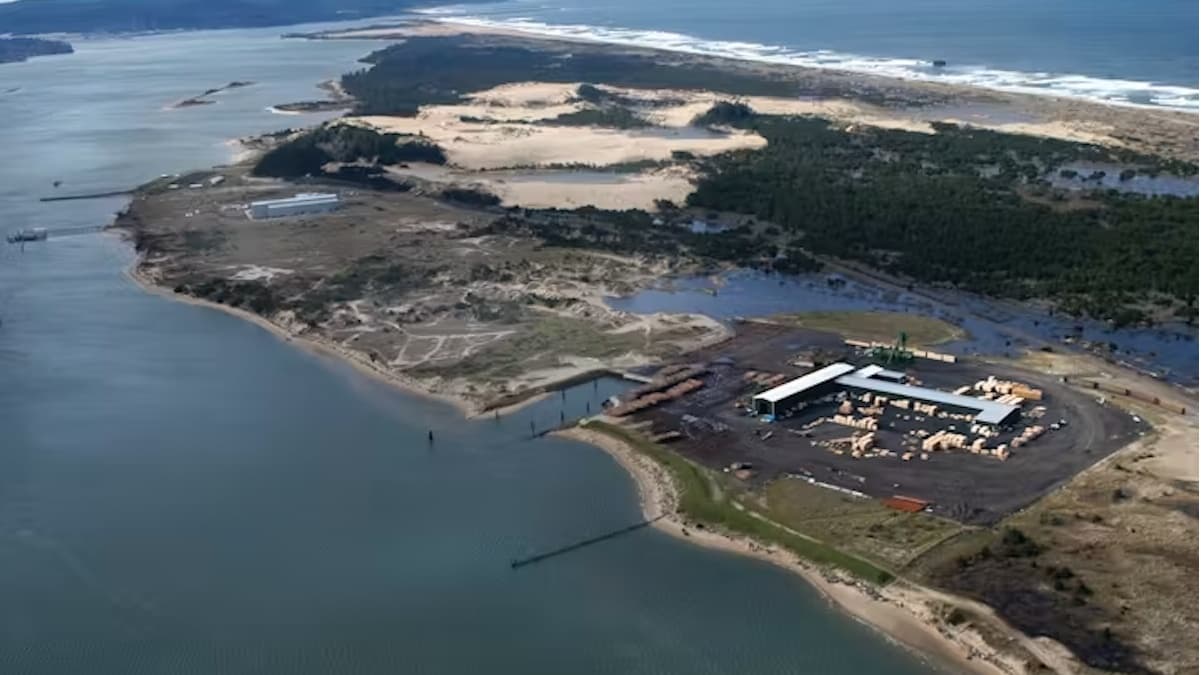
Oregon's Coos Bay Port Greenlights $25 Million Federal Grant for Groundbreaking Ship-to-Rail Terminal
In a landmark step for West Coast freight infrastructure, the port commission of the Oregon International Port of Coos Bay has officially approved a $25 million federal grant agreement. This approval clears the path for planning and pre-construction activities on what is projected to become the first fully ship-to-rail intermodal terminal on the entire West Coast — a development that could fundamentally reshape how container cargo moves through the Pacific shipping corridor.
The project, known as the Pacific Coast Intermodal Port (PCIP), has been gaining momentum as supply chain stakeholders look for new and resilient freight options beyond the already congested ports of Los Angeles and Long Beach. With this latest milestone, that vision moves one significant step closer to reality.
What the $25 Million INFRA Grant Covers
The federal funding comes from the Infrastructure for Rebuilding America (INFRA) grant program, a competitive federal initiative designed to support freight and highway projects of national or regional significance. The $25 million award will be matched dollar-for-dollar by NorthPoint Development, the port's private-sector partner in this public-private partnership, bringing the combined investment for this phase to $50 million.
Together, these funds will finance environmental review, permitting processes, and preliminary engineering activities — the foundational groundwork that must be completed before any large-scale construction can begin. These pre-construction phases are critical in determining the long-term feasibility, timeline, and environmental impact of a project of this scale.
Chad Meyer, president of NorthPoint Development, emphasized the ongoing urgency behind the project: "The market need for additional freight capacity and supply chain resilience hasn't changed. If anything, it's become more apparent. This agreement helps us advance the ball and positions us to meet that demand."
A First for the West Coast: What Makes This Terminal Unique
The Pacific Coast Intermodal Port is designed to do something no other facility currently does on the West Coast — offer a fully integrated, ship-to-rail intermodal connection for container traffic. That means cargo arriving by ocean vessel can be transferred directly to rail cars without the intermediate trucking steps that add cost, time, and emissions to typical port operations.
The terminal will move shipping containers between the Port of Coos Bay and Eugene, Oregon, via the port's own Coos Bay Rail Line. From Eugene, freight connects with Union Pacific (NYSE: UNP) and the broader national rail network, giving shippers access to destinations across the continental United States.
When fully operational, the Pacific Coast Intermodal Port is projected to handle up to 2 million twenty-foot equivalent units (TEUs) annually. To put that figure in perspective, a single TEU represents one standard 20-foot shipping container — the backbone unit of global trade measurement. A 2 million TEU capacity would make PCIP a serious player in the North American container freight market from day one.
Stacking Up the Funding: A Multi-Source Investment Strategy
The $25 million INFRA grant is just one component of an increasingly robust funding stack assembled for this project. The total estimated cost of the Pacific Coast Intermodal Port is approximately $2.3 billion, and stakeholders at the state and federal level have been lining up to invest in its success.
Here is a breakdown of the major funding sources secured so far:
- INFRA Grant (Federal): $25 million approved by the Coos Bay port commission, matched by $25 million from NorthPoint Development for a combined $50 million pre-construction fund.
- Oregon Legislature: The state has committed $100 million to the project, signaling strong local and regional political will behind the development.
- Consolidated Rail Infrastructure and Safety Improvements (CRISI) Grant: An additional $29.75 million in federal rail funding has been secured through this separate program administered by the Federal Railroad Administration.
- U.S. Maritime Administration (MARAD) Port Infrastructure Development Program: Another $11.25 million in federal maritime funding has been awarded, recognizing the project's importance to national port infrastructure.
Taken together, these awards represent a substantial and diversified public-sector commitment to a project that private industry is co-funding through the public-private partnership structure with NorthPoint Development.
Why Supply Chain Resilience Makes This Project Critical
The timing of the Pacific Coast Intermodal Port's development cannot be separated from the broader conversation about supply chain vulnerabilities that came into sharp relief during and after the COVID-19 pandemic. Bottlenecks at Southern California ports cost American businesses billions of dollars and exposed just how fragile a concentrated freight network can be.
Coos Bay offers a strategic alternative. Its natural harbor and geographic positioning along the Oregon coast provide access to trans-Pacific shipping lanes, while the existing Coos Bay Rail Line gives the port a direct inland freight corridor that many competing terminals lack. Adding a fully intermodal ship-to-rail capability transforms the port from a regional asset into a nationally relevant freight hub.
Diversifying West Coast port capacity across multiple facilities — rather than concentrating volume at a handful of mega-ports — is widely regarded by logistics experts as one of the most effective long-term strategies for supply chain resilience. The Pacific Coast Intermodal Port is designed precisely with that logic in mind.
What Comes Next for the Pacific Coast Intermodal Port
With the grant agreement now officially approved by the port commission, the next phases of work will focus on completing environmental review and permitting — processes that, for a project of this magnitude, typically involve extensive public comment periods, agency coordination, and detailed assessments of impacts on land, water, and local communities.
Preliminary engineering work will run in parallel, translating the project's vision into detailed technical specifications that construction teams can eventually execute. These steps are not quick, but they are necessary, and the approval of this grant agreement signals that all parties are firmly committed to keeping the project moving forward.
As freight demand continues to grow and supply chain resilience remains a top priority for both government and industry, the Pacific Coast Intermodal Port represents one of the most ambitious and strategically significant infrastructure investments underway on the West Coast today. Stakeholders across the shipping, rail, and logistics sectors will be watching Coos Bay closely in the months and years ahead.