
Pemex and Petrobras Sign an MOU — But What Does It Actually Mean?
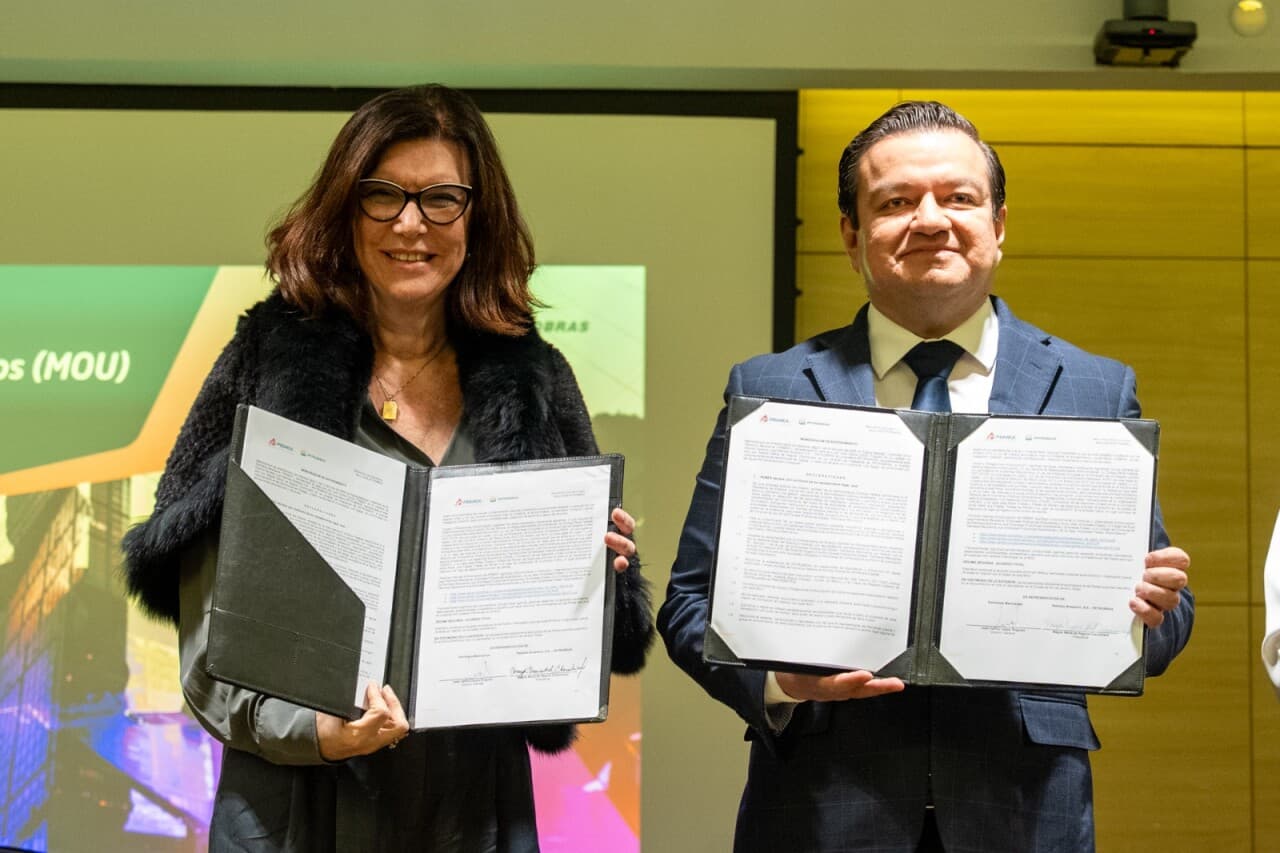
On June 23, 2026, two of Latin America's most consequential oil companies sat down in Rio de Janeiro and signed a Memorandum of Understanding. The headlines followed quickly: Pemex and Petrobras, the national energy champions of Mexico and Brazil, were joining forces. But as with most agreements between state-linked energy giants, the real story lies in the fine print — and in one sentence in particular.
The document explicitly states that the agreement "does not constitute a binding investment commitment nor does it create a partnership, consortium, or joint venture." For anyone tracking Latin American energy markets, that single clause defines the entire scope of what was signed. This is a technical and strategic bridge, not a financial alliance. Understanding the distinction is essential for investors, policymakers, and energy analysts trying to read the road ahead.
Two Companies, Two Very Different Models
To understand why the MOU is structured the way it is, you first have to understand the fundamental differences between the two companies at the table.
Pemex is a fully state-owned enterprise. The Mexican government holds 100 percent of its shares, there are no market listings, and the company's mandate has historically been tied directly to the nation's energy policy rather than to shareholder returns. It operates as an instrument of the state as much as a commercial enterprise, which gives it strategic flexibility but limits its exposure to capital market discipline.
Petrobras is an entirely different creature. It is a mixed-economy corporation listed on the B3 stock exchange in São Paulo and on the New York Stock Exchange. Private investors hold significant stakes, and those investors demand financial discipline, operational transparency, and measurable results. Petrobras answers to quarterly earnings reports, credit rating agencies, and environmental, social, and governance frameworks in ways that Pemex simply does not.
That structural gap explains why a full joint venture or investment partnership was never on the table. Any binding financial commitment between the two companies would need to satisfy Petrobras's fiduciary obligations to private shareholders — a far more complex undertaking than a non-binding technical exchange. The MOU format allows both companies to cooperate meaningfully without triggering those obligations.
The Logic of Complementarity
Despite their differences, the two companies have genuine reasons to work together, and those reasons are rooted in what each one needs and what the other one has.
Pemex holds significant strategic assets. Its portfolio includes mature onshore fields, deep-water blocks in the Gulf of Mexico, and geological prospects with meaningful hydrocarbon potential. The challenge is not the resource base — it is the technical and operational capacity to develop those resources efficiently. Years of underinvestment, financial strain, and shifting government priorities have left Pemex in need of modern methodologies, advanced drilling practices, and institutional knowledge that it cannot easily generate internally.
Petrobras offers exactly that. The Brazilian company has built one of the most technically sophisticated offshore oil operations in the world through its work in the pre-salt layer beneath the Santos and Campos basins. The pre-salt fields have required Petrobras to master ultra-deepwater drilling, subsea engineering, and high-pressure reservoir management at a scale and complexity few operators anywhere can match. That accumulated expertise is precisely what Pemex is looking to access through this agreement.
On the other side of the equation, Petrobras sees real strategic value in Mexico. The Gulf of Mexico remains one of the most prolific hydrocarbon basins in the Western Hemisphere, and deeper engagement there would expand Petrobras's geographic footprint in a mature, high-value market. Beyond exploration and production, the MOU also opens discussions around refining, petrochemicals, fertilizers, and lower-carbon fuels — areas where both companies are under pressure to modernize and where knowledge-sharing could accelerate progress for both sides.
What the MOU Actually Covers
The agreement carries a two-year term with the possibility of renewal. Its scope, as outlined in the signed document, spans three broad areas:
- Exploration and production: Including technical exchanges on offshore operations, mature field optimization, and geological assessment methodologies drawn from Petrobras's pre-salt experience.
- Industrial processes: Covering refining efficiency, petrochemical integration, and the potential for joint development of fertilizer and specialty chemical production.
- Knowledge and experience transfer: Structured personnel exchanges, joint training programs, and shared best practices across engineering, safety, and environmental management disciplines.
None of these areas involves capital deployment by either company into the other's operations. There are no equity stakes, no shared revenue structures, and no binding project timelines attached to the MOU. What it creates is a framework — a formalized channel through which conversations, studies, and pilot exchanges can take place without either party committing resources before the value of deeper cooperation is validated.
What This Agreement Is Not
It would be a mistake to read this MOU as a precursor to privatization, a workaround for Pemex's debt situation, or a signal that Petrobras is preparing to deploy capital into Mexican upstream assets in the near term. The non-binding language is not legal boilerplate — it is a deliberate signal about the current limits of what both parties are prepared to do.
For Pemex, any arrangement that looked like a partial privatization or foreign equity participation would face significant political headwinds in Mexico, where energy nationalism remains a powerful and electorally relevant force. For Petrobras, committing investment capital to a partner operating under Pemex's financial and governance constraints would face scrutiny from the private shareholders it is legally obligated to serve.
The MOU sidesteps both of those friction points by keeping the relationship at the technical and strategic level, at least for now.
Why This Agreement Still Matters
Even without binding commitments, the Pemex-Petrobras MOU carries real significance. It formalizes a relationship between two companies that share a region, a resource base, and a set of common challenges around energy transition, production efficiency, and long-term competitiveness. It creates institutional pathways for knowledge transfer that could, over time, meaningfully improve Pemex's operational capabilities.
It also signals something about the broader direction of Latin American energy diplomacy — a recognition that national oil companies in the region have more to gain from structured cooperation than from isolation, even when the political and financial structures that govern them make deeper integration difficult.
Whether this particular MOU evolves into something more substantial will depend on what the two-year working period produces. If pilot projects demonstrate clear value, if technical exchanges deliver measurable improvements, and if the political environment in both countries remains supportive, the groundwork for a more binding arrangement could take shape. For now, what exists is a carefully constructed agreement designed to make progress possible without making promises neither side is yet ready to keep.