
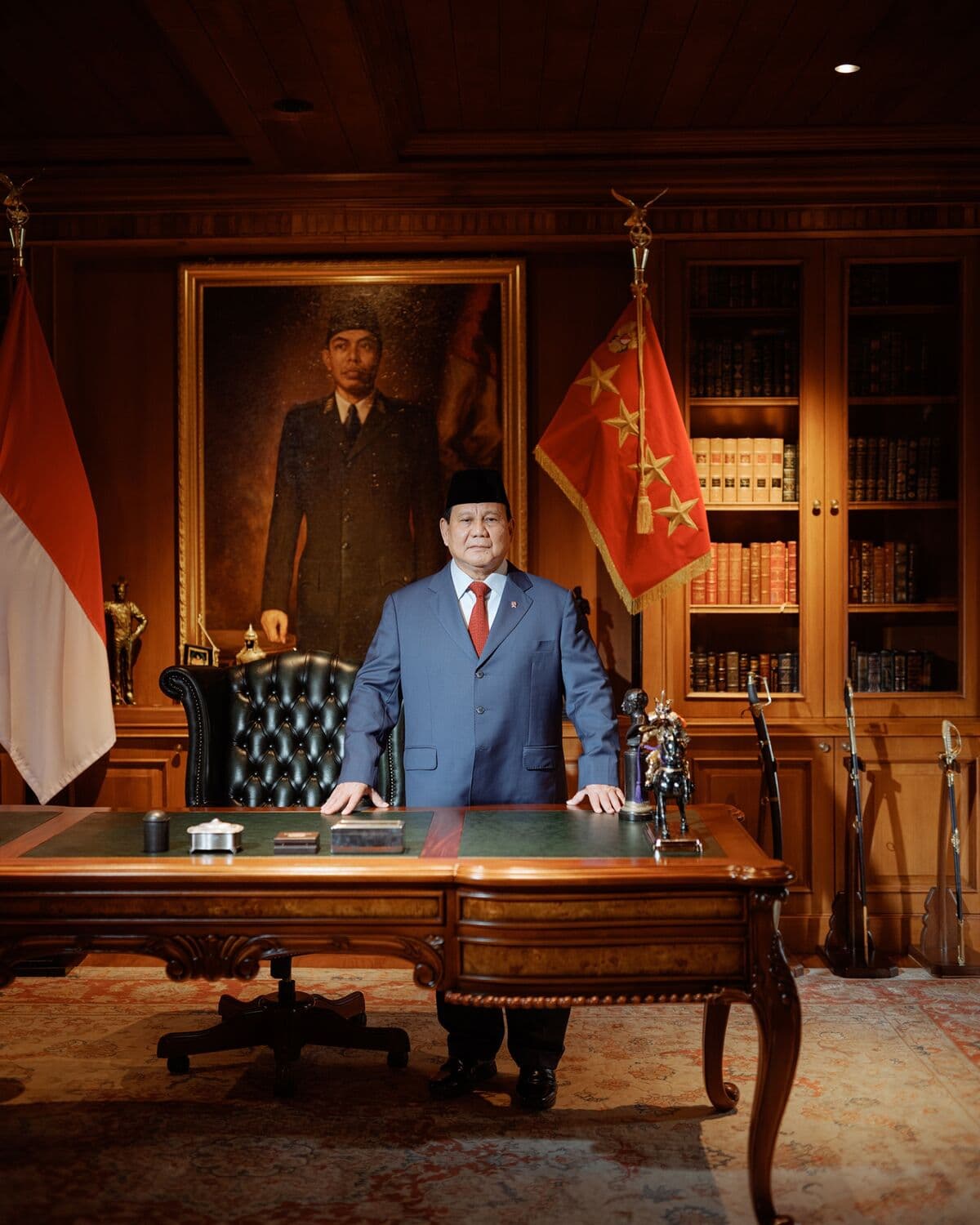
Indonesia's Investment Climate Under Prabowo: A Growing Cause for Concern
For years, Indonesia wore the badge of "emerging-market darling" with well-earned pride. Stable growth, a booming consumer base, rich natural resources, and a democratic track record that inspired confidence across global boardrooms made Southeast Asia's largest economy a go-to destination for foreign capital. But as President Prabowo Subianto settles deeper into power, a new and unsettling narrative is taking shape — one defined by unpredictable state intervention, opaque decision-making, and a tight inner circle that is leaving international investors increasingly wary.
The Shift in Indonesia's Investment Story
Indonesia's rise as an investment destination was built on a foundation of institutional credibility. Reforms under previous administrations streamlined regulations, opened strategic sectors to foreign ownership, and signaled that the country was serious about integrating into global supply chains. Portfolio investors poured money into Indonesian equities and bonds, while multinational corporations set up regional headquarters in Jakarta, betting on long-term growth.
That confidence is now being tested. Under President Prabowo, observers both inside and outside the country have noted a growing tendency toward unpredictability in policy execution. Decisions that once followed transparent regulatory pathways are increasingly being shaped behind closed doors, influenced by a small circle of advisers and loyalists whose priorities do not always align with market expectations. For investors who depend on consistency and the rule of law, this shift is not a minor inconvenience — it is a fundamental risk factor.
State Intervention: From Occasional Tool to Central Strategy
One of the clearest signals troubling the investment community is the expanding role of the state in commercial decision-making. While state-led development is not unusual in Southeast Asia, the manner and pace of intervention under the current administration has raised eyebrows. Strategic industries are experiencing increasing government direction, and private-sector actors — both domestic and foreign — have reported difficulty navigating an environment where the goalposts can shift without warning.
Key sectors such as mining, energy, and food production, which are critical to Indonesia's economic identity, have seen regulatory changes rolled out with limited consultation. Licensing processes that were once predictable have become entangled in political considerations, and enforcement of existing rules has been uneven. For foreign companies weighing capital allocation across competing emerging markets, these are red flags that translate directly into higher risk premiums and, ultimately, reduced investment appetite.
Who Is Inside the Palace?
Much of the investor anxiety circles back to questions about who is actually shaping economic policy. Prabowo's inner circle is described by analysts as notably insular, drawing heavily from military backgrounds and long-standing personal loyalties rather than technocratic expertise. While the president himself has spoken the language of economic development and national self-sufficiency, the practical implementation of policy has often diverged from the reassuring rhetoric delivered in high-profile settings.
This disconnect between public statements and on-the-ground reality has become a recurring frustration. Investors attending investor summits and meeting with government officials come away with pledges of openness and reform, only to encounter a very different bureaucratic experience when projects move into the operational phase. The credibility gap is widening, and credibility, once lost, is extraordinarily difficult to rebuild.
Indonesia Falling Behind Its Peers
The consequences of this uncertainty are beginning to show up in comparative data. While regional competitors like Vietnam, India, and even the Philippines have attracted growing waves of foreign direct investment — benefiting partly from supply chain diversification away from China — Indonesia's share of that capital has not grown commensurately with its potential. What was once a global laggard-turned-darling risks reverting to the earlier description.
- Foreign direct investment flows have shown signs of softening in sectors most affected by regulatory unpredictability.
- Indonesia's equity markets have underperformed several regional peers on a risk-adjusted basis since Prabowo assumed office.
- Ratings agency analysts and sovereign debt investors have flagged governance concerns as a watch factor in their Indonesia assessments.
- Several high-profile infrastructure and energy projects have stalled or been renegotiated in ways that disadvantaged foreign partners.
Each of these data points, taken in isolation, might be dismissed as noise. Taken together, they paint a troubling picture of a country that is squandering a genuine window of opportunity during a period when global capital is actively searching for alternatives to traditional destinations.
What Would Restore Investor Confidence?
The path back to credibility is not impossible, but it requires deliberate action. Investors and analysts have been broadly consistent in what they say they need to see from Jakarta. Transparent, rules-based decision-making must be restored as the default, not the exception. Regulatory frameworks must be applied consistently regardless of political relationships. Technocratic voices within the government need to be genuinely empowered — not just present for optics — when economic policy is being shaped.
There is also the question of communication. Investors can tolerate policy change, but they struggle to tolerate surprise. Clear signaling, proper consultation periods, and accessible channels for dialogue between the private sector and government would go a long way toward rebuilding the trust that has eroded in recent months.
The Broader Stakes for Indonesia
Indonesia's long-term economic ambitions — including its aspirations to join the ranks of upper-middle-income countries and eventually achieve high-income status — depend critically on sustained foreign investment and deep integration into global trade networks. These goals are not achievable through resource nationalism and insider governance alone. They require the kind of institutional confidence that takes years to build and can be dismantled with remarkable speed.
President Prabowo and his circle have time to course-correct. But the window is not unlimited. For every month that policy uncertainty persists, capital that could have flowed into Indonesian factories, infrastructure, and innovation finds a home elsewhere. The emerging-market darling that the world once celebrated is watching its reputation — and its opportunity — slip quietly away.