
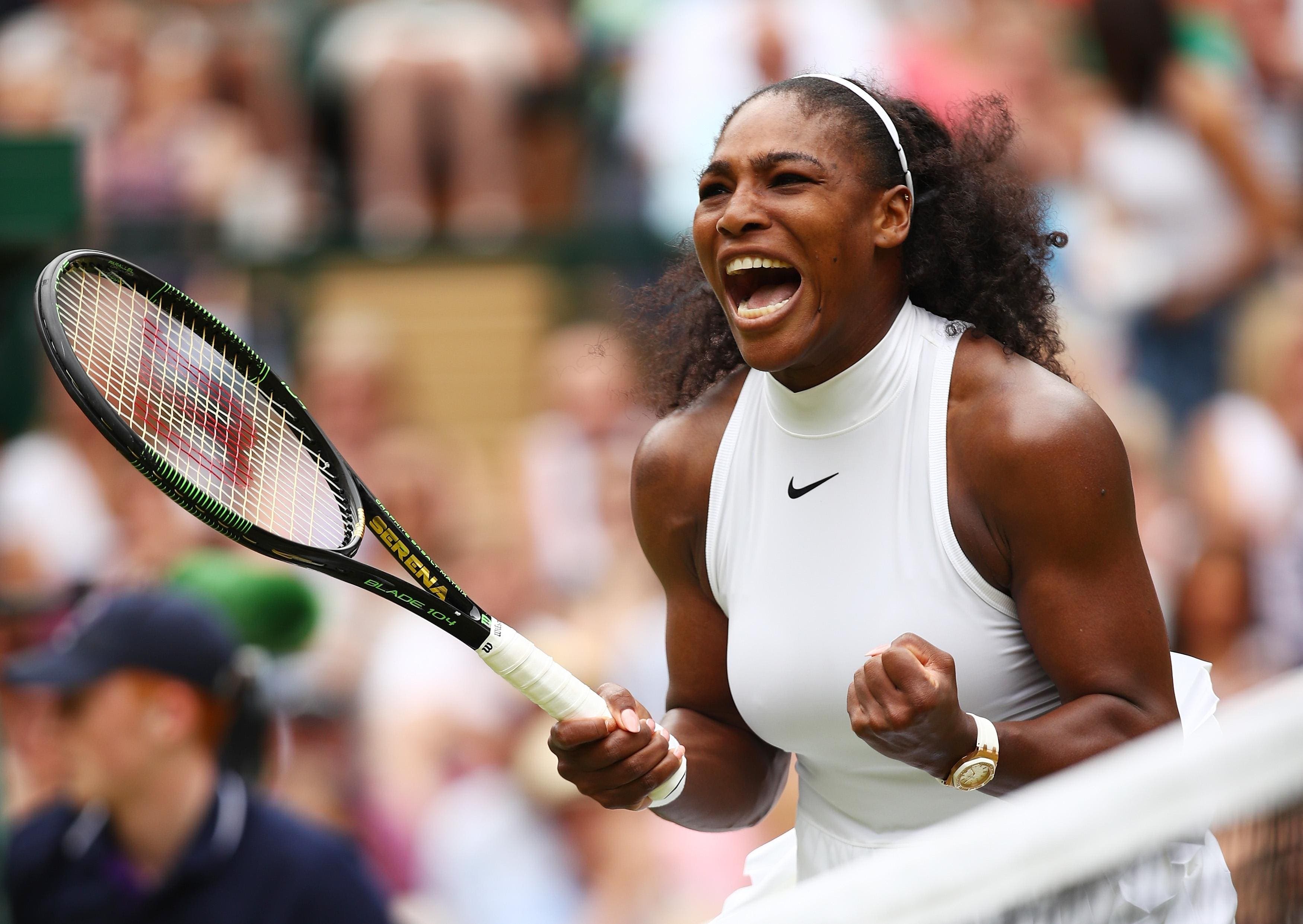
Serena Williams Is Back — And Wimbledon Will Never Be the Same
There are comebacks, and then there is Serena Williams. The 23-time Grand Slam champion is set to make one of the most electrifying returns in the history of professional tennis, walking back onto the grass courts of the All-England Club as a 44-year-old wildcard. From the moment her name appeared in the women's draw, the conversation shifted entirely. Suddenly, the question was no longer who would win Wimbledon — it was whether anyone could stop Serena.
As one insider close to the tournament put it simply: "No one's going to want to face her." Those words say everything about the kind of gravitational force Serena still commands, even years after her last competitive appearance on the Grand Slam stage.
The Most Anticipated Wildcard in Wimbledon History
Wimbledon wildcards are typically reserved for players recovering from injury, promising young talent, or beloved British competitors being given a home crowd boost. Rarely — if ever — has a wildcard slot carried the weight that Serena Williams' entry does in 2025. At 44 years old, she arrives not as a nostalgia act or a farewell tour, but as a genuine X factor who could disrupt the entire women's draw.
Her presence alone changes how every other player in the bracket prepares. Coaches will be building game plans. Opponents will be losing sleep. The draw ceremony, typically a procedural formality, became a spectacle the moment Serena's name was confirmed. No other player on the WTA Tour or beyond has that kind of effect.
Why the All-England Club Feels Like Home for Serena
If Serena Williams were to choose any court in the world for a comeback, the logic of returning to Wimbledon is undeniable. She has won the Wimbledon singles title seven times — a modern-era record — and the grass courts of SW19 have witnessed some of the most iconic moments of her extraordinary career. From her first title in 2002 to her final appearance in 2022, the All-England Club has been both a proving ground and a sanctuary.
Grass suits Serena's game in ways that other surfaces simply do not. Her powerful serve, which has clocked well over 120 mph throughout her career, is particularly devastating on fast grass. Her aggressive baseline game translates beautifully to a surface that rewards big hitting and shortens rallies. If she is anywhere close to competitive fitness, grass is where she gives herself the best possible chance.
What Has Changed — and What Has Not
Age is not just a number in professional tennis. The sport demands explosive movement, split-second reflexes, and a body capable of sustaining match after match over a grueling two-week tournament. At 44, Serena will face physical questions that no amount of competitive fire alone can answer. Recovery time between matches, the wear on joints and muscles, and the endurance required to outlast younger opponents who have been competing full-time are all legitimate variables.
And yet, what has not changed is the thing that has always made Serena Williams special: her mental fortitude. Throughout her career, she has won matches she had no business winning on paper. She has come back from match points, from injuries, from personal loss, and from childbirth to return to the top of the sport. The psychological dimension of Serena Williams on a Wimbledon court — in whites, in front of a roaring crowd — is not something that simply fades with age.
Her opponents will feel that the moment they walk out to face her.
The Women's Draw Just Got a Whole Lot More Interesting
Before Serena's entry was confirmed, the 2025 Wimbledon women's draw looked like a fascinating but fairly predictable contest between the current generation of elite players. Now, there is a wildcard in the truest sense of the word — someone whose ceiling, on any given day, may still be higher than anyone else in the field.
Current top-ranked players will not take Serena lightly. They know her history. They have studied her game. Some of them grew up watching her win these very titles. That psychological complexity adds an entirely new layer to the tournament's dynamics. A potential Serena Williams match in the second or third round would likely attract more viewers than many a Grand Slam final has in recent years.
What a Successful Run Would Mean for Tennis
Beyond the results, a competitive Serena Williams at Wimbledon 2025 would mean something profound for the sport of tennis itself. It would signal that the conversation about women athletes, age, and longevity needs to be fundamentally rewritten. It would inspire a generation of players who wonder whether their best years are behind them. And it would remind a global audience why Serena Williams is, by almost any measure, the greatest female tennis player who has ever lived.
Even if she loses in the first round — which, given her competitive instincts, feels unlikely to happen without a fierce fight — her very presence at the All-England Club will be a statement. At 44, with 23 Grand Slam titles and a legacy already cemented in history, Serena Williams doesn't need Wimbledon. But Wimbledon, as it turns out, still very much needs her.
Final Thoughts: The Return Everyone Has Been Waiting For
Serena Williams returning to Wimbledon as a 44-year-old wildcard is the kind of story that transcends sport. It is about resilience, legacy, and the refusal to be defined by anyone else's expectations of what is possible. Whether she goes one round or seven, the 2025 Wimbledon women's draw will be remembered for her presence in it. And somewhere in the locker room, right now, there are players hoping they do not draw her name in the first round — because as everyone already knows, no one is going to want to face her.