
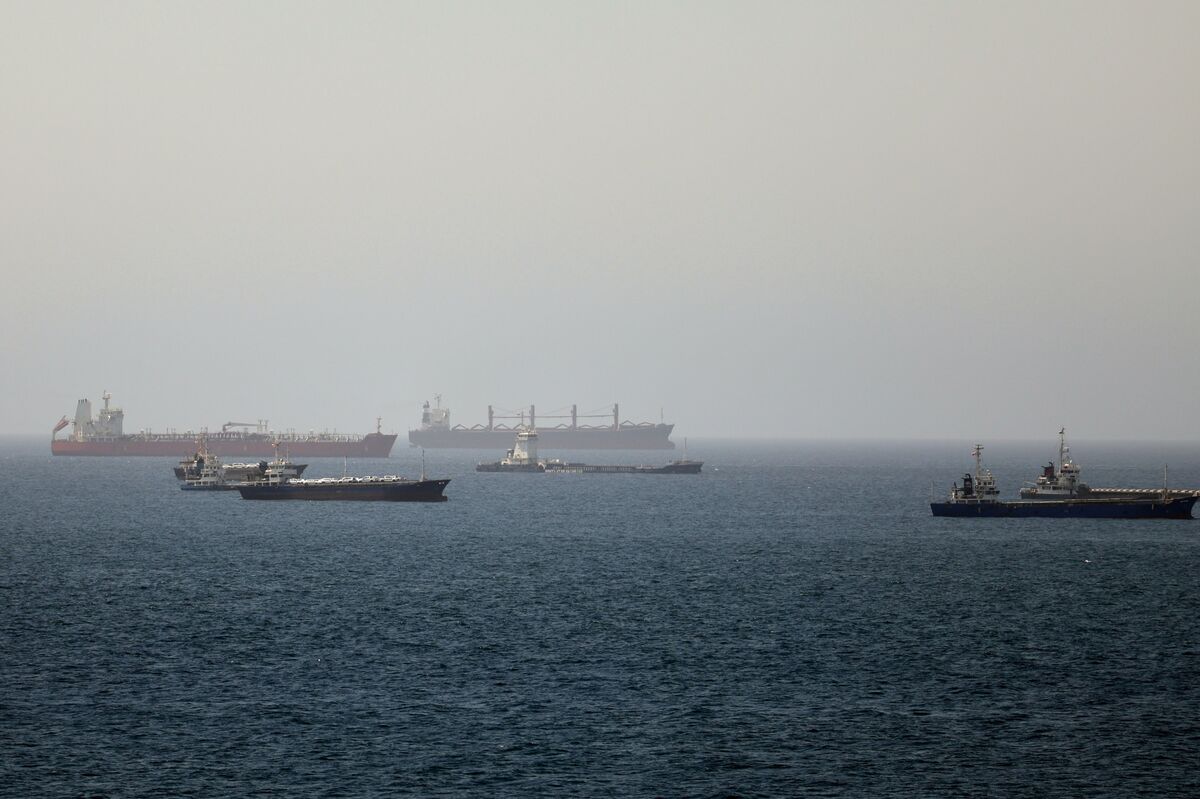
Ship Struck in Strait of Hormuz as Oil Supertankers Retreat Again
The Strait of Hormuz — the narrow, high-stakes chokepoint through which roughly 20% of the world's traded oil passes every day — was thrust back into the global spotlight on Thursday after a vessel was struck by an unidentified projectile. The attack marks the first reported maritime incident following a fragile interim peace agreement between the United States and Iran, casting serious doubt on the durability of that deal and sending oil supertankers retreating once again from one of the most consequential shipping lanes on earth.
For energy markets, shipping companies, and geopolitical analysts alike, the news landed like a thunderclap. Just as cautious optimism had begun to return to the region, this latest strike signals that the underlying tensions in the Persian Gulf are far from resolved — and that the cost of ignoring them could be measured in barrels, shipping premiums, and broader economic pain.
What Happened in the Strait of Hormuz?
On Thursday, a commercial ship navigating the Strait of Hormuz was hit by an unidentified projectile in an attack that has not yet been formally attributed to any party. Details remain limited in the immediate aftermath, but the incident has been widely characterized as the first reported attack since the United States and Iran reached an interim diplomatic agreement intended to reduce hostilities in the region.
The attack is a significant setback to efforts that had been quietly underway to restore normal commercial traffic through the strait. In recent weeks, shipping companies had begun cautiously reassessing their risk models, and some vessels that had been rerouted around the Cape of Good Hope were beginning to consider returning to the more direct — and commercially efficient — Hormuz passage.
That cautious momentum has now stalled. Reports indicate that oil supertankers have once again turned back, opting for longer and more expensive routes rather than risk transiting a waterway that has demonstrated it remains dangerous.
Why the Strait of Hormuz Matters So Much
To understand the weight of this moment, it helps to appreciate just how critical the Strait of Hormuz is to the global energy system. At its narrowest point, the strait is only about 21 miles wide, yet it serves as the primary export route for crude oil from Saudi Arabia, Iraq, Iran, Kuwait, the UAE, and Qatar. According to the U.S. Energy Information Administration, approximately 21 million barrels of oil passed through the strait daily in recent years — accounting for roughly one-fifth of global petroleum liquids consumption.
There is simply no easy alternative. The overland pipelines and alternative sea routes that exist can absorb only a fraction of that volume. When the strait is threatened, the ripple effects move swiftly through global energy markets, raising oil prices, increasing shipping insurance premiums, and creating downstream pressure on fuel costs for consumers and industries worldwide.
Supertankers Turn Back: The Immediate Market Impact
The decision by oil supertankers to turn back from the Strait of Hormuz following Thursday's attack is not merely a logistical inconvenience — it is a market signal. When Very Large Crude Carriers (VLCCs) divert around the Cape of Good Hope, voyage times increase by approximately two to three weeks, adding hundreds of thousands of dollars in fuel and operational costs per journey. Those costs are eventually passed on through the supply chain.
- Shipping insurance war-risk premiums for Hormuz-adjacent routes are likely to spike sharply in the wake of the attack.
- Oil prices may face upward pressure as traders price in the potential for sustained disruption to supply flows.
- Refinery scheduling in Asia and Europe — both heavily dependent on Gulf crude — could be disrupted if delays compound over days and weeks.
- Spot charter rates for supertankers on alternative routes are expected to surge as demand for Cape of Good Hope transits increases.
Analysts who had been monitoring the cautious reopening of the Hormuz corridor are now re-evaluating their forecasts. The optimism that had quietly built following the US-Iran interim deal has been sharply curtailed by a single, well-placed projectile.
The US-Iran Deal and Its Fragile Promise
The interim agreement between Washington and Tehran had been positioned as a de-escalation framework — a diplomatic breathing room intended to reduce the risk of direct military confrontation and, by extension, allow commercial shipping to resume more freely through the Persian Gulf. While the deal was never celebrated as a comprehensive resolution to the deep structural tensions between the two nations, it was seen as a meaningful first step.
Thursday's attack complicates that narrative considerably. Whether the strike was carried out by a state actor, a proxy militia, or another party entirely, the effect is the same: the deal's credibility as a security guarantor for commercial shipping has been wounded. Shipping companies do not operate on diplomatic promises — they operate on risk assessments, insurance underwriting, and the cold calculus of whether a given route is safe enough to transit.
What Comes Next for Hormuz Shipping?
In the short term, expect heightened naval patrols, urgent diplomatic communications, and considerable uncertainty across energy markets. The United States Navy maintains a significant presence in the region through the Fifth Fleet, based in Bahrain, and is almost certain to intensify its monitoring of commercial traffic through the strait.
For shipping operators, the immediate question is risk tolerance. The attack will almost certainly trigger emergency reviews of routing decisions, and many fleet operators that had tentatively returned to Hormuz transits will now pull back pending a clearer security picture. Cargo owners — particularly major oil companies and national energy firms — will be watching closely before committing large cargoes to the route.
Longer term, the incident underscores a structural vulnerability that no interim agreement has yet resolved: the Strait of Hormuz remains one of the most heavily militarized and contested stretches of water in the world, and the gap between a diplomatic ceasefire and genuine maritime security is still wide enough for a supertanker — or a peace deal — to fall through.
A Reminder That Energy Security Is Never Guaranteed
Thursday's attack in the Strait of Hormuz is a stark reminder that the global energy infrastructure rests on a surprisingly fragile foundation of geopolitics, military deterrence, and diplomatic goodwill — none of which are guaranteed in perpetuity. As supertankers turn back once again and insurance brokers recalculate their premiums, the world is reminded that the price of oil is not set only by supply and demand. It is set, in part, by the security of the lanes through which it must travel — and right now, those lanes are anything but secure.