
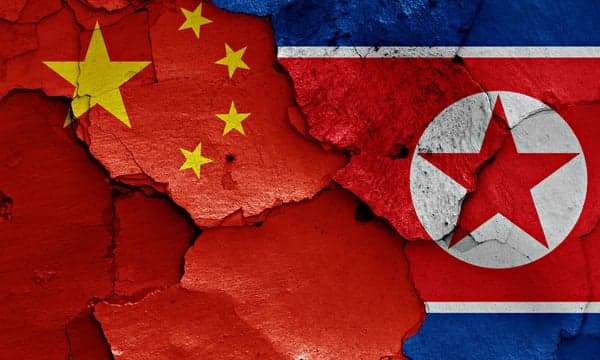
Understanding the Current State of Sino-North Korean Relations
Few bilateral relationships in modern geopolitics are as strategically loaded — or as consistently misread — as the one between China and North Korea. Bound together by history, ideology, and mutual strategic interest, Beijing and Pyongyang have long projected an image of ideological brotherhood. Yet beneath that surface, the relationship has grown increasingly complicated, strained by North Korea's accelerating weapons programs, its deepening alignment with Russia, and what analysts widely describe as a slow, cautious response from Xi Jinping's administration to a rapidly shifting ally.
The recent summit between Chinese and North Korean officials has been widely interpreted as an attempt to recalibrate this relationship — a deliberate diplomatic reset aimed at reasserting Beijing's relevance in Pyongyang's strategic calculus. To understand why such a reset was needed, it is worth examining how the relationship arrived at this point of friction.
The Historical Foundation: An Alliance Built on Necessity
The China-North Korea alliance is often described using the phrase "as close as lips and teeth," a Chinese idiom suggesting the two countries cannot survive without each other. That framing emerged from the Korean War era, when Chinese forces entered the peninsula to prevent a U.S.-aligned government from reaching its northern border. Decades later, China remains North Korea's most important economic lifeline, supplying the bulk of its food, fuel, and trade revenue.
But necessity is not the same as warmth, and the modern relationship has long been marked by tension. North Korea's nuclear program has persistently embarrassed Beijing on the world stage, complicating China's preferred posture as a responsible global power. Each nuclear test, each ballistic missile launch, has forced Beijing into awkward diplomatic contortions — nominally condemning provocations while quietly resisting the kind of punishing sanctions that could destabilize the Kim regime.
Where Xi's Administration Fell Behind
The core criticism leveled at Xi Jinping's handling of the North Korea file is one of strategic lag. As Kim Jong Un dramatically accelerated his weapons development timeline — conducting multiple ICBM tests, claiming a hydrogen bomb capability, and eventually declaring his nuclear status "irreversible" — Beijing's response remained largely reactive rather than proactive.
Part of this hesitation stemmed from competing priorities. Xi's administration has been preoccupied with managing economic slowdowns at home, navigating an intensifying rivalry with the United States, and managing the fallout of the zero-COVID years. North Korea, while strategically important, was not always the most urgent item on the agenda.
Meanwhile, a more consequential shift was underway. As international sanctions tightened and Russia's war in Ukraine created new opportunities, Pyongyang began pivoting toward Moscow. Reports emerged of North Korean ammunition and artillery shells being supplied to Russian forces, and bilateral summits between Kim Jong Un and Vladimir Putin signaled a warming of ties that visibly excluded Beijing. For a Chinese leadership accustomed to viewing North Korea as a client state within its own sphere of influence, the Pyongyang-Moscow axis represented an uncomfortable development — one that reduced China's leverage over its traditionally dependent neighbor.
The Summit as a Reset Mechanism
It is against this backdrop that the most recent high-level contact between Beijing and Pyongyang takes on its full significance. Rather than a routine diplomatic exchange, the summit represented China's effort to reassert its centrality in North Korea's foreign policy orbit and to reopen channels that had grown quieter in recent years.
From Beijing's perspective, the objectives of such a reset are multilayered. First, there is the straightforward interest in maintaining influence over a nuclear-armed neighbor. A North Korea that operates primarily within a Russia-facing axis is a North Korea that is harder for Beijing to manage, predict, or restrain. Second, there is the broader regional dimension — any significant escalation on the Korean Peninsula would fall squarely within China's backyard, with enormous implications for stability, refugee flows, and U.S. military positioning in the region. Third, and perhaps most subtly, Beijing has an interest in demonstrating to Washington and its Asian allies that it retains meaningful sway over Pyongyang, even if that sway is increasingly contested.
What North Korea Gets from Engagement with China
For all of the focus on Beijing's motivations, it is equally important to consider what Pyongyang gains from periodic diplomatic reengagement with its larger neighbor. The answer is primarily economic. Despite the diversification of North Korea's external relationships, China remains overwhelmingly the dominant source of goods, energy, and hard currency for the Kim regime. No amount of Russian solidarity fully replicates the economic infrastructure that Beijing provides.
There is also a diplomatic dimension. Engagement with China lends North Korea a degree of international legitimacy — or at least a buffer against complete isolation. When Beijing shows up at the table, it signals to the wider world that North Korea is not entirely beyond the reach of conventional diplomacy.
Looking Ahead: Structural Tensions That Won't Disappear
Despite the symbolic value of the reset, analysts are right to temper expectations about what it can realistically achieve. The structural tensions in the Sino-North Korean relationship are deep and unlikely to be resolved by a single summit or a new round of high-level engagement.
- North Korea's nuclear program remains a fundamental source of friction, as Beijing continues to formally oppose proliferation while tacitly accommodating Pyongyang's status as a de facto nuclear state.
- The growing Russia-North Korea partnership will not be dismantled by Chinese diplomatic pressure, particularly as long as the war in Ukraine continues to generate demand for North Korean military supplies.
- Kim Jong Un has demonstrated a consistent willingness to play major powers against one another, extracting concessions from each while maintaining strategic autonomy.
- Domestic political pressures within North Korea — including the need to showcase strength to internal audiences — will continue to drive provocative behavior that periodically embarrasses Beijing.
What the reset can accomplish, more modestly, is a reopening of communication channels, a reaffirmation of economic ties, and a mutual signaling exercise that keeps the alliance nominally intact. In the volatile landscape of Northeast Asian geopolitics, even that limited outcome carries real value.
Conclusion: A Relationship in Permanent Negotiation
The state of play in Sino-North Korean ties is best understood not as a fixed alliance or a broken partnership, but as a relationship in permanent, often awkward negotiation. Xi Jinping's administration has been slow to adapt to the pace of Kim Jong Un's strategic evolution, and the latest summit reflects an awareness of that lag and a genuine desire to close it. Whether Beijing can translate renewed engagement into meaningful influence — especially as Pyongyang deepens its ties with Moscow — is one of the defining geopolitical questions of the coming years in Asia. For now, the reset is underway. Whether it holds is another matter entirely.