
Taiwan's Growing Anxiety in the Shadow of Great Power Diplomacy
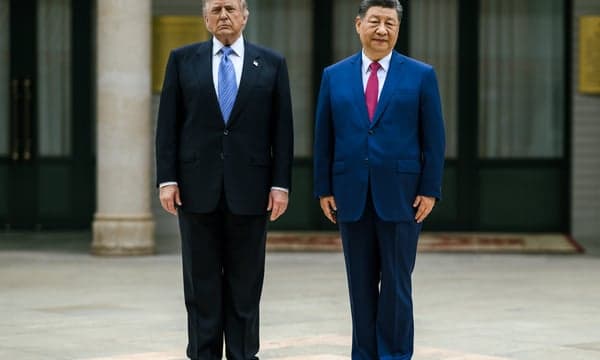
When the leaders of the world's two most powerful nations sit down together, the rest of the world watches carefully. For Taiwan, however, watching is not a passive act — it is an exercise in existential calculation. Recent survey data suggest that a significant portion of the Taiwanese public fears that their island's interests could be quietly set aside as Washington and Beijing work to rebuild a more stable bilateral relationship. The Trump–Xi summit has brought these anxieties to the surface in ways that are difficult to ignore, and the implications stretch well beyond the Taiwan Strait.
What the Survey Data Reveals
Public opinion in Taiwan has long been sensitive to shifts in United States foreign policy, but the mood following the Trump–Xi summit appears notably more anxious than usual. Survey findings indicate that many Taiwanese citizens are concerned that their security, their sovereignty, and their international standing could become bargaining chips in a broader negotiation between Washington and Beijing. This is not an abstract fear rooted in paranoia — it is a rational response to decades of watching Taiwan's status fluctuate according to the strategic needs of larger powers.
The data point to a public that is alert, politically aware, and deeply skeptical of diplomatic processes that unfold without their direct participation. Respondents expressed worry not just about military threats from China, but about the quieter, more insidious risk of being diplomatically marginalized. In the calculus of great power competition, small actors often find that their concerns are acknowledged in public statements but quietly shelved when larger interests are at play.
The Historical Context Behind Taiwan's Fears
Taiwan's anxiety about being left behind is not new. It has its roots in the diplomatic ruptures of the 1970s, when the United States shifted formal recognition from the Republic of China to the People's Republic of China. The Taiwan Relations Act of 1979 provided a framework for continued unofficial relations and a degree of security assurance, but it also institutionalized the ambiguity that Taiwan has lived with ever since. That ambiguity — sometimes called "strategic ambiguity" — was designed to deter both a Chinese attack and a unilateral Taiwanese declaration of independence. For decades, it served its purpose reasonably well.
But the geopolitical environment of the 2020s is dramatically different from that of the late twentieth century. China's military capabilities have grown enormously. Its economic leverage over the global system has expanded. And the United States, under various administrations, has shown both a renewed commitment to Taiwan and a simultaneous desire to manage tensions with Beijing. These dual impulses are not always easy to reconcile, and Taiwan is acutely aware of the tension between them.
Why the Trump–Xi Meeting Heightened Concerns
High-level summits between American and Chinese leaders tend to generate both hope and anxiety in Taipei. Hope, because engagement generally reduces the risk of miscalculation and open conflict. Anxiety, because the specific content of those conversations is rarely fully disclosed, and Taiwan is never at the table. The Trump–Xi meeting was no exception. While official statements emphasized broad themes of stabilization and cooperation, Taiwanese observers were left to read between the lines — a familiar and uncomfortable exercise.
Several factors made this particular summit especially worrying for many in Taiwan. The Trump administration's transactional approach to foreign policy raised questions about whether security commitments could be traded away in exchange for concessions on trade or other economic issues. When the United States frames international relationships primarily through the lens of deal-making, allies and partners that cannot offer immediate economic value may find themselves in a vulnerable position. Taiwan, despite its critical role in global semiconductor supply chains, cannot match China's scale as a trading partner or investment destination.
The Semiconductor Factor and Taiwan's Leverage
It would be a mistake, however, to assume that Taiwan is entirely without leverage. The island's dominance in advanced semiconductor manufacturing — particularly through companies like TSMC — gives it a form of structural importance that is difficult to overlook. The global economy's dependence on Taiwanese chips means that any serious disruption to Taiwan's security would have immediate and severe consequences for the United States, Europe, Japan, and virtually every other major economy. This reality provides Taiwan with a degree of protection that purely military or diplomatic calculations might underestimate.
Yet leverage and assurance are not the same thing. Taiwan's economic importance may deter certain extreme scenarios, but it does not guarantee that Taiwanese voices will be heard in the conversations that shape its future. The fear expressed in survey data is precisely this: that decisions affecting Taiwan's fate will be made elsewhere, by others, without adequate consideration of what Taiwanese people actually want.
What Taiwan Is Asking For
At its core, the concern revealed by this survey data is a demand for recognition — not just of Taiwan's strategic value, but of its democratic legitimacy and the right of its people to have a say in their own future. Taiwanese civil society has grown increasingly vocal about this over the past decade. The island's democratic institutions, its vibrant press, and its engaged citizenry represent a sharp contrast with the political system across the strait, and Taiwanese people are well aware of what they stand to lose.
- Taiwan seeks continued and unambiguous security commitments from the United States, free from the shadow of transactional diplomacy.
- Taiwan wants greater inclusion in international organizations and diplomatic forums, where it is currently excluded due to Chinese pressure.
- Taiwan calls for transparent communication from Washington about the substance of US–China dialogues that affect its security.
- Taiwan asks that its democratic values be treated as an asset to the broader free world, not merely as a complication in great power relations.
The Broader Stakes for Regional Stability
Taiwan's fears are not purely a domestic political matter. How Washington manages its relationship with Taipei — alongside its relationship with Beijing — will send powerful signals to every other US ally and partner in the Indo-Pacific region. Japan, South Korea, the Philippines, and Australia are all watching to see whether American security commitments remain credible when tested by the gravitational pull of US–China diplomacy. A Taiwan that feels abandoned would not only be a humanitarian and democratic tragedy; it would be a profound signal about the reliability of American partnerships more broadly.
The Trump–Xi summit, whatever its ultimate outcomes, has served as a reminder that Taiwan's security exists at the intersection of competing pressures that do not always align in its favor. Managing those pressures requires not just military deterrence and economic leverage, but sustained diplomatic attention and a genuine commitment to ensuring that Taiwanese voices are not drowned out by the louder conversation happening between Washington and Beijing. The survey data capturing Taiwanese public anxiety is more than a snapshot of fear — it is a call for the kind of engaged, principled diplomacy that makes smaller democracies feel seen rather than sacrificed.