
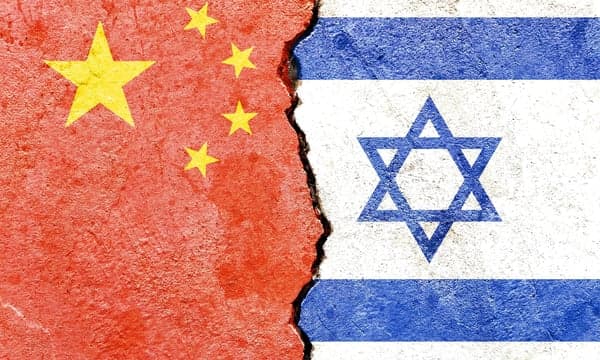
Understanding the Geopolitics of China-Israel Trade and Investment
The economic relationship between China and Israel has grown remarkably over the past two decades, evolving from modest trade exchanges into a multibillion-dollar partnership spanning technology, infrastructure, and capital investment. Yet behind the balance sheets and trade figures lies a far more complex story — one shaped by strategic rivalries, alliance pressures, and shifting geopolitical currents. Drawing on the work of researcher Tomer Fadlon, this article unpacks the forces that define China-Israel economic ties and what they mean for the region and the world.
A Relationship Built on Complementary Strengths
At its core, the China-Israel economic relationship has been driven by a straightforward logic of complementarity. Israel, often called the "Start-Up Nation," boasts a dense ecosystem of high-technology companies, world-class universities, and a culture of innovation that consistently punches above its weight on the global stage. China, for its part, brings vast manufacturing capacity, enormous capital reserves, and a government-backed appetite for acquiring advanced technology to fuel its own development ambitions.
This pairing proved highly attractive through the 2010s. Chinese investment flowed into Israeli startups in sectors ranging from agritech and cybersecurity to medical devices and artificial intelligence. Chinese state-owned enterprises won contracts to develop critical infrastructure, most notably in Israeli ports. Bilateral trade climbed steadily, with China becoming one of Israel's most significant trading partners outside the Western bloc.
For Israeli businesses, Chinese capital offered an alternative to dependence on American and European investors — a way to diversify funding sources and access one of the world's largest consumer markets. For China, Israel was a gateway to cutting-edge technologies that could accelerate its own industrial and military modernization.
The Strategic Friction Beneath the Surface
Despite these economic incentives, the relationship has never operated in a geopolitical vacuum. Israel is a close ally of the United States, bound by deep security, intelligence, and military ties that stretch back generations. As Washington's strategic competition with Beijing has intensified — particularly over technology, supply chains, and regional influence — Israel has found itself navigating an increasingly uncomfortable position between its most important security guarantor and one of its most significant economic partners.
American pressure on Israel regarding Chinese investment has grown considerably. U.S. officials have raised repeated concerns about Chinese involvement in Israeli infrastructure projects, warning that control over sensitive ports or telecommunications networks could provide Beijing with intelligence opportunities or strategic leverage. These concerns reached a particular pitch around Chinese involvement in the Haifa port project, which sits near facilities used by the U.S. Navy.
Tomer Fadlon's analysis highlights how this pressure has forced Israeli policymakers to make difficult choices — choices that carry both economic costs and alliance consequences. Israel has gradually moved to strengthen its foreign investment screening mechanisms, partly in response to American lobbying, creating new bureaucratic hurdles for Chinese capital that had previously entered relatively freely.
Technology Transfer and the Innovation Dilemma
One of the most sensitive dimensions of China-Israel economic ties involves the flow of advanced technology. Israeli innovations — particularly in fields like cybersecurity, surveillance, agricultural technology, and semiconductor manufacturing — hold obvious appeal for a China seeking to upgrade its technological base. But the dual-use nature of many Israeli technologies, which can serve both civilian and military applications, creates serious dilemmas for Israeli companies, investors, and regulators.
Critics argue that Israeli technology sold or licensed to Chinese partners has in some cases ended up integrated into Chinese defense systems or used in ways that conflict with Israeli values and strategic interests. Supporters of engagement counter that restricting technology transfer risks isolating Israel from a major market and driving Chinese firms toward less scrupulous suppliers.
- Cybersecurity tools developed in Israel have attracted Chinese buyers seeking to enhance digital surveillance capabilities.
- Agricultural technologies, including precision irrigation systems, have found major markets in China amid food security concerns.
- Medical technology and pharmaceutical research partnerships have deepened, particularly following the COVID-19 pandemic.
- Semiconductor and AI-related startups remain a flashpoint, drawing heightened scrutiny from both Israeli and American regulators.
How the Gaza War Has Reshaped the Equation
The October 7, 2023 Hamas attacks on Israel and the subsequent conflict in Gaza introduced yet another layer of complexity into China-Israel economic relations. China's diplomatic posture during the conflict — which Israeli officials and their allies viewed as insufficiently critical of Hamas and overly sympathetic to Palestinian authorities closely linked to Iran — created significant political friction. For many in Israel, Beijing's stance exposed the limits of framing the relationship purely in economic terms.
Israeli public opinion toward China has shifted meaningfully, and political appetite for deepening economic ties has cooled. At the same time, the broader disruption of Israel's economy during wartime — reduced foreign investment, disrupted trade routes, and heightened security expenditures — has complicated the country's economic calculus across the board.
Lessons for Small States Navigating Great Power Rivalry
Israel's experience offers broader lessons for small and middle powers caught between competing great powers. The pressure to choose sides is intensifying globally, and the economic benefits of engagement with China are increasingly difficult to separate from the strategic costs that engagement imposes on alliance relationships.
Tomer Fadlon's research underscores that managing this tension requires more than economic pragmatism — it demands sophisticated foreign policy, robust investment screening institutions, and honest public deliberation about which relationships and values a society wishes to prioritize. For Israel, and for many nations in a similar position, the geopolitics of trade and investment are no longer a secondary concern. They sit at the very heart of national security strategy.
Conclusion: An Evolving and Consequential Relationship
The China-Israel economic relationship remains significant, but it is being fundamentally renegotiated under the pressure of great power competition, technological nationalism, and regional conflict. Understanding its trajectory requires grappling not just with trade statistics, but with the strategic logic, alliance dynamics, and domestic politics that ultimately shape how countries engage with one another in an era of growing geopolitical rivalry. The insights of analysts like Tomer Fadlon are invaluable for making sense of this complex and consequential relationship.