
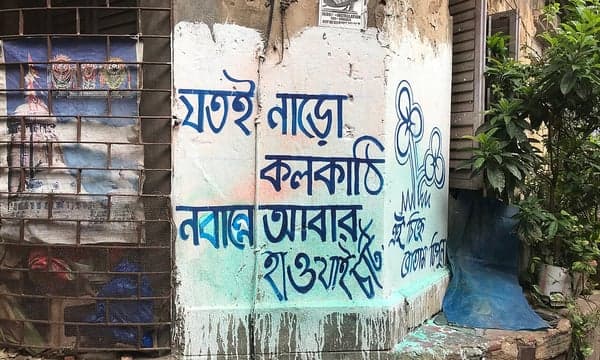
The Fall of a Political Giant: How BJP Dismantled Trinamool Congress
For more than a decade, the Trinamool Congress (TMC) stood as the undisputed face of regional power in Indian politics. Under the fiery leadership of Mamata Banerjee, the party governed West Bengal for three consecutive terms, built a loyal grassroots base, and became a symbol of resistance against the Bharatiya Janata Party (BJP) and Prime Minister Narendra Modi's expanding national dominance. But today, that once-formidable political machine is barely recognizable. Legislators are abandoning ship in droves, alliances are dissolving, and what was once India's strongest regional party has been reduced to a shadow of its former self.
The story of Trinamool Congress's decline is not simply one of electoral defeat. It is a carefully orchestrated political unraveling — one that reflects the BJP's sophisticated strategy for neutralizing opposition strongholds across India.
A Party That Once Defied Modi's BJP Machine
To understand how dramatic this collapse truly is, one must first appreciate just how powerful Trinamool Congress once was. When Mamata Banerjee swept to power in West Bengal in 2011, ending the Left Front's 34-year reign, she did more than just win an election — she built a political identity rooted in Bengali pride, welfare programs, and an uncompromising stance against central government overreach. Her party became a beacon for opposition leaders nationwide who believed that regional identity and grassroots governance could hold back the BJP tide.
The 2021 West Bengal assembly elections seemed to confirm this belief. Despite a massive BJP campaign personally led by Prime Minister Modi, Mamata Banerjee secured a commanding majority. TMC won 213 out of 294 seats, and Banerjee herself became a symbol of the anti-Modi political resistance. Political analysts celebrated it as proof that regional parties could survive — and even thrive — against the BJP's formidable electoral machinery.
The Defection Crisis That Changed Everything
Yet the cracks appeared almost immediately after that 2021 victory, and they widened rapidly. The mass defection of TMC legislators to the BJP has been the defining feature of the party's decline. Senior leaders, sitting MLAs, local strongmen, and longtime loyalists have crossed over to the BJP in numbers that have stunned observers of Indian politics.
The reasons behind these defections are complex but interconnected. Several factors have played a decisive role:
- Central agency pressure: India's central investigative bodies, including the Enforcement Directorate (ED) and the Central Bureau of Investigation (CBI), launched a wave of corruption probes against TMC leaders. Critics argue these agencies have been weaponized for political purposes, creating an atmosphere where defecting to BJP offers protection from legal scrutiny — an allegation the BJP and central government have consistently denied.
- Resource asymmetry: The BJP's unmatched financial resources and organizational reach make it an attractive home for politicians calculating their long-term survival. Joining the BJP often means better access to central government funds, contracts, and influence.
- Internal party tensions: Banerjee's governance style, frequently described as centralized and authoritarian even by sympathizers, created internal resentment. Many regional leaders felt sidelined or undervalued, making the BJP's open arms all the more appealing.
- Electoral arithmetic shifts: As BJP consolidated Hindu voters in West Bengal more effectively, many local TMC leaders sensed the wind was changing in their constituencies and chose political pragmatism over loyalty.
What This Means for Indian Regional Politics
The collapse of Trinamool Congress carries implications far beyond the borders of West Bengal. For decades, regional parties served as the essential counterweight to New Delhi's political and economic centralization. They represented the linguistic, cultural, and economic diversity of India's states and forced national governments to negotiate, compromise, and share power.
The steady erosion of TMC's strength signals a troubling pattern for opposition politics across India. When even the most electorally successful regional party — one that had just won a landslide mandate as recently as 2021 — can be hollowed out so quickly, it sends a chilling message to every state-level opposition leader in the country.
Political analysts have noted that the BJP's strategy is not always about winning elections outright. Sometimes, the goal is to make governance so difficult for opposition-ruled states that a political and administrative paralysis sets in, eventually prompting voters and leaders alike to reconsider their allegiances.
Mamata Banerjee's Diminished Position
Mamata Banerjee remains a resilient and combative political figure. She has survived political crises before, and those who have written her off in the past have frequently been proven wrong. However, her current position is undeniably weaker than it has been at any point since she first came to power. Without a strong legislative bench, without trusted lieutenants who can anchor districts across the state, and without the organizational machinery that regional dominance requires, governing effectively becomes extraordinarily difficult.
Her national ambitions — she briefly positioned herself as a potential opposition prime ministerial candidate — have also taken a significant hit. A leader whose own political fortress is under siege is poorly positioned to rally opposition forces at the national level.
The Broader Warning for India's Democracy
The decline of Trinamool Congress raises serious questions about the health of Indian federalism and the future of multi-party democracy in the world's most populous nation. A vibrant democracy depends on credible opposition — at both the national and the state level. When ruling parties at the centre possess tools — financial, legal, organizational — powerful enough to dismantle even dominant regional governments, the institutional checks that democracy relies upon begin to erode.
India's political landscape is being reshaped in real time, and the collapse of its once-strongest regional party is one of the clearest signs yet of how fundamentally — and perhaps irreversibly — that reshaping is underway.