
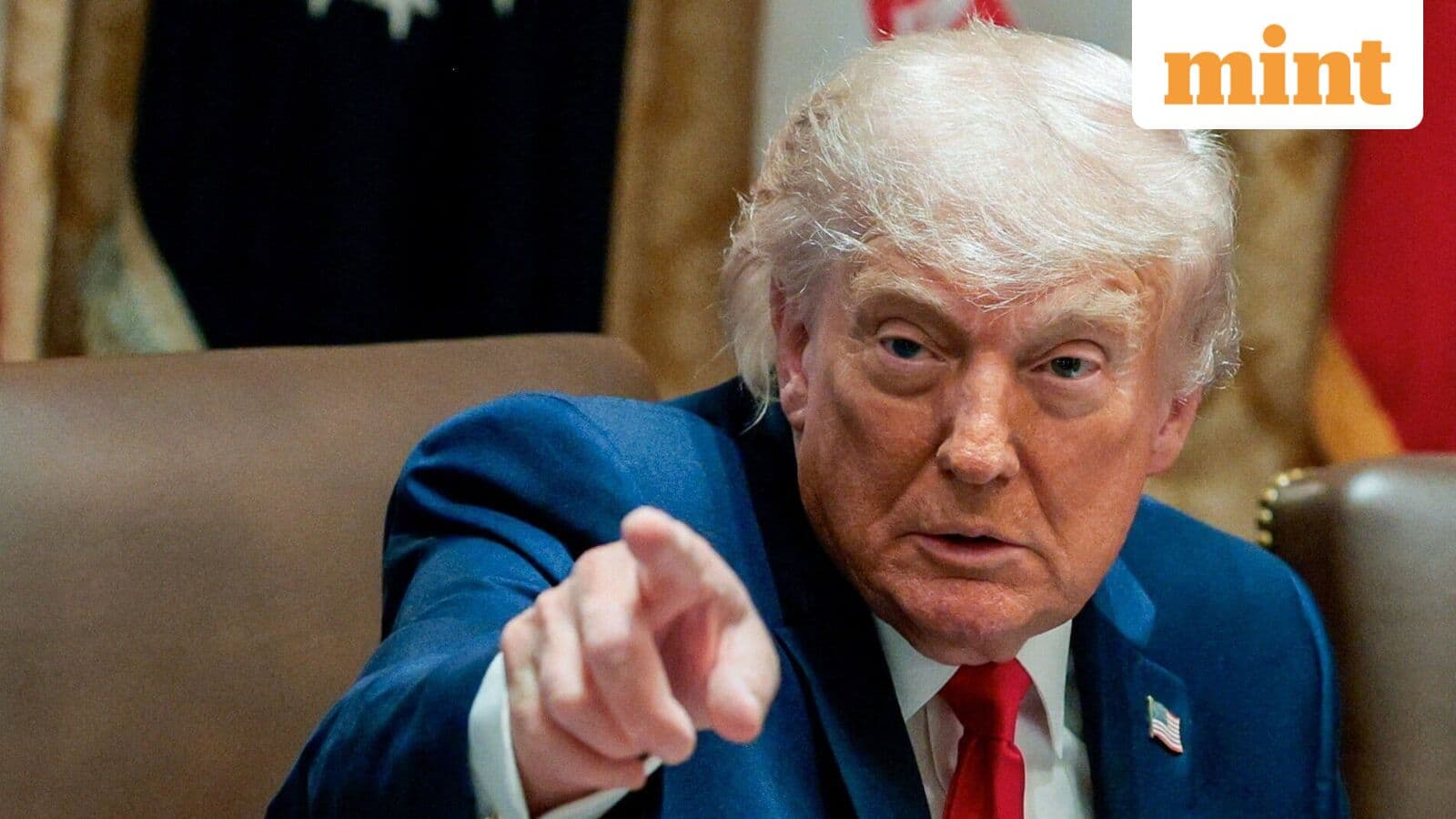
Trump Drops Bombshells on Israel: 'They'll Do As I Say' and He Has to Keep Netanyahu 'Sane'
In a series of stunning remarks that have sent shockwaves through diplomatic circles around the world, US President Donald Trump claimed on Friday that Israeli leaders follow his directives and that he personally exercises control over Tel Aviv's decisions regarding potential military strikes in Lebanon. Perhaps even more startling, Trump suggested that part of his role in managing the volatile Middle East situation involves keeping Israeli Prime Minister Benjamin Netanyahu mentally grounded — saying bluntly that he has to keep Netanyahu "sane."
The comments represent some of the most candid, and arguably most controversial, public statements any sitting US president has made about the nature of American influence over Israeli military and foreign policy decisions. They raise profound questions about the current state of the US-Israel relationship, the personal dynamic between Trump and Netanyahu, and what these revelations mean for broader stability across the Middle East.
What Trump Actually Said About Israel and Lebanon
According to the source, Trump was unambiguous in asserting his sway over Israeli decision-making when it comes to Lebanon. "They'll do as I say," Trump reportedly stated, projecting a level of command and confidence in his relationship with Israeli leadership that few presidents have ever voiced so openly in public.
The remark came against the backdrop of ongoing tensions between Israel and Lebanon, a flashpoint that has long been a pressure cooker in regional geopolitics. Hezbollah, the Iran-backed militant group based in Lebanon, has remained a persistent threat in Israel's north, and the possibility of renewed Israeli military action in Lebanese territory has been a subject of intense international concern. Trump appeared to suggest that his personal leverage over Israeli leaders would be sufficient to shape or restrain any such decisions.
Whether one interprets these comments as reassuring evidence of American diplomatic control or as an unsettling display of transactional power politics will likely depend heavily on one's perspective — and geography.
The Netanyahu 'Sane' Remark: Unpacking the Implications
Equally explosive was Trump's admission that he has to keep Netanyahu "sane." While the remark could be read as offhand or even darkly humorous coming from Trump's characteristically unfiltered communication style, it carries substantial weight when placed in its geopolitical context.
Benjamin Netanyahu has navigated one of the most turbulent periods in Israeli political and military history, facing domestic legal pressures, a prolonged war in Gaza following the October 7, 2023 Hamas attacks, and immense international scrutiny over Israeli military conduct. The pressures on the Israeli prime minister have been enormous, and Trump's comment — whether intended as a joke or not — paints a picture of a US president who sees himself as a stabilizing force on Netanyahu personally.
Critics will inevitably question what it means for American foreign policy if the president believes that the leader of one of its closest allies requires this kind of personal management. Supporters, on the other hand, may view it as evidence that Trump's hands-on, relationship-driven approach to diplomacy is actively preventing escalation in one of the world's most volatile regions.
US-Israel Relations Under Trump: A Relationship Built on Personal Leverage
Trump's remarks fit squarely within a broader pattern that has defined his approach to the US-Israel relationship across both of his presidential terms. Unlike the carefully worded diplomatic language typically favored by American presidents and their State Departments, Trump has consistently preferred to frame international alliances — including with Israel — in terms of personal loyalty, deal-making, and direct control.
During his first term, Trump made bold moves in favor of Israel, including recognizing Jerusalem as Israel's capital, brokering the Abraham Accords, and withdrawing from the Iran nuclear deal. These decisions cemented a close personal bond with Netanyahu, though that relationship has reportedly experienced its own strains, particularly after Netanyahu congratulated Joe Biden on his 2020 election victory before Trump was ready to concede.
Now, back in the White House, Trump appears to be reasserting that bond — while also making clear, at least to domestic audiences, that he views himself as the senior partner in this alliance.
The Lebanon Question: Why It Matters Now
Lebanon remains one of the most sensitive geopolitical fault lines in the Middle East. Following the intense military exchanges between Israel and Hezbollah in 2024, which caused widespread destruction in parts of Lebanon and northern Israel, a fragile ceasefire has been in place. However, tensions have never fully dissipated, and any resumption of large-scale hostilities could rapidly draw in regional actors — including Iran — and risk a far broader conflict.
In this context, Trump's claim that he can direct Israeli decisions on Lebanon carries real strategic significance. If accurate, it suggests a level of American influence that could serve as a genuine brake on escalation. If it is more bravado than reality, however, the remarks could embolden or alarm various actors across the region in unpredictable ways.
International Reaction and What Comes Next
Diplomatic observers and foreign governments will be watching closely to see how Israeli officials respond to Trump's characterization of their relationship. Publicly, Israeli leaders are unlikely to welcome the framing that they simply do as the US president tells them — such language cuts against Israeli sovereignty narratives that are politically essential at home.
Meanwhile, Lebanon, Hezbollah, and Iran will be parsing every word of Trump's statements for signals about American intentions and red lines. Arab states that have normalized or are considering normalizing relations with Israel will also be recalibrating their assessments of US reliability and consistency as a regional partner.
Conclusion: Candor, Control, and the Cost of Unfiltered Diplomacy
Trump's bombshell remarks about Israel — that Israeli leaders will do as he says on Lebanon and that he must keep Netanyahu "sane" — are unlikely to fade quickly from the diplomatic conversation. They encapsulate the extraordinary, personality-driven nature of American foreign policy under this administration and underscore just how much the US-Israel relationship has become intertwined with the personal bond between two of the world's most polarizing political figures. Whether this approach ultimately delivers stability or sows new seeds of uncertainty in an already fragile Middle East remains the defining question of this diplomatic moment.