
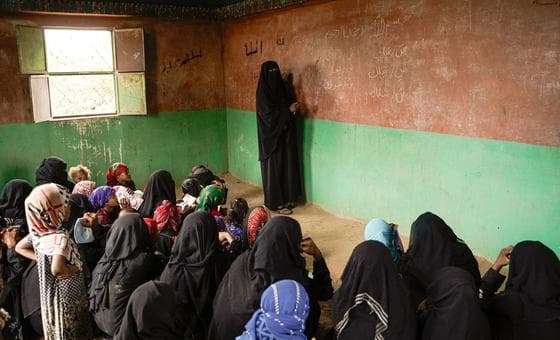
UN Officials Sound the Alarm Over Yemen's Deepening Crisis
In a sobering briefing before the United Nations Security Council, top UN officials issued an urgent call for intensified global efforts to address two of Yemen's most pressing challenges: a worsening hunger emergency and the elusive pursuit of lasting peace. The briefing underscored the gravity of conditions on the ground and stressed that without immediate, coordinated international action, the humanitarian and political situation in Yemen risks deteriorating even further.
Yemen has been embroiled in conflict for nearly a decade, a war that has displaced millions, gutted critical infrastructure, and left a population of roughly 34 million people extraordinarily vulnerable. What was once described as the world's worst humanitarian crisis has not faded from that grim distinction — if anything, compounding economic pressures and political stalemates have made conditions harder to reverse.
A Nation on the Brink: Understanding Yemen's Humanitarian Situation
To grasp the urgency of the UN's appeal, it is essential to understand the scale of suffering currently unfolding across Yemen. Millions of Yemenis face acute food insecurity, with significant portions of the population teetering on the edge of famine. Agricultural output has collapsed in many regions due to ongoing violence, climate shocks, and the destruction of irrigation systems and farmland. Supply chains have been consistently disrupted by conflict and blockades, driving up the prices of essential goods beyond what most families can afford.
The humanitarian response, while substantial, has been perpetually underfunded. UN agencies and international NGOs operating in Yemen have repeatedly warned that gaps in funding force painful triage decisions — choosing which communities to prioritize for food assistance, clean water, and medical supplies. When donor commitments fall short, the consequences are measured directly in malnutrition rates, preventable deaths, and the long-term developmental damage inflicted on Yemen's children.
Food Insecurity Reaching Critical Levels
According to recent assessments by the UN's World Food Programme and partner organizations, millions of Yemenis are classified in crisis or emergency levels of food insecurity. Children under five are among the most vulnerable, with acute malnutrition remaining a serious and widespread concern. Pregnant and lactating women also face disproportionate nutritional risks, further threatening the country's future generations.
The officials who addressed the Security Council stressed that hunger in Yemen is not a natural phenomenon — it is the direct product of conflict, economic collapse, and restricted humanitarian access. Tackling hunger, they argued, requires not just more food aid, but political will to remove barriers that prevent assistance from reaching those who need it most.
The Path Toward Peace: Obstacles and Opportunities
Alongside the humanitarian emergency, UN officials emphasized that durable solutions to Yemen's suffering ultimately hinge on political progress. While a fragile UN-brokered truce implemented in 2022 brought a notable reduction in frontline violence and offered millions of Yemenis their first sustained respite from airstrikes and shelling, a permanent peace agreement has yet to materialize.
The path to peace in Yemen is complicated by a web of competing interests. The internationally recognized government, Houthi forces — formally known as Ansar Allah — regional powers with strategic stakes in the conflict, and a constellation of armed factions all hold influence over the country's future. Bridging these divides requires patient, principled diplomacy backed by consistent international pressure and meaningful incentives for all parties to commit to negotiation rather than renewed hostilities.
The Role of Regional and International Stakeholders
The involvement of regional powers, particularly Saudi Arabia and Iran, has long shaped the trajectory of the Yemen conflict. Diplomatic shifts in the broader Middle East, including a landmark Saudi-Iranian normalization agreement brokered in 2023, opened new avenues for de-escalation. UN officials have pointed to these developments as reasons for cautious optimism, while simultaneously warning that positive momentum can be fragile and must be actively supported by the international community.
The Security Council, as the UN's principal body for matters of international peace and security, bears a particular responsibility in this regard. Member states were urged to use their political leverage to press all parties toward meaningful negotiations and to ensure that commitments made at the diplomatic level are translated into tangible improvements for ordinary Yemenis.
Why the World Must Act Now
The message delivered at the Security Council briefing was unambiguous: the window for effective action in Yemen remains open, but it will not stay open indefinitely. Every month of continued conflict deepens the humanitarian toll, erodes institutional capacity, and makes eventual reconstruction more difficult and costly. Conversely, progress on the peace front — even incremental steps — tends to unlock humanitarian gains, as ceasefires allow aid corridors to function, markets to stabilize, and communities to begin rebuilding.
- Sustained and fully-funded humanitarian assistance must be maintained to prevent famine and address acute malnutrition across Yemen's most vulnerable populations.
- All parties to the conflict must be held accountable for protecting civilians and guaranteeing unhindered humanitarian access in line with international humanitarian law.
- International diplomacy must intensify to build on existing ceasefire arrangements and push toward a comprehensive, inclusive, and permanent peace settlement.
- Economic stabilization measures, including support for Yemen's central banking institutions and currency stability, are essential to complement military and political peacebuilding efforts.
- Long-term development planning must begin now, so that when peace is achieved, the infrastructure and institutional frameworks needed for recovery are already in place.
Looking Ahead: Hope Tempered by Urgency
Despite the enormity of the challenges, UN officials did not deliver a message of despair. They acknowledged that Yemen has, at various points, demonstrated that progress is possible — that ceasefires can hold, that humanitarian access can be negotiated, and that communities can begin to recover when given the chance. The human resilience on display across Yemen, even amid extraordinary suffering, speaks to the determination of its people to rebuild their country and their lives.
But resilience alone is not enough. The international community must match Yemeni determination with concrete commitments: adequate funding for humanitarian operations, unwavering diplomatic engagement, and a shared recognition that peace in Yemen is not merely a regional priority but a global one. The Security Council briefing served as both a status report and a moral call to action — a reminder that the world has both the tools and the responsibility to help end one of the most prolonged and devastating humanitarian crises of the modern era.
As the situation continues to evolve, the voices of UN officials speaking before the Security Council represent not only institutional concern but the collective cry of millions of Yemenis waiting for the international community to act with the urgency their suffering demands.