
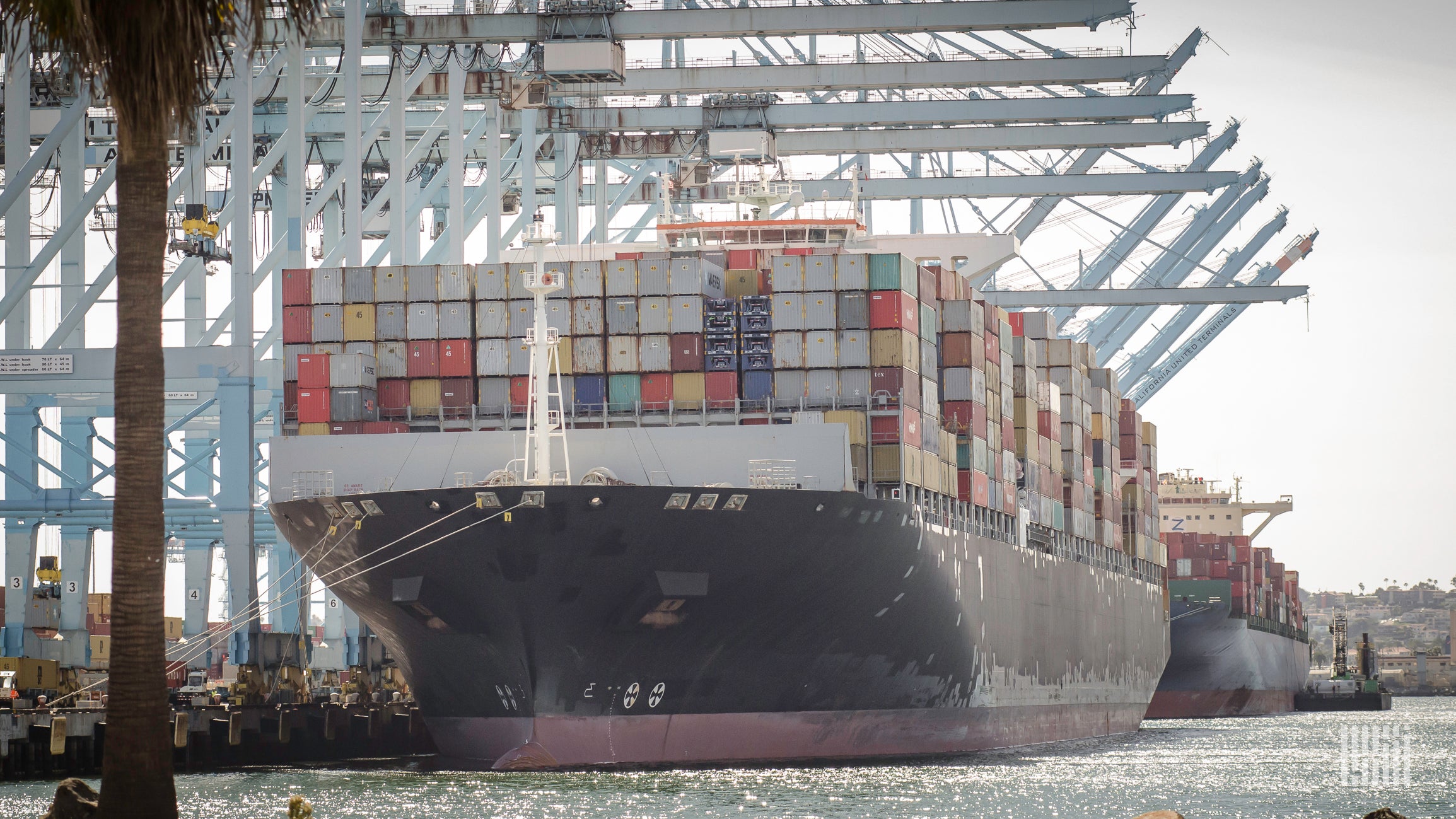
U.S. Container Imports Surge 40% at Port of Long Beach Amid Supply Chain Uncertainty
If you were wondering whether U.S. retailers are nervous about the months ahead, the numbers coming out of the Port of Long Beach tell a very clear story. Imports at one of America's busiest container gateways surged a staggering 40% in May 2026, as shippers scramble to get goods on shelves before costs climb even higher. From tariff pressure to geopolitical tension, the forces reshaping global trade are pushing the supply chain into an early — and intense — gear shift.
Port of Long Beach Posts Third-Busiest May on Record
The Port of Long Beach recorded 842,030 twenty-foot equivalent units (TEUs) in May 2026, marking a 31.7% increase compared to May 2025 and landing it as the third-busiest May in the port's history. These are not incremental gains — they reflect a wholesale repositioning by importers who are moving fast to get ahead of a rapidly changing trade environment.
Together with its neighbor the Port of Los Angeles, Long Beach forms the busiest container gateway in the United States. The combined volume these two ports process each month serves as a real-time barometer of American consumer demand and global supply chain health. May's numbers sent a clear signal: businesses are not waiting around.
Imports led the charge, soaring 40% year-over-year to 418,851 TEUs. Exports also saw meaningful growth, rising 32.9% to 109,168 TEUs. Even empty container volumes — often watched as a leading indicator of future import activity — climbed 21.8% to 314,012 TEUs, suggesting that demand for inbound cargo is unlikely to cool down anytime soon.
Frontloading: The Strategy Behind the Surge
The dramatic import spike is not accidental. Retailers and shippers across virtually every sector are engaged in aggressive frontloading — the practice of pulling shipments forward in time to avoid anticipated price increases and supply disruptions. It is a calculated hedge against a future that feels increasingly unpredictable.
Manufacturers are set to implement cost increases in July 2026, and shippers are racing to move cargo before those new price tags kick in. Combined with elevated fuel costs and tightening booking availability on trans-Pacific shipping lanes, the urgency to act now rather than later has never felt more acute for procurement and logistics teams.
Noel Hacegaba, Chief Executive of the Port of Long Beach, framed it plainly in a recent media briefing: "These numbers reflect the strength and adaptability of the supply chain. Shippers are responding to the higher cost of doing business by moving cargo earlier." That adaptability, while impressive, also underscores the volatility that businesses are navigating on a daily basis.
What Is Driving the Uncertainty?
Hacegaba identified several overlapping factors that are reshaping shipper behavior and accelerating the frontloading trend:
- Tariff uncertainty: Ongoing trade policy debates and shifting tariff structures are making it difficult for businesses to predict their landed cost of goods. When cost certainty disappears, the safest move is often to buy early and buy in bulk.
- Rising fuel costs: Energy prices continue to add pressure across every link in the logistics chain, from ocean freight to drayage and last-mile delivery. Higher fuel costs eat directly into margins, incentivizing faster movement of goods before prices escalate further.
- Geopolitical risks: A peace agreement between the United States and Iran led to the reopening of the Strait of Hormuz, but the long-term stability of that development remains unclear. The Strait is one of the world's most critical chokepoints for energy and cargo flows, and any disruption there reverberates across global trade lanes almost immediately.
- Carrier capacity adjustments: Ocean carriers have been recalibrating capacity on trans-Pacific routes, pushing freight rates significantly higher over recent weeks while simultaneously tightening available booking space. Shippers who wait too long risk being unable to secure space at any price.
An Earlier — and Longer — Peak Shipping Season
Traditionally, peak shipping season ramps up in late summer as retailers stock up for the holiday quarter. In 2026, however, that peak is arriving earlier and with greater intensity. Hacegaba expects higher-than-normal cargo volumes in July and August, a timeline that compresses logistics planning windows and puts greater strain on port infrastructure, inland transportation networks, and warehouse capacity.
For port operators, this early surge requires careful orchestration. Chassis availability, labor scheduling, rail connections, and yard capacity all come under pressure when volume spikes happen faster than anticipated. Long Beach has handled surges before, but the combination of elevated volume and systemic uncertainty makes this cycle particularly complex to manage.
Year-to-Date Volume Tracks Record 2025 Pace
Through the first five months of 2026, the Port of Long Beach has processed 4,050,247 TEUs, up a modest 0.2% year-over-year. That figure is significant because it essentially mirrors the record-setting volume pace of 2025 — meaning the port is not experiencing a post-surge correction but is instead sustaining historically elevated throughput. For supply chain professionals, that continuity signals that structural demand for U.S. imports remains robust even as the macro environment grows more turbulent.
What This Means for Businesses and Supply Chains
The lesson from Long Beach's May data is not simply that imports are up — it is that businesses are actively rewriting their supply chain playbooks in real time. The era of just-in-time inventory, already shaken by the pandemic years, is giving way to a more defensive posture of building buffers and moving early.
As Hacegaba noted, "Supply chains perform best when businesses can plan with confidence. Whether we're talking about fuel costs, geopolitical risks, or tariff policy — uncertainty is the common thread." That uncertainty is not going away quickly, which means the frontloading dynamic is likely to persist through the summer months and potentially into the fall.
For retailers, manufacturers, logistics providers, and investors watching trade flows, the Port of Long Beach's record-breaking May is both a sign of resilience and a flashing amber light. The supply chain is moving fast — not because conditions are easy, but because the cost of moving slowly has become too high to accept.
Key Takeaways
- The Port of Long Beach handled 842,030 TEUs in May 2026, up 31.7% year-over-year and the third-busiest May on record.
- Imports surged 40% to 418,851 TEUs as shippers frontload cargo ahead of July cost increases.
- Tariff uncertainty, rising fuel costs, and geopolitical risks are all accelerating the early peak shipping season.
- Trans-Pacific freight rates are climbing and booking space is tightening as carriers adjust capacity.
- Year-to-date volume through May 2026 is up 0.2%, closely tracking the record pace set in 2025.
- Port CEO Noel Hacegaba warns that uncertainty — across trade policy, energy markets, and geopolitics — remains the central challenge for supply chain planning.
Businesses that understand these signals and adjust their sourcing, inventory, and logistics strategies accordingly will be far better positioned to navigate the volatile months ahead. The holiday shelves may not stock themselves — but it is becoming increasingly clear that getting goods there early is the smartest play in an uncertain world.