
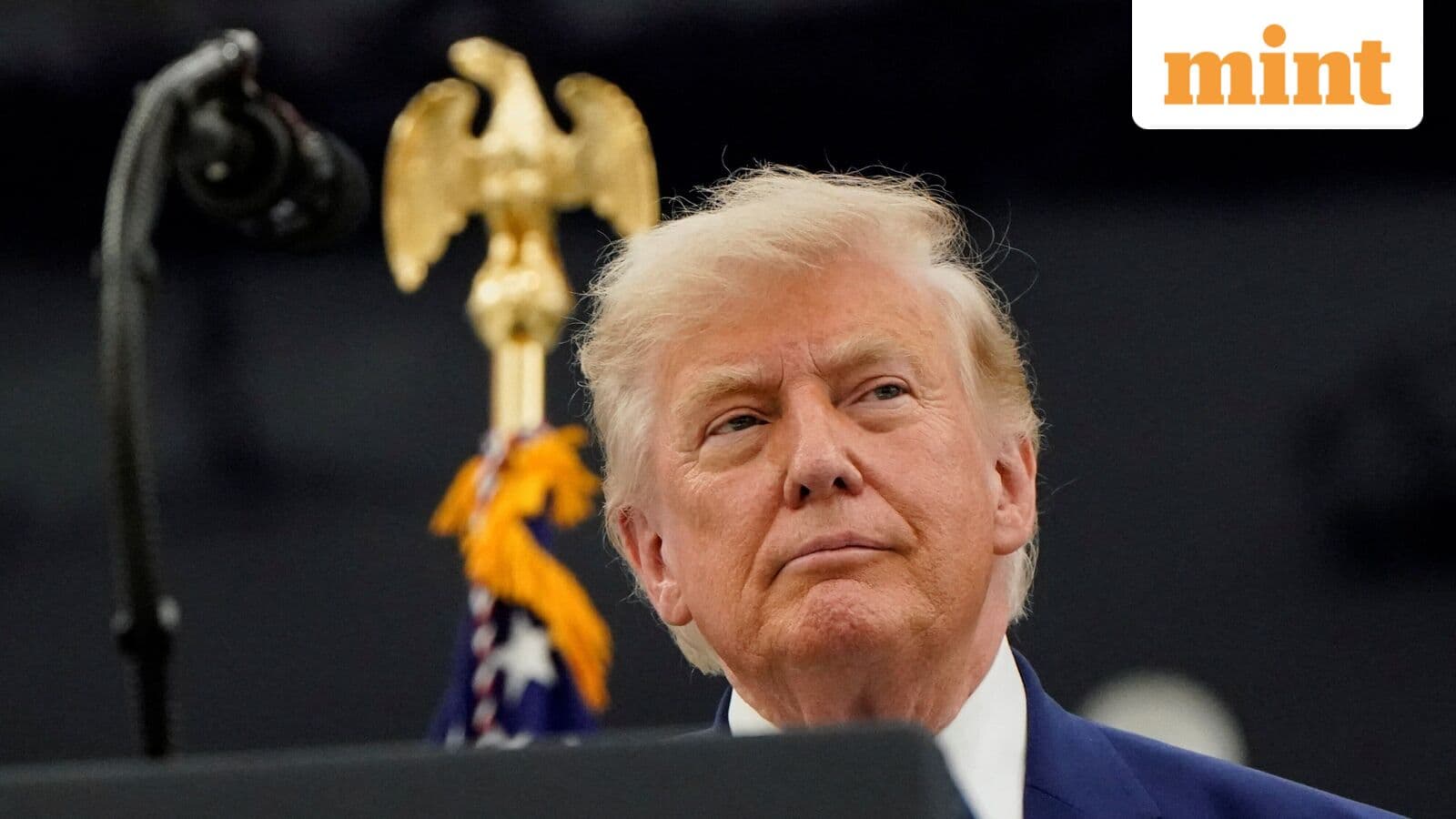
Trump Doubles Down on US-Iran Peace Deal Terms: No Financial Relief for Tehran
In a bold and unambiguous statement that sent ripples across international diplomatic circles, US President Donald Trump reiterated on Friday that Iran would receive absolutely no financial concessions under the newly signed Memorandum of Understanding (MoU) between Washington and Tehran. Speaking just days after the landmark 14-point agreement was signed to formally end hostilities between the two nations, Trump was characteristically blunt: Iran would get "not ten cents" in monetary relief during the 60-day negotiation period that the deal establishes.
The statement has drawn significant attention from foreign policy analysts, Middle East observers, and global markets alike. As the world watches the fragile early stages of what could become one of the most consequential diplomatic agreements of the modern era, Trump's hardline rhetoric raises important questions about what this peace deal actually means for Iran, for the United States, and for regional stability.
What Is the US-Iran MoU and What Does It Cover?
The Memorandum of Understanding signed between the United States and Iran outlines a 14-point framework designed to de-escalate tensions and provide a structured pathway toward a more comprehensive agreement. The MoU establishes a 60-day negotiation window during which both parties are expected to engage in formal diplomatic talks aimed at resolving long-standing disputes, including Iran's nuclear program, regional proxy activities, and the status of ongoing economic sanctions.
While the signing of the MoU has been widely interpreted as a breakthrough moment in US-Iran relations — relations that have been severely strained for decades, particularly since the United States withdrew from the Joint Comprehensive Plan of Action (JCPOA) in 2018 under Trump's first term — the president has been careful to frame the agreement on his own terms. For Trump, the MoU is not a concession to Iran; it is a framework that places Washington firmly in the driver's seat.
The 60-Day Negotiation Period Explained
The 60-day window built into the MoU is designed to give both sides space to negotiate the finer points of a longer-term deal without the immediate threat of escalation. During this period, both nations are expected to refrain from actions that could destabilize the agreement. However, Trump has made it abundantly clear that this diplomatic pause does not come with any financial sweeteners for Iran. No sanctions relief, no frozen asset releases, and no economic lifeline — at least not during these initial two months.
This stance is consistent with the maximum pressure strategy that has defined Trump's approach to Iran throughout both of his administrations. The logic is straightforward: keep the financial pressure on Tehran until a comprehensive, verifiable deal is reached on all outstanding issues, particularly those related to nuclear enrichment and regional military activities.
Trump's 'Not Ten Cents' Remark: What It Signals
When Trump declared that Iran would receive "not ten cents," he was doing more than simply restating policy — he was sending a message to multiple audiences simultaneously. To domestic critics who feared he might be softening his stance on Iran, he was reassuring them that no capitulation was underway. To Iran's leadership, he was signaling that the terms of engagement had not changed despite the MoU signing. And to American allies in the region, particularly Israel and Saudi Arabia, he was confirming that Washington's commitment to economic pressure on Tehran remained intact.
Trump also reportedly claimed that Tehran is "finished" — a provocative characterization that reflects his administration's belief that Iran's economy and political leverage have been severely weakened by years of compounding sanctions, internal unrest, and regional setbacks. Whether or not that assessment is accurate, it frames the US negotiating posture as one of overwhelming strength rather than mutual compromise.
Iran's Position and the Stakes of the Negotiation
From Tehran's perspective, the calculus is considerably more complex. Iran enters these negotiations from a position of acknowledged economic strain. Years of sanctions have battered its currency, constrained its oil exports, and limited its access to international financial systems. For Iranian leadership, any deal that does not include meaningful sanctions relief in the near term will be a hard sell domestically, particularly given the political pressures that come with managing a population facing economic hardship.
Iran's willingness to sign the MoU in the first place suggests that its leadership sees some value in the negotiation process — whether as a path to eventual relief, as a way to buy time, or as an opportunity to reshape its international image. But with Trump publicly stating that no money will flow to Tehran during the 60-day window, Iranian negotiators will need to present their domestic audience with a credible argument for why continued engagement is in the national interest.
Global Reactions and Geopolitical Implications
The international community has responded to the US-Iran MoU with a mixture of cautious optimism and measured skepticism. European allies, who have long sought a diplomatic solution to the Iran nuclear question, have welcomed the dialogue while expressing concern about the rigidity of the American financial position. Russia and China, both of which maintain significant economic ties with Iran, are closely monitoring developments to assess how a potential US-Iran agreement might reshape the broader geopolitical landscape of the Middle East.
- Israel has signaled cautious support for the MoU framework but continues to press Washington for ironclad guarantees that any final deal will include permanent restrictions on Iranian nuclear enrichment capacity.
- Saudi Arabia and Gulf states are watching closely, aware that a stabilized US-Iran relationship could significantly alter the regional balance of power.
- European Union diplomats have offered to serve as facilitative observers during the 60-day negotiation period, though it remains unclear whether either party will take up that offer.
- Oil markets reacted with modest volatility following Trump's remarks, as traders assessed the implications of a prolonged negotiation process on Iranian oil exports and global supply dynamics.
What Happens After the 60 Days?
The conclusion of the 60-day negotiation window will be a defining moment. If talks progress productively, both sides may agree to extend the framework, introduce phased sanctions relief, or move toward a more comprehensive binding treaty. If talks collapse, the risk of renewed escalation — including potential military confrontation or accelerated Iranian nuclear activity — becomes significantly higher.
Trump's administration has indicated that it will judge progress not by diplomatic gestures or interim agreements, but by concrete, verifiable actions on Iran's part, particularly with respect to its nuclear program. The bar, in other words, is set high — and Trump appears content to keep the financial pressure on until Iran clears it.
Conclusion: A High-Stakes Diplomatic Gamble
The US-Iran MoU represents a significant, if tentative, step toward resolving one of the world's most enduring geopolitical standoffs. But as President Trump's "not ten cents" declaration makes clear, this is not a deal built on goodwill or mutual concession — it is a structured negotiation conducted under the shadow of sustained American economic pressure. Whether that approach produces a durable peace or simply delays an inevitable confrontation remains to be seen. What is certain is that the next 60 days will be among the most consequential in US-Iran relations in a generation, and the world will be watching closely.