
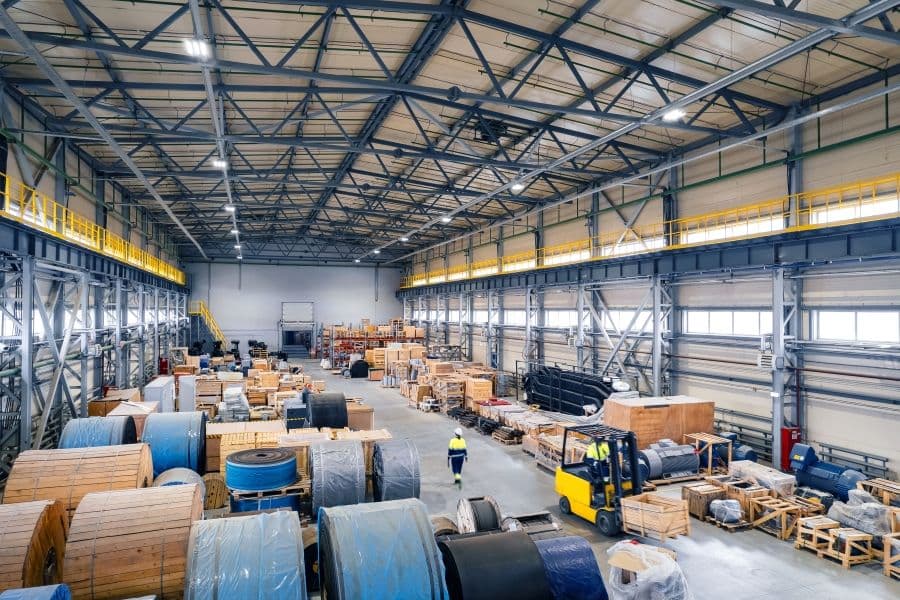
US Warehousing Is Expanding Fast at Key Inland Hubs — Here's Why It Matters
The American industrial real estate market is undergoing a quiet but significant transformation. Across the country's most strategically located inland cities, warehouse vacancy rates are falling, lease activity is accelerating, and developers are racing to meet surging demand. Two forces are driving this shift: the aggressive frontloading of imports by businesses bracing for tariff uncertainty, and an unprecedented wave of data center construction that is reshaping how industrial land is used and valued. For logistics professionals, retailers, and real estate investors, understanding what is happening at these key hubs is no longer optional — it is essential.
Why Inland Hubs Are Becoming the New Logistics Powerhouses
For decades, coastal ports like Los Angeles, Long Beach, and New York dominated the conversation around warehousing and distribution. But the economics of modern supply chains, combined with the lessons learned during pandemic-era port congestion, have pushed businesses to look further inland. Cities like Chicago, Illinois and Indianapolis, Indiana have emerged as critical nodes in the national distribution network, offering rail connectivity, highway access, lower land costs relative to coastal markets, and vast labor pools.
Chicago, already home to one of the largest intermodal freight rail hubs in North America, has seen industrial vacancy rates tighten considerably as tenants compete for available space near its rail yards and expressway corridors. Indianapolis, strategically positioned within a one-day drive of roughly 80 percent of the US population, has become a magnet for large-format distribution centers operated by e-commerce giants, third-party logistics providers, and manufacturers seeking central positioning.
The trend is not isolated to these two cities. Markets like Columbus, Ohio; Memphis, Tennessee; Kansas City, Missouri; and Louisville, Kentucky are all experiencing similar dynamics — rising occupancy, shrinking available square footage, and upward pressure on asking rents.
Import Frontloading: The Tariff-Driven Stockpile Effect
One of the most immediate catalysts for the current warehousing surge is the widespread practice of import frontloading. As businesses face uncertainty around US trade policy and the prospect of escalating tariffs on goods from China, Southeast Asia, and other key manufacturing regions, importers have been pulling orders forward — shipping goods earlier than needed and stockpiling them in domestic warehouses to avoid paying higher duties later.
This strategy, while financially rational for individual businesses, has created a collective surge in warehouse demand that industrial markets are struggling to absorb. Tenants that might typically operate with lean inventory are now signing short- and medium-term leases for additional space to house product buffers. Freight volumes at major inland rail hubs have climbed as a result, and third-party warehouse operators report some of the highest utilization rates they have seen in years.
The frontloading effect is also influencing lease terms. Businesses uncertain about how long they will need extra storage capacity are driving demand for flexible lease structures, putting pressure on landlords to offer shorter initial terms while commanding premium rents for the convenience. This dynamic is particularly visible in markets like Indianapolis and Chicago, where speculative industrial development has struggled to keep pace with absorption rates.
Data Centers: A New Competitor for Industrial Land
Alongside the logistics-driven demand, a second and somewhat unexpected force is reshaping the industrial real estate landscape: data center construction. As artificial intelligence workloads, cloud computing infrastructure, and digital services continue their rapid expansion, technology companies and co-location providers have been aggressively acquiring large tracts of industrial-zoned land to build next-generation data center campuses.
This competition for industrial land is consequential. Data centers require many of the same site attributes as large distribution warehouses — heavy power infrastructure, highway accessibility, flat topography, and proximity to fiber networks — which means they are often bidding against logistics tenants for the same parcels. In markets where developable industrial land is already constrained, data center projects are absorbing sites that might otherwise have become warehouse facilities, further tightening the available supply for traditional distribution users.
Cities like Chicago have become prime targets for data center investment due to their existing power grid capacity, central location, and access to subsea and terrestrial fiber routes. This has added an entirely new dimension to the vacancy compression story, as industrial land that was once earmarked for logistics development is increasingly being repositioned for digital infrastructure.
What Falling Vacancy Rates Mean for Businesses and Investors
For businesses that rely on warehousing and distribution at inland hubs, the tightening market carries real operational implications. Finding available space in prime locations is becoming more difficult and more expensive. Companies that delayed real estate decisions are now finding themselves competing in a seller's market, where landlords hold significant leverage and concessions that were common a few years ago have largely disappeared.
For investors and developers, however, the picture is more favorable. Industrial real estate at key inland hubs continues to outperform many other commercial property sectors. The combination of strong tenant demand, limited new supply, and dual-use competition from the data center sector is supporting rent growth and keeping cap rates relatively compressed even in a higher interest rate environment.
Looking Ahead: How Long Will the Expansion Last?
The trajectory of inland warehousing demand will depend heavily on how trade policy evolves, how quickly data center development is absorbed into the broader industrial land market, and whether the frontloading cycle eventually gives way to a period of inventory correction. If tariff uncertainty persists, businesses will continue to maintain elevated buffer stock, sustaining warehouse demand. If trade conditions stabilize, some of that demand could ease.
What seems certain is that cities like Chicago and Indianapolis have cemented their roles as critical pillars of the American logistics infrastructure. Whether driven by trade strategy, digital transformation, or both, the expansion of US warehousing at inland hubs reflects a fundamental and lasting shift in how supply chains are structured — and the real estate markets serving those chains are responding accordingly.