
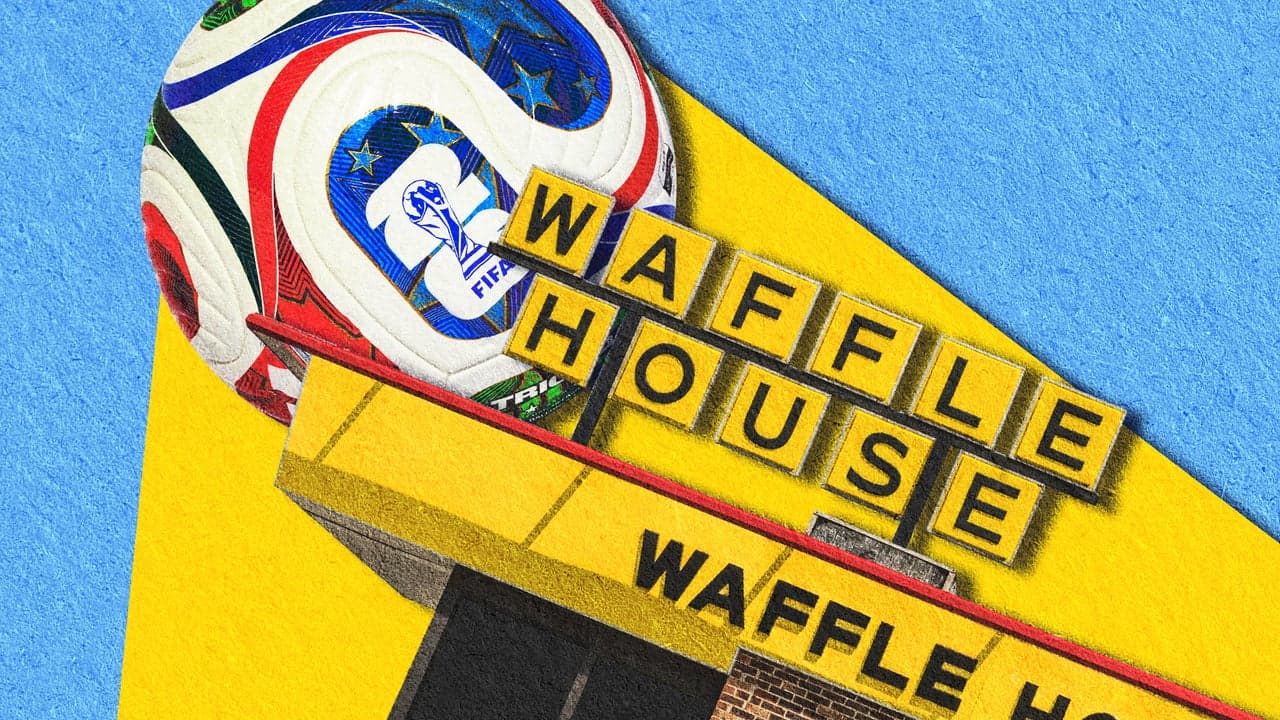
How Waffle House and Everyday American Brands Are Stealing the 2026 FIFA World Cup Spotlight
When the 2026 FIFA World Cup came to North America, the world expected headlines about stunning goals, underdog upsets, and packed stadiums. Nobody quite expected Waffle House to become an international sensation. Yet here we are — and honestly, it makes a lot of sense once you understand what's happening on the ground.
As hundreds of thousands of international soccer fans road-trip across the United States and Canada for the tournament, they're encountering something they never anticipated: the sheer, overwhelming spectacle of everyday American consumer culture. And they love it. Their reactions, splashed across TikTok, Instagram, and X (formerly Twitter), are generating millions of views and reshaping how the world perceives the U.S. — one free soda refill at a time.
The Unlikely Stars of the 2026 World Cup
While Lionel Messi and Kylian Mbappé dominate the sports headlines, a different set of names is trending on social media among visiting fans: Waffle House, Buc-ee's, Walmart, Chick-fil-A, Taco Bell, and Bass Pro Shops. These are not luxury destinations or tourist attractions in any traditional sense. They are the everyday fabric of American life — and to international visitors experiencing them for the first time, they feel nothing short of extraordinary.
The viral content follows a recognizable pattern. A fan from Europe or South America walks into one of these establishments, camera rolling, and proceeds to experience what can only be described as genuine astonishment. The size of the portions. The friendliness of the staff. The impossible variety of products. The fact that your soda glass will be refilled before it's even half empty, completely free of charge. For visitors from countries where dining and shopping operate under entirely different assumptions, these moments land like cultural revelations.
Germany's @FreddyLA7 and the Power of Authentic Enthusiasm
Perhaps no single World Cup tourist has captured this phenomenon better than German soccer fan @FreddyLA7, who began a six-week, Cup-centric journey across the U.S. and Canada just before the tournament kicked off. Armed with a camera and an apparently bottomless capacity for delight, Freddy has attracted hundreds of thousands of followers on X by documenting his encounters with routine American culture.
His posts read like dispatches from a wide-eyed explorer discovering a new world. He called a Taco Bell "The Holy Land." After visiting his first Waffle House location in Georgia, he reported back to his growing audience with a simple but glowing verdict: "Great food, great prices, and friendly staff." These are not the words of a paid influencer running a polished brand campaign. They are the genuine impressions of someone encountering something unexpected and finding it wonderful — and that authenticity is exactly why the content resonates so powerfully.
Why American Chains Hit Different for International Visitors
To understand why international tourists are reacting this way, it helps to think about what makes these brands unusual by global standards. Waffle House, for instance, operates almost exclusively in the American South and is famously open 24 hours a day, 365 days a year. It serves simple, hearty food at remarkably low prices with a no-nonsense, diner-style atmosphere that feels genuinely unique to American culture. For a visitor from Germany, the UK, or Brazil, there is simply nothing quite like it back home.
Buc-ee's, the Texas-born travel center chain famous for its enormous locations, immaculate restrooms, and mind-boggling selection of snacks and merchandise, has become a particular object of fascination. A Scottish visitor to a Bass Pro Shops location summed up the feeling well when speaking to The New York Times: "It's like a theme park and a museum all wrapped into, you know, a big retail store." That reaction — the sense of being inside something that exists nowhere else on Earth — is the common thread running through all of this viral content.
A Surprising Moment of Soft Power for the United States
The timing of all this viral affection carries a certain irony. On the eve of its 250th birthday, the United States is facing real headwinds in global public opinion. Recent polling data suggests that the U.S. is now viewed less favorably than China in many parts of the world — a striking shift from its long-held status as the world's most admired nation. Cohosting the 2026 World Cup while navigating domestic inflation and various international travel complications hasn't exactly smoothed things over.
And yet, the road-tripping soccer fans are telling a different story — one that the American press has been quick to amplify. While geopolitics pulls favorability ratings in one direction, the lived experience of a Waffle House breakfast or a Buc-ee's pit stop is quietly pulling in another. It's an accidental, grassroots form of soft power, driven not by government messaging or advertising budgets, but by the simple human experience of feeling welcomed, well-fed, and genuinely surprised by something you didn't expect to love.
What Brands Can Learn From This Viral Moment
For marketers and brand strategists, the 2026 World Cup tourist phenomenon offers a fascinating case study in the power of experiential authenticity. None of these brands launched a World Cup campaign targeting international visitors. None of them hired @FreddyLA7 to post enthusiastic content to his hundreds of thousands of followers. The viral attention emerged organically because the brands delivered a genuine, memorable experience to people who had no prior frame of reference for it.
The lesson is straightforward but easy to overlook in an era of heavily produced influencer content: real enthusiasm from real people is still the most powerful marketing force in the world. When someone walks into a Waffle House for the first time, orders a plate of waffles and eggs at 2 a.m., and thinks "I need to tell everyone about this," no campaign brief produced that moment. The product did.
The World Cup Tourist Effect Is Just Getting Started
The 2026 FIFA World Cup runs through mid-July, which means weeks of additional content, additional first-time visitors, and additional viral moments are still ahead. As more international fans complete their road trips across America, the steady stream of gobsmacked reactions to Walmart, Chick-fil-A, and yes, Waffle House, shows no sign of slowing down.
Whatever else the tournament brings in terms of sporting drama, it has already delivered something unexpected: a genuine, unscripted reminder that American everyday culture — its scale, its convenience, its particular brand of friendly excess — still has the power to surprise and delight the world. Waffle House didn't set out to win the World Cup. It just kept the lights on, the griddles hot, and the coffee coming. Turns out, that was enough.