
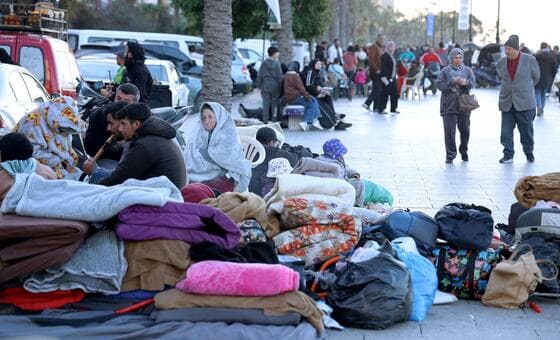
UN Reports Significant Drop in Lebanon Violence After Weekend Clashes
In a briefing delivered on Tuesday, United Nations Spokesperson Stéphane Dujarric confirmed that while UN peacekeepers continue to observe incidents of violence and exchanges of fire across southern Lebanon, the overall level of hostilities has dropped considerably compared to what was recorded over the weekend. The statement offered a cautious but notable signal that conditions on the ground may be stabilizing, at least temporarily, following a tense and volatile period that drew international concern.
UN peacekeepers operating under the UNIFIL mandate — the United Nations Interim Force in Lebanon — remain deployed throughout the region, closely monitoring the situation and working to prevent any further escalation. Their continued presence is considered critical by international observers, particularly as diplomatic efforts to consolidate a lasting ceasefire arrangement between conflicting parties remain fragile and ongoing.
The reduction in violence comes after a weekend that saw heightened exchanges along contested areas, raising fears of a broader flare-up. While Dujarric's remarks were measured and stopped short of declaring any formal agreement or ceasefire, the decrease in reported incidents has provided a brief window of cautious optimism for humanitarian workers and civilians caught in the crossfire of regional tensions.
Why the Situation in Lebanon Remains Deeply Fragile
Despite the encouraging reduction in violence, analysts and UN officials are quick to caution that the situation in Lebanon remains precarious. Ceasefire lines are not formally enforced by binding agreements, and sporadic exchanges of fire continue to pose a serious risk to civilian populations living near contested zones. Infrastructure damage from prior conflicts continues to compound the humanitarian challenges facing Lebanese communities, with many families still displaced from their homes.
The UN has repeatedly called on all parties to exercise maximum restraint and to work toward a durable, politically negotiated resolution to the conflict. Humanitarian access to affected communities also remains a pressing concern, as aid organizations struggle to reach vulnerable populations amid the ongoing instability. The international community is watching developments closely, aware that a single incident has the potential to reignite broader hostilities in a region already stretched thin by years of compounding crises.
Gaza Faces Deepening Humanitarian Shortages
Simultaneously, the humanitarian situation inside Gaza continues to deteriorate at an alarming rate. UN agencies and international non-governmental organizations operating in the territory have reported severe shortages of essential goods, including food, clean water, medicine, and fuel. These shortages are pushing an already battered civilian population to the edge of a full-scale humanitarian catastrophe.
Aid delivery into Gaza has faced persistent obstacles, including restricted access points, security concerns, and logistical bottlenecks that prevent supplies from reaching those who need them most. UN officials have described conditions in parts of Gaza as nothing short of dire, with hospitals operating beyond capacity, sanitation systems failing, and malnutrition rates — particularly among children — climbing steadily.
The Human Cost of the Gaza Crisis
Behind the statistics lie the lived realities of millions of civilians who have endured months of relentless conflict and deprivation. Families are surviving on dwindling food supplies. Medical professionals are performing life-saving procedures without adequate equipment or medication. Displaced persons sheltering in overcrowded facilities face compounding risks from disease and exposure.
The United Nations has issued repeated urgent appeals for all parties to allow unimpeded humanitarian access into Gaza and to uphold their obligations under international humanitarian law. Relief organizations have stressed that without a significant and immediate increase in aid flows, the humanitarian toll will continue to rise with devastating speed. The international community faces mounting pressure to take decisive action before conditions become entirely irreversible.
- Food and clean water supplies remain critically inadequate for the civilian population.
- Medical facilities are overwhelmed and lack essential supplies and personnel.
- Fuel shortages are crippling power generation, further degrading hospital and water system operations.
- Malnutrition rates, especially among children and the elderly, are rising sharply.
- Humanitarian organizations continue to call for unrestricted access and increased funding.
Rising Global Debt Is Squeezing Development Funding
Beyond the immediate crises unfolding in Lebanon and Gaza, a slower but equally consequential challenge is threatening the longer-term stability of vulnerable nations around the world. Rising levels of sovereign debt are increasingly constraining the ability of developing countries to invest in critical areas such as healthcare, education, climate adaptation, and infrastructure — the very foundations upon which sustainable development depends.
According to United Nations financial experts and development economists, many low- and middle-income countries are now spending more on debt servicing than on essential public services. This dynamic creates a vicious cycle: governments unable to invest in their populations see slower economic growth, which in turn worsens their debt-to-GDP ratios and further limits their fiscal space for development spending.
The Implications for Global Development Goals
The consequences of this debt burden extend far beyond individual national budgets. Progress toward the United Nations Sustainable Development Goals — the globally agreed framework for achieving a more equitable, peaceful, and sustainable world by 2030 — is being directly undermined by the growing debt crisis. With resources diverted toward interest payments rather than people-centered programs, timelines for achieving key targets on poverty reduction, health equity, and climate resilience are being pushed further and further out of reach.
International financial institutions, including the International Monetary Fund and the World Bank, have acknowledged the severity of the problem and have called for comprehensive debt relief initiatives, enhanced concessional financing mechanisms, and reforms to the global financial architecture that would give developing nations greater flexibility and support. Civil society organizations have gone further, demanding immediate debt cancellations for the most vulnerable countries to allow governments to prioritize human welfare over creditor obligations.
A World at a Crossroads: The Need for Coordinated Global Action
Taken together, the developments summarized in this UN briefing paint a picture of a world grappling simultaneously with active conflicts, acute humanitarian emergencies, and systemic economic pressures. Each of these challenges is serious in its own right; in combination, they represent a formidable test of the international community's capacity for collective action and its commitment to the principles of human dignity and shared responsibility.
The United Nations continues to serve as the primary forum for coordinating global responses to these overlapping crises. From peacekeeping operations in Lebanon to emergency relief efforts in Gaza and advocacy for debt restructuring in the developing world, the organization is working across multiple fronts to mitigate harm and build pathways toward more stable, just, and sustainable outcomes. Whether the political will exists among member states to match the scale of these challenges with adequate resources and resolve remains one of the defining questions of our time.