
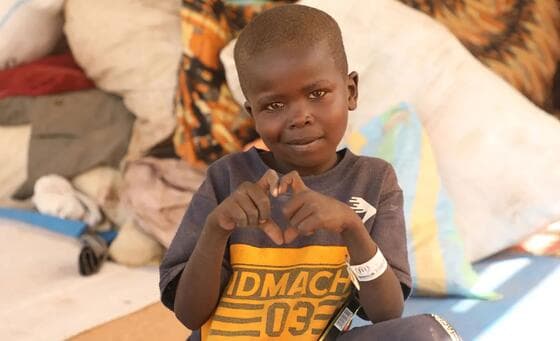
World Refugee Day 2025: A Global Call to Act
Every year on June 20, the world pauses to observe World Refugee Day — a United Nations-recognized occasion dedicated to honoring the courage, resilience, and determination of millions of people who have been forced to flee their homes. In 2025, the message from the UN High Commissioner for Refugees (UNHCR) is clearer and more urgent than ever: the international community must renew its commitment and deepen its solidarity with the nearly 42 million refugees scattered across the globe. These are not statistics. They are human beings — parents, children, teachers, doctors, and dreamers — who have lost everything and are counting on the world not to look away.
The Scale of the Global Refugee Crisis
The numbers are staggering. According to the UNHCR, close to 42 million people have crossed international borders to escape conflict, violence, or persecution, making this one of the most profound humanitarian challenges of the modern era. When combined with internally displaced persons — those who have fled their homes but remain within their own country's borders — the total number of forcibly displaced people worldwide surpasses 100 million, a figure that was once unimaginable.
The root causes driving these mass movements are as complex as they are devastating. Prolonged armed conflicts in regions across Africa, the Middle East, and beyond have created entire generations of children who have never known peace. Political repression and systemic persecution continue to push vulnerable populations from their homes. Climate-related disasters, while not always recognized under the current international refugee framework, are increasingly intersecting with existing crises to compound displacement.
For the individuals caught in these circumstances, the journey to safety is rarely safe at all. Many risk their lives crossing treacherous seas, harsh deserts, or militarized borders in search of protection. Those who survive the journey often arrive in host countries with nothing — no shelter, no legal documents, no certainty about what tomorrow holds.
What the UNHCR Is Asking the World to Do
The UN High Commissioner for Refugees has issued a direct and impassioned appeal to governments, civil society, the private sector, and ordinary citizens around the world. The core message is this: protecting refugees is not charity — it is a legal obligation and a moral imperative enshrined in international law, particularly the 1951 Refugee Convention and its 1967 Protocol.
Specifically, the UNHCR is calling for action in several critical areas:
- Increased financial contributions to humanitarian operations that are chronically underfunded, leaving millions without access to food, clean water, healthcare, and education.
- Expanded pathways for legal admission, including resettlement programs, humanitarian visas, and family reunification schemes that offer refugees safe and dignified routes to protection rather than forcing them into the hands of smugglers.
- Stronger international burden-sharing, recognizing that the overwhelming majority of the world's refugees are hosted by low- and middle-income countries that lack the resources to sustain long-term solutions on their own.
- Meaningful inclusion of refugees in national education systems, labor markets, and healthcare frameworks so that displacement does not become a permanent condition of poverty and exclusion.
These are not abstract policy demands. Each one corresponds to a real and immediate gap between what refugees need and what the international system currently provides.
Host Countries Carrying a Disproportionate Burden
One of the most important and often overlooked dimensions of the refugee crisis is geographic. Despite the narrative that large numbers of refugees are flooding wealthy Western nations, the reality is that the vast majority — more than 70 percent — are hosted by developing countries. Nations such as Uganda, Bangladesh, Ethiopia, Iran, and Colombia have opened their borders and communities to millions of refugees, often at significant economic and social cost.
Uganda alone hosts more than 1.5 million refugees, making it one of the largest refugee-hosting nations in the world. In many cases, these host communities are themselves impoverished and struggling with limited public services. The generosity they have shown stands in stark contrast to the political resistance that has emerged in some wealthier nations where anti-refugee sentiment has been cynically weaponized for electoral gain.
World Refugee Day is, in part, an opportunity to acknowledge and celebrate the humanity of these host communities — and to call on richer nations to provide far greater support in recognition of this unequal burden.
The Human Face Behind the Numbers
Behind every statistic is a story. A Syrian mother who carried her two-year-old across a river in the dark. A young Afghan journalist who fled after the fall of his country's government left him marked for death. A Sudanese family separated at a border crossing, waiting months to be reunited. These stories are at the heart of World Refugee Day — a reminder that empathy is not weakness, and that recognizing another person's humanity costs us nothing while meaning everything to them.
Refugees have contributed enormously to the societies that have welcomed them. They have launched businesses, won Nobel Prizes, served in armies, taught in schools, and enriched the cultural fabric of countries on every continent. Treating refugees as a burden to be managed rather than people to be welcomed is not only morally wrong — it is factually mistaken.
How You Can Make a Difference
World Refugee Day is not just for governments and international organizations. Individuals can take meaningful steps to show solidarity. Donating to reputable humanitarian organizations working on the ground, advocating for fair and humane refugee policies, challenging misinformation in your own communities, and simply listening to and amplifying refugee voices are all acts of solidarity that matter.
As the UNHCR's call to action reminds us, the global refugee crisis will not resolve itself. It demands sustained attention, political will, and above all, a shared commitment to the principle that every human being — regardless of where they were born or why they fled — deserves dignity, protection, and a chance to rebuild their life in safety.
On this World Refugee Day, the question is not whether the world can afford to help nearly 42 million refugees. The question is whether we can afford — morally, politically, and historically — to turn away.