
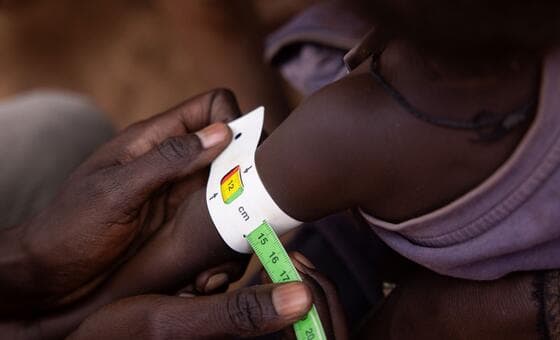
A World on the Brink: The Growing Threat of Famine Across 13 Global Hotspots
Hunger is not a new crisis. But in 2025, the convergence of relentless conflict, deepening economic instability, and dramatically shrinking humanitarian aid budgets is pushing the world's most vulnerable populations toward a breaking point. Across 13 identified global hotspots, millions of people face the very real prospect of famine — a threshold that represents not just severe food insecurity, but the catastrophic breakdown of entire food systems and the communities that depend on them.
International food security experts and humanitarian organizations are sounding urgent alarms. Without swift and coordinated international action, what is currently a hunger crisis risks escalating into a full-scale famine emergency on multiple fronts simultaneously — a scenario that would overwhelm the capacity of even the most well-resourced aid systems.
What Is Driving the Global Hunger Crisis in 2025?
The current hunger emergency is not the result of a single cause. It is the product of several overlapping and mutually reinforcing forces that have steadily eroded food security across entire regions over many years.
Conflict Remains the Leading Driver of Acute Food Insecurity
Armed conflict continues to be the single most powerful driver of famine-level hunger around the world. When wars erupt or persist, they destroy agricultural infrastructure, displace farming communities, cut off supply routes, and divert government resources away from social safety nets. In regions experiencing active conflict, civilians often lose access to food, clean water, and livelihoods all at once, creating a humanitarian crisis that compounds with every passing month.
Areas such as Sudan, Gaza, South Sudan, Haiti, and parts of the Sahel and East Africa are among those where conflict has either triggered or dramatically deepened food insecurity. In some of these locations, fighting has been ongoing for years, leaving little time for recovery between crises and stripping communities of the resilience they need to withstand future shocks.
Economic Pressures Are Squeezing Vulnerable Populations
Beyond conflict, economic deterioration is playing an increasingly prominent role in the global hunger equation. Currency devaluations, runaway inflation, unemployment, and collapsing local economies are making food unaffordable even in places where it is technically available. When families must choose between food and other basic necessities, malnutrition rises sharply — particularly among children, pregnant women, and the elderly.
Global economic shocks, including the lingering effects of the COVID-19 pandemic, supply chain disruptions, and rising fuel and fertilizer costs, have hit low-income countries hardest. For nations already operating on narrow economic margins, these pressures have tipped millions from food insecurity into acute hunger, and from acute hunger toward the famine threshold.
Shrinking Aid Budgets Are Leaving Gaps That Cannot Be Ignored
Perhaps the most alarming development in 2025 is the steep reduction in humanitarian funding at precisely the moment it is needed most. Major donor governments have cut aid budgets in response to domestic political pressures and economic constraints, leaving the organizations tasked with responding to food crises severely under-resourced.
The United Nations World Food Programme, UNICEF, and a range of NGOs have all reported significant shortfalls in their operational budgets. In practical terms, this means fewer food rations distributed, nutrition programs suspended, and early warning systems underfunded. When aid organizations are forced to triage their responses — choosing which populations receive assistance and which do not — people die.
The 13 Hotspots: Where the Risk Is Most Acute
Food security analysts have identified 13 specific regions where the combination of conflict, economic stress, and aid shortfalls has created conditions most likely to deteriorate into famine in the coming months. These hotspots span Sub-Saharan Africa, the Middle East, parts of Asia, and the Caribbean, and together they account for tens of millions of people already experiencing emergency or catastrophic levels of food insecurity.
In these areas, even a modest worsening of conditions — a fresh outbreak of violence, a failed harvest, a further cut to aid — could tip populations into famine. The window for preventive action is narrowing rapidly, and the cost of inaction, both in human lives and long-term recovery needs, will be immense.
The Human Cost: Who Is Suffering Most?
Behind every statistic is a human story. Children under five are among the most visible victims of acute hunger, with malnutrition stunting their growth, impairing cognitive development, and leaving them dangerously vulnerable to disease. Mothers in crisis zones frequently sacrifice their own meals to feed their children, suffering the health consequences of prolonged undernourishment in silence.
Displaced populations — those who have fled conflict or disaster and live in camps or informal settlements — face some of the most extreme levels of food insecurity. Cut off from their land, livelihoods, and social networks, they are almost entirely dependent on humanitarian assistance that is now increasingly uncertain.
What Needs to Happen Now
Addressing the global hunger crisis requires action on multiple levels simultaneously. In the immediate term, donor governments must reverse funding cuts and restore humanitarian budgets to levels that match the scale of need. Food aid, nutrition programs, and emergency healthcare must reach the most affected populations without further delay.
At a structural level, lasting solutions demand investment in peacebuilding, agricultural resilience, and economic development in the most affected regions. Hunger cannot be solved by emergency food drops alone. Communities need the tools, stability, and resources to feed themselves — and the world has both the capacity and the responsibility to help make that possible.
The Time to Act Is Now
The warning signs are clear, the data is available, and the communities in need have been identified. What remains is political will and the commitment of adequate resources. Allowing 13 global hotspots to slide from hunger crises into declared famines would be a preventable tragedy — one that history would not judge kindly. International leaders, donor nations, and humanitarian organizations must treat this moment with the urgency it demands, because for millions of people living on the edge of famine, there is no time left to waste.