
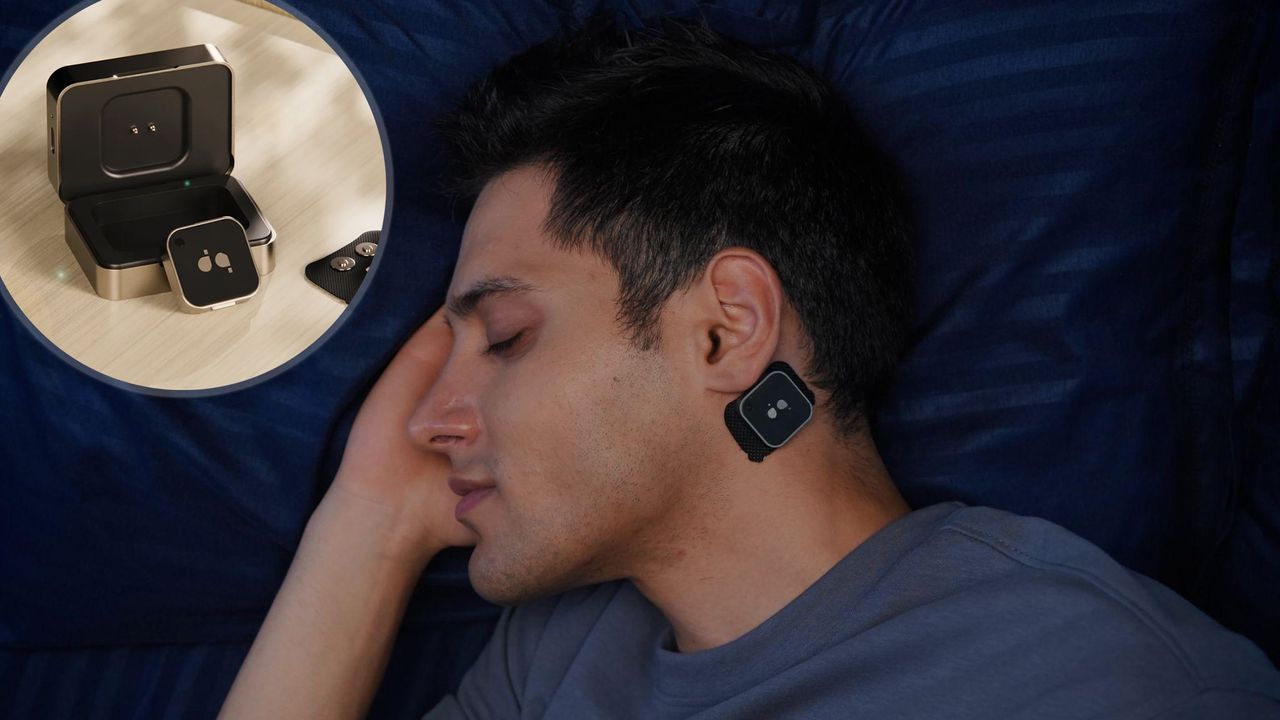
DUSQ's Revolutionary Wearable Is Changing the Way We Sleep
For millions of people around the world, the problem isn't falling asleep — it's staying asleep. The dreaded 3 a.m. wake-up, where you find yourself staring at the ceiling with a racing mind and no clear path back to slumber, is one of the most common and frustrating sleep disruptions people experience. Now, a company called DUSQ may have finally cracked the code. Their new wearable sleep device doesn't just track your sleep — it actively intervenes, detecting the moment you wake and guiding your brain back into deep, restorative sleep. Early users are already calling it life-changing, with one tester noting: "I sleep much faster and way deeper."
What Makes DUSQ Different From Every Other Sleep Wearable
The sleep tracking market is far from new. Devices from Fitbit, Garmin, Apple, Oura, and Whoop have long offered sleep stage monitoring, heart rate variability data, and morning readiness scores. But there's a critical distinction between what those devices do and what DUSQ is offering: passive observation versus active intervention.
Most wearables tell you after the fact that your sleep was poor. They present you with a score in the morning and leave you wondering what to do about it. DUSQ's approach is fundamentally different. The device monitors your biometrics in real time throughout the night, and the moment it detects that you've woken — or are on the edge of waking — it responds with a targeted stimulus designed to pull you back toward deep sleep before full consciousness takes hold.
This represents a genuine first for consumer sleep tracking technology: a feedback loop that closes in real time, during the night, when it actually matters.
How the Technology Works
DUSQ's wearable relies on a sophisticated combination of sensors to monitor your sleep architecture continuously. These include heart rate and heart rate variability sensors, movement detection accelerometers, and skin temperature monitors — similar in scope to high-end fitness trackers but interpreted through a proprietary algorithm tuned specifically for sleep stage detection.
Where the device diverges sharply from the competition is in its output mechanism. Rather than simply logging data, when the algorithm determines that a wake event has occurred or is imminent — particularly during the vulnerable lighter sleep stages in the early hours of the morning — the wearable delivers a gentle, precisely timed sensory stimulus. Depending on the version and configuration, this can take the form of subtle haptic pulses, soft audio tones, or a combination of both, calibrated to nudge the nervous system back toward deeper sleep without causing full arousal.
The science underpinning this approach draws from decades of sleep research around auditory and tactile stimulation. Studies have shown that certain low-intensity stimuli, when timed correctly to coincide with specific brainwave patterns, can enhance slow-wave sleep and reduce the likelihood of prolonged wakefulness. DUSQ has essentially packaged that research into a consumer-ready, wrist-worn device.
The 3 a.m. Problem: Why Nighttime Wake-Ups Are So Damaging
To understand why DUSQ's innovation matters, it helps to understand what's actually happening when you wake in the middle of the night. Human sleep follows a cyclical pattern of light sleep, deep sleep (slow-wave sleep), and REM sleep. In the first half of the night, we get the bulk of our deep, physically restorative sleep. In the second half — typically from around 2 to 5 a.m. — our cycles shift toward lighter sleep and more REM, making us significantly more susceptible to waking.
When a wake event occurs during this window, the body's stress response can activate quickly. Cortisol begins to rise, the mind starts processing thoughts and worries, and re-entering sleep becomes progressively harder the longer you remain conscious. For people with insomnia, anxiety, or disrupted circadian rhythms, this cycle can become a nightly ordeal with serious downstream consequences for health, mood, and cognitive performance.
Chronic sleep disruption has been linked to increased risks of cardiovascular disease, metabolic disorders, weakened immunity, depression, and accelerated cognitive decline. Solving the 3 a.m. wake-up problem isn't a luxury — for many people, it's a genuine health priority.
What Early Users Are Saying
Feedback from initial testers of the DUSQ device has been strongly positive. Users consistently report falling back to sleep faster after nighttime wake events, feeling more refreshed in the morning, and experiencing fewer disruptions overall. The quote that's circulating widely — "I sleep much faster and way deeper" — captures a sentiment echoed by multiple early adopters who describe the device as one of the most impactful health tools they've tried.
Critically, users note that the intervention itself is imperceptible in the best possible way: they often don't remember being stimulated at all, which suggests the device is successfully doing its job without generating new disruptions of its own.
The Broader Implications for Sleep Tech
DUSQ's launch signals a meaningful shift in the direction of consumer sleep technology. The industry has spent years perfecting the art of measurement, producing increasingly granular data about sleep stages, respiratory patterns, and overnight recovery. What has lagged behind is the translation of that data into real-time, actionable intervention.
If DUSQ's approach proves effective at scale — and early signals suggest it will — it opens the door to a new generation of wearables that don't just observe our biology but actively support it. Future iterations could incorporate machine learning models that adapt their intervention strategies to each individual user's unique sleep patterns over time, making them progressively more effective the longer you wear them.
Should You Consider a Sleep Intervention Wearable?
If you regularly experience nighttime wake-ups, struggle with sleep maintenance insomnia, or simply want to maximize the quality — not just the quantity — of your sleep, devices like DUSQ represent a compelling new category worth watching. While traditional sleep hygiene practices (consistent sleep schedules, limiting screen exposure, managing caffeine and alcohol) remain the foundation of good sleep, technology that actively supports those efforts during the night itself is a genuinely exciting development.
As always, those with significant sleep disorders should consult a healthcare professional before relying on any wearable as a primary treatment. But for the growing population of otherwise healthy individuals looking to optimize their rest, DUSQ may be the most meaningful step forward in sleep technology in years.
Final Thoughts
Sleep is not passive. It's one of the most complex and consequential biological processes the human body performs, and it deserves tools that match that complexity. DUSQ's new wearable represents exactly that — a device smart enough to recognize when your sleep is going wrong and responsive enough to fix it in the moment. In a market crowded with trackers that show you your problems, here at last is one designed to solve them.