
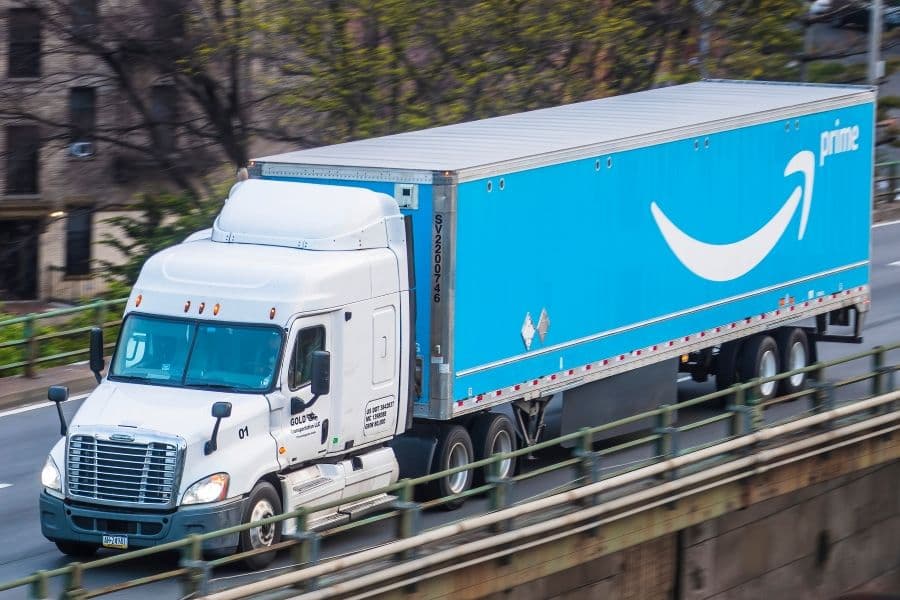
Amazon Freight Enters the LTL Arena — And It's Playing by Its Own Rules
Amazon has never been shy about disrupting industries it enters, and freight logistics is no exception. The company's freight division, Amazon Freight, has officially launched a less-than-truckload (LTL) service — and its leadership is wasting no time drawing a sharp line between what they're offering and the traditional freight brokerage model. According to Amazon Freight's director, this is an asset-backed LTL operation built on company-owned equipment and proprietary technology, not a middleman arrangement that simply connects shippers with third-party carriers.
For shippers, carriers, and logistics professionals paying close attention to the evolving freight landscape, this distinction matters enormously. Let's break down exactly what Amazon Freight is offering, why the "not a brokerage" framing is significant, and what it all means for the future of LTL shipping in the United States.
What Is LTL Shipping and Why Does It Matter?
Less-than-truckload shipping refers to the transportation of freight that does not require a full truckload. Instead of dedicating an entire truck to a single shipment, multiple shippers share space on the same truck, each paying only for the portion they use. This model is especially valuable for small and mid-sized businesses that need to move goods efficiently without the cost of booking an entire trailer.
The LTL market in the United States is substantial, generating tens of billions of dollars annually and serving a wide range of industries — from retail and manufacturing to healthcare and technology. Traditionally, this space has been dominated by established players like FedEx Freight, Old Dominion Freight Line, XPO Logistics, and Estes Express Lines. Amazon's entry into this segment is therefore not just a business expansion — it's a potential reshaping of the competitive landscape.
Asset-Backed vs. Brokerage: A Critical Distinction
When Amazon Freight's director says the new LTL service is "not a brokerage," the statement carries real operational and reputational weight. In the freight industry, brokerages act as intermediaries — they don't own trucks or employ drivers directly. Instead, they match shippers with available capacity from third-party carriers, taking a margin in the process. While brokerages play a valuable role in the ecosystem, they also introduce variables: inconsistent service standards, varying equipment quality, and less direct accountability when things go wrong.
An asset-backed model, by contrast, means the company owns the trucks, employs or directly manages the drivers, and controls the technology that runs the operation end to end. This vertical integration typically results in greater consistency, tighter visibility into shipment status, and more predictable service levels — qualities that shippers increasingly demand in today's supply chain environment.
Amazon Freight is positioning itself firmly in the asset-backed camp. By leveraging company-owned equipment and its own technology infrastructure, the division is signaling to the market that it intends to compete on quality and reliability, not just price or network reach.
The Role of Amazon's Technology Advantage
Perhaps the most compelling aspect of Amazon Freight's LTL launch isn't the trucks — it's the technology behind them. Amazon has spent decades building some of the most sophisticated logistics and data systems in the world. From real-time route optimization algorithms to advanced shipment tracking and machine learning-driven demand forecasting, the company brings a technological edge that most traditional LTL carriers simply cannot match.
For shippers, this translates into several practical benefits:
- Enhanced visibility: Real-time tracking and status updates throughout the shipment lifecycle, reducing uncertainty and improving inventory planning.
- Streamlined booking: Digital-first interfaces that make it faster and easier to schedule pickups, manage freight documentation, and handle billing.
- Data-driven pricing: Dynamic pricing models that can offer more competitive and transparent rates compared to legacy systems reliant on complex tariff structures.
- Integration capabilities: Seamless connectivity with existing e-commerce platforms, warehouse management systems, and ERP tools — particularly advantageous for businesses already operating within the Amazon ecosystem.
These technology advantages could prove to be a decisive differentiator, especially for shippers who have grown frustrated with the opacity and inefficiency that still characterizes parts of the traditional LTL industry.
What This Means for Existing LTL Carriers
Established LTL carriers should be paying close attention. Amazon Freight's entry into this segment introduces a well-capitalized, technologically advanced competitor that already has deep relationships with millions of shippers through its e-commerce and fulfillment businesses. The ability to bundle LTL services with Amazon's broader logistics offerings — including fulfillment by Amazon, Amazon Warehousing and Distribution, and its existing full-truckload freight services — gives the company a cross-selling advantage that traditional carriers cannot easily replicate.
That said, incumbents have their own strengths. Decades of operational experience, established national hub-and-spoke networks, and long-standing customer relationships are not easily displaced. The LTL market is also notably complex to operate efficiently, with tight margins and demanding service requirements. Amazon will need to prove it can execute at scale before shippers begin shifting significant freight volumes away from their current providers.
Opportunities for Shippers and Small Businesses
For shippers — particularly small and mid-sized businesses — Amazon Freight's LTL launch represents a meaningful new option worth evaluating. Increased competition in the LTL space generally benefits shippers through more competitive pricing, improved service innovation, and greater flexibility in carrier selection.
Businesses already using Amazon's fulfillment or seller services may find particular value in the integration potential, potentially consolidating freight management within a single platform. As Amazon Freight builds out its LTL network and refines its service offering, early adopters willing to test the product could gain useful insights while potentially locking in favorable rates before broader market adoption drives pricing adjustments.
The Bigger Picture: Amazon's Long-Term Logistics Ambitions
Amazon Freight's LTL launch is not an isolated move — it's the latest step in a long-term strategy to build a fully integrated, end-to-end logistics empire. From last-mile delivery through Amazon Logistics, to ocean freight forwarding, to now competing directly in the LTL segment, Amazon is methodically filling in the gaps across the entire supply chain. The "asset-backed, not a brokerage" message reinforces a commitment to owning the infrastructure that powers its logistics network, rather than relying on external partners whose performance it cannot fully control.
For the freight industry, the message is clear: Amazon is not just a customer — it's now a competitor, and it's building for the long haul.