
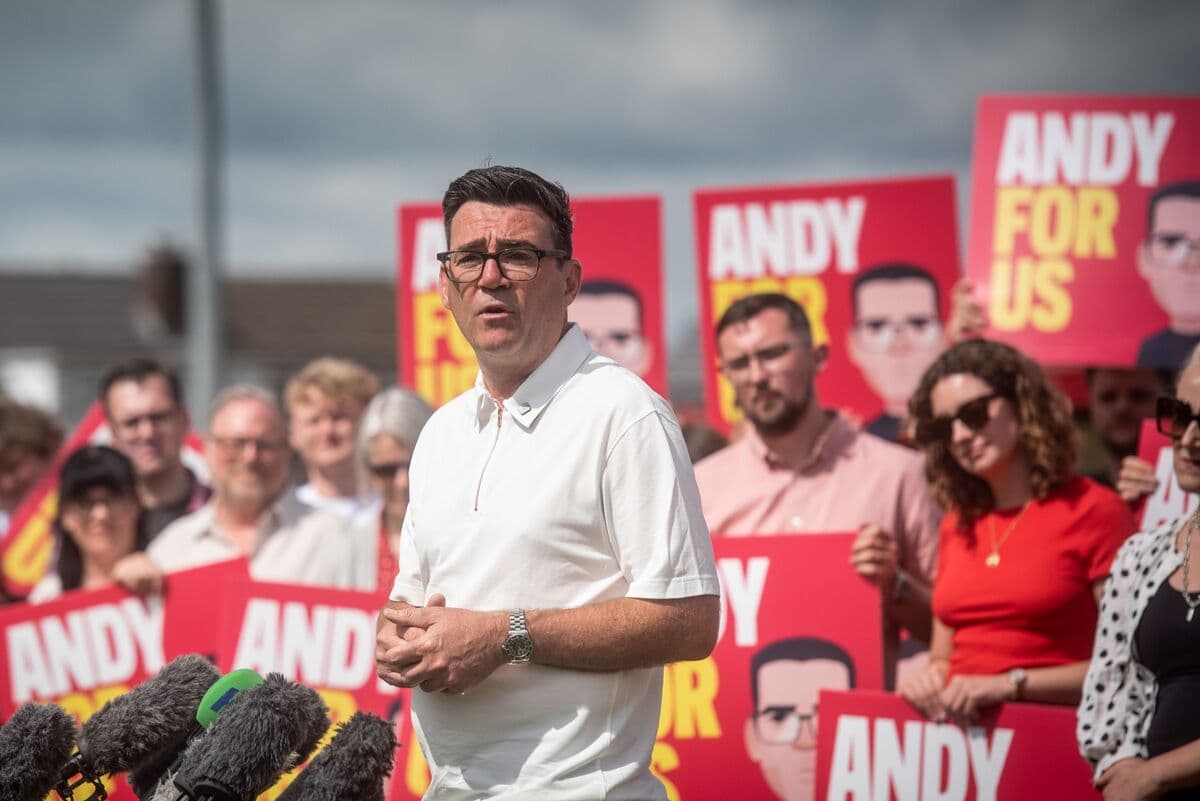
Andy Burnham and the Future of UK Fiscal Policy
British politics rarely stands still for long, but the recent momentum building around Andy Burnham has caught the attention of economists, policy analysts, and investors alike. As the Greater Manchester Mayor takes what many are describing as a giant leap toward becoming the UK's next Prime Minister, a pressing question is beginning to dominate Westminster conversations: what would a Burnham-led government actually do with the country's finances?
The answer, according to those watching closely, could be significant. Burnham has never been a conventional political figure, and the team he is assembling around him suggests an economic agenda that could diverge meaningfully from recent fiscal orthodoxy. Whether that represents bold reform or risky experimentation will depend heavily on whom you ask — and what happens next on the campaign trail.
Who Is Andy Burnham, and Why Does It Matter?
For those less familiar with UK domestic politics, Andy Burnham is a veteran Labour politician who served in senior cabinet roles under both Tony Blair and Gordon Brown. He held positions including Secretary of State for Health and Secretary of State for Culture, Media and Sport before transitioning out of Westminster to become Mayor of Greater Manchester in 2017.
That regional role proved transformative — both for Greater Manchester and for Burnham's political identity. He became known for a hands-on, people-first style of governance, famously confronting the central government over local COVID-19 restrictions and championing integrated transport and housing initiatives. His public profile grew considerably, and his reputation as a politician willing to fight for working communities solidified.
Now, with his sights trained on national leadership, Burnham brings with him an economic philosophy forged not in the Treasury but in the practical realities of running a major post-industrial city region. That context matters enormously for understanding what a Burnham fiscal agenda might look like.
The Economic Vision Taking Shape
Sources close to Burnham's emerging team suggest that his fiscal approach would prioritise long-term investment over short-term deficit reduction. This places him somewhat at odds with the austerity-leaning traditions of UK fiscal policy that have dominated thinking — with varying degrees of intensity — since 2010.
Among the central pillars likely to define a Burnham economic programme are regional devolution, green industrial investment, and a rethinking of how public spending is measured and justified. He has spoken repeatedly about the need to rebalance the UK economy away from its heavy dependence on London and the South East, arguing that unlocking the productive potential of the North, the Midlands, and other underinvested regions represents one of the clearest routes to sustainable growth.
On the question of public finances more specifically, Burnham is expected to push for reforms to the fiscal rules that currently govern how governments can borrow and spend. Critics of the existing framework argue it is too rigid and discourages the kind of capital investment that generates long-run returns. Burnham's team appears sympathetic to that view.
The Team Behind the Playbook
Leadership in government is never a solo endeavour, and the advisers and allies a potential Prime Minister surrounds themselves with send strong signals about policy direction. Burnham's inner circle is reported to include economists and strategists with roots in heterodox thinking — those who have questioned whether mainstream fiscal frameworks adequately account for investment returns, productivity gains, and the social costs of underinvestment.
This matters for several reasons. First, it suggests that a Burnham Treasury would be open to revisiting assumptions that have long been treated as settled within Whitehall. Second, it implies a willingness to engage with models of public finance that place greater weight on demand management, regional equity, and industrial strategy — areas where UK policy has historically been more cautious than many comparable economies.
There are also indications that Burnham would seek to empower regional institutions with greater fiscal autonomy, potentially allowing cities and combined authorities to raise and deploy capital more independently of central government. This would represent a structural shift in how the UK economy is governed, moving power closer to the communities most affected by economic decisions.
Potential Challenges and Market Reactions
Not everyone is enthusiastic. Business lobby groups and fiscal conservatives have raised concerns about what a more expansionary approach to public spending could mean for government borrowing costs and investor confidence. The UK bond market remains sensitive to perceptions of fiscal credibility, as the brief but turbulent period following the 2022 mini-budget made dramatically clear.
Burnham's team is aware of these constraints. Those close to the prospective leadership campaign are at pains to emphasise that any reform of fiscal rules would be accompanied by credible frameworks for accountability and transparency. The argument, broadly, is that sustainable investment is not the same as reckless spending — and that conflating the two has cost the UK dearly in forgone growth.
What This Means for Britain's Economic Future
Regardless of how the leadership contest ultimately unfolds, the conversation Burnham is helping to drive is an important one. Questions about fiscal rules, regional inequality, and the role of the state in shaping economic outcomes are not going away. They sit at the heart of debates about what kind of country the UK wants to be in the decades ahead.
- A potential shift away from rigid austerity-based fiscal frameworks toward investment-led growth models.
- Greater emphasis on regional devolution and economic rebalancing outside of London.
- A rethinking of how public borrowing for capital investment is classified and communicated to markets.
- New industrial strategy priorities centred on green transition and manufacturing revival.
- Structural reforms to how local and regional governments access and deploy public funds.
Andy Burnham has not yet reached Downing Street. But the fiscal playbook his team is beginning to write is already shaping the terms of a national debate that will matter long after the next election is decided. Britain's economic future may not be written in Westminster alone — and that, perhaps, is precisely the point Burnham is trying to make.